
Sacred Architecture: How Different Religions Build for God
From soaring Gothic cathedrals to minimalist Zen gardens, explore how architecture expresses the divine across world religions.
Building for the Divine
Every religion translates its understanding of the sacred into physical form. The results — from the mathematical precision of Islamic geometric patterns to the organic curves of Hindu temples — reveal how different cultures perceive their relationship with the divine.
Christianity: Reaching Heavenward
Gothic cathedrals like Notre-Dame and Chartres use pointed arches, ribbed vaults, and flying buttresses to create impossibly tall, light-filled spaces. The message is vertical: look up, toward God. Stained glass windows transform sunlight into stories, turning the building itself into scripture for the illiterate.
Islam: Infinite Pattern
Islamic architecture avoids figurative representation, instead using geometric patterns that suggest infinity. The muqarnas (honeycomb vaulting) of the Alhambra and the tile work of Isfahan's mosques create spaces where the eye finds no beginning and no end — reflecting the infinite nature of Allah.
Hinduism: The Cosmic Mountain
Hindu temples are designed as symbolic mountains, the earthly home of gods. The shikhara (tower) represents Mount Meru, the cosmic axis. Temples are covered with sculptures depicting every aspect of existence — divine, human, animal, erotic — because Hinduism sees all of life as sacred.
Buddhism: Emptiness and Presence
Buddhist architecture ranges from the massive stupas of Borobudur to the stripped-down emptiness of a Zen meditation hall. Both express core Buddhist teachings: the stupa's concentric circles represent the path to enlightenment, while the Zen garden's negative space invites contemplation of emptiness (sunyata).
Shinto: Nature as Temple
Shinto's most sacred shrine, Ise Jingu, is rebuilt identically every 20 years — a practice that has continued since 690 CE. The architecture is deliberately simple, using natural materials. The message: the divine dwells not in human artifice but in nature itself.
How Faith Shapes Stone
Architecture is one of humanity's most powerful means of expressing the invisible through the visible. When communities build places of worship, they are not merely creating shelter for prayer — they are constructing physical representations of their deepest beliefs about the nature of God, the cosmos, and humanity's place within it. The forms, proportions, materials, and orientations of sacred buildings encode theological ideas in ways that affect worshippers' experience before a single word is spoken or a single note sung.
The Mosque: Geometry as Theology
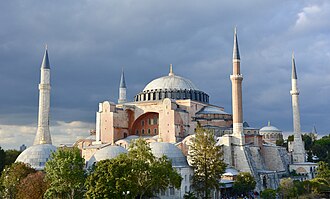
Islamic sacred architecture is governed by the prohibition against figurative representation, channeling artistic energy into geometric patterns, calligraphy, and spatial design of extraordinary sophistication. The mosque's fundamental elements — mihrab (prayer niche indicating the direction of Mecca), minbar (pulpit), and minaret (tower for the call to prayer) — serve specific liturgical functions while creating spaces of serene beauty. The use of repeating geometric patterns reflects the Islamic understanding of God's infinite nature — patterns that appear to extend infinitely in all directions, with no beginning and no end. The muqarnas (honeycomb vaulting) found in Persian and Moorish mosques creates a dissolution of structural weight that symbolizes the insubstantiality of the material world compared to divine reality. Great mosques like those of Isfahan, Córdoba, and Istanbul represent some of the highest achievements of human architectural creativity.
The Gothic Cathedral: Light as Divine Presence
Gothic Christian architecture, developed in 12th-century France, represents one of the most radical architectural innovations in history. By using pointed arches, flying buttresses, and ribbed vaults, Gothic builders could dissolve solid walls into vast expanses of stained glass, transforming churches into vessels of colored light. This was not merely aesthetic — it was theological. Drawing on the writings of Pseudo-Dionysius, who described God as pure light, Gothic architects sought to create spaces that would make the divine presence physically visible and experientially overwhelming. Walking into Chartres Cathedral or Sainte-Chapelle and experiencing the cascade of colored light filtering through hundreds of square meters of stained glass remains one of the most powerful architectural experiences available to a modern visitor.
The Hindu Temple: Mountain of the Gods
Hindu temple architecture follows principles laid down in ancient texts called Vastu Shastras, which govern not just the building's form but its cosmic orientation and symbolic meaning. The temple is understood as a microcosm of the universe, with the garbhagriha (inner sanctum) representing the cave-like heart of the cosmic mountain where the divine resides. The towering shikhara (spire) above represents Mount Meru, the mythical center of all physical and spiritual universes. The elaborate sculptural programs on temple exteriors — at sites like Khajuraho, Konark, and the great temples of Tamil Nadu — depict the full range of existence, from the earthly to the celestial, inviting worshippers on a visual journey from the mundane to the divine as they approach the inner sanctum.
The Buddhist Stupa: Enlightenment in Form
The stupa — a hemispherical mound containing relics — is the oldest form of Buddhist architecture, originating with the division of the Buddha's remains among eight kingdoms after his death. The form itself carries meaning: the dome represents the dome of heaven, the square base represents the earth, and the central axis (yasti) represents the axis connecting earth and sky, the material and the spiritual. Walking clockwise around a stupa (circumambulation) is a meditative practice representing the spiritual journey toward enlightenment. The great stupas of Sanchi, Borobudur, and Boudhanath demonstrate how this simple form evolved into structures of remarkable complexity and beauty.
The Synagogue: Community as Sacred Space
Unlike temples and cathedrals, the synagogue's sanctity derives not from the building itself but from the community that gathers within it and the Torah scrolls housed in the ark. This theological principle has given synagogue architecture enormous stylistic freedom — from the ancient synagogue of Dura-Europos in Syria (with its remarkable wall paintings) to the soaring modernism of Berlin's Jewish Museum. The essential elements are consistent: the Torah ark on the wall facing Jerusalem, the bimah (reading platform), and seating arranged so the community faces both the ark and each other, reflecting Judaism's dual emphasis on divine revelation and communal study.
Sacred Architecture in the Modern Age
Contemporary sacred architecture faces the challenge of expressing ancient truths in a modern architectural language. Some of the most successful examples include Tadao Ando's Church of the Light in Japan (where a cross-shaped opening in a concrete wall creates a crucifix of pure sunlight), Zaha Hadid's King Abdullah Petroleum Studies and Research Centre mosque in Saudi Arabia, and the Bahá'í Houses of Worship, whose nine-sided forms represent unity in diversity across continents. These buildings demonstrate that sacred architecture remains a vital and innovative field, capable of producing spaces of genuine spiritual power.

