🏛️ Mezquita-Catedral de Córdoba
Spain
About This Sacred Site
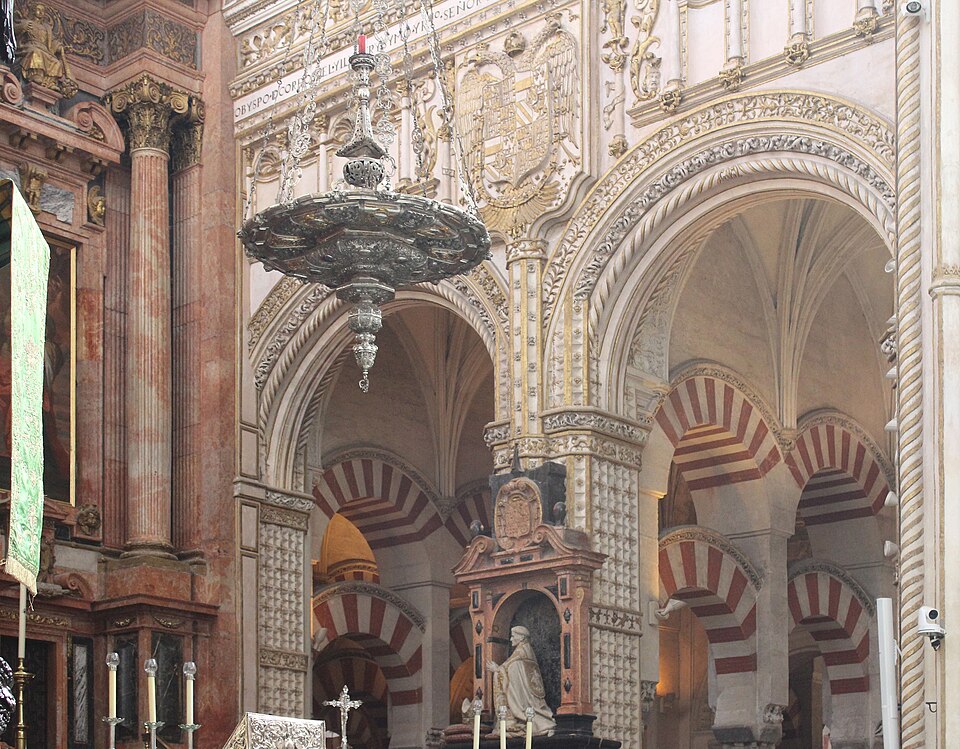
The Mezquita-Catedral de Córdoba in Spain is an architectural masterpiece that embodies centuries of religious transformation. Originally built as a mosque in 784 CE under the Umayyad Caliphate, it was one of the largest and most ornate Islamic places of worship in medieval Europe. Following the Reconquista in 1236, the mosque was converted into a Catholic cathedral, with a Renaissance nave inserted into the center while preserving much of the original Islamic structure, including iconic horseshoe arches and a hypostyle hall. This fusion symbolizes Córdoba’s rich multi-faith history.
History & Origins
The Mezquita-Catedral de Córdoba was originally constructed as a mosque starting in 784 CE under the patronage of Abd al-Rahman I, the Umayyad Emir of Córdoba. The building was erected on the site of a former Visigothic church, reflecting the transition of power in the Iberian Peninsula. Over the next two centuries, successive rulers such as Abd al-Rahman II and Al-Hakam II expanded the mosque, adding significant architectural elements including the iconic red-and-white horseshoe arches around the 10th century. The mosque contained over 850 columns made of jasper, onyx, marble, and granite, sourced from Roman and Visigothic ruins. In 1236, following the Christian Reconquista led by King Ferdinand III, the mosque was consecrated as a cathedral. In the 16th century, a Renaissance cathedral nave was inserted into the center of the mosque by architect Hernán Ruiz, substantially altering the original Islamic structure. Today, the Mezquita-Catedral is a UNESCO World Heritage Site and serves as a symbol of the cultural and religious intersections in medieval Spain.
Spiritual Significance
Originally serving as a grand mosque, the site was central to Islamic worship in Al-Andalus, where Muslims performed the five daily prayers facing the mihrab located in the southern wall. The red-and-white horseshoe arches symbolize the Moorish architectural aesthetic, reflecting the Umayyad interpretation of Quranic principles on beauty and order. After its conversion to a cathedral, it became a place for Catholic liturgies, including the celebration of the Feast of the Assumption and the Corpus Christi festival, important in the Roman Catholic calendar. Pilgrims and visitors often reflect on the site’s dual religious heritage, which embodies the coexistence and transition between Islamic and Christian faiths in Spain. The Mezquita-Catedral’s layered spiritual history is referenced in theological discussions about convivencia, the interfaith relations during medieval Iberian history.
Key Facts
- •Contains over 850 columns made of jasper, onyx, marble, and granite
- •The red-and-white horseshoe arches are an iconic example of Moorish architecture
- •Originally a mosque (784 CE), converted to a cathedral in 1236
- •Charles V reportedly said 'You have destroyed something unique' upon seeing the cathedral insertion
- •UNESCO World Heritage Site since 1984
Location
Coordinates: 37.8789, -4.7794
Frequently Asked Questions
What religion is Mezquita-Catedral de Córdoba associated with?▾
Mezquita-Catedral de Córdoba is a Multi-faith holy site located in Spain. It was established 784 CE (mosque) and is ranked #40 in our global directory of sacred sites.
When was Mezquita-Catedral de Córdoba established?▾
Mezquita-Catedral de Córdoba dates back to 784 CE (mosque). Contains over 850 columns made of jasper, onyx, marble, and granite
How many people visit Mezquita-Catedral de Córdoba each year?▾
Mezquita-Catedral de Córdoba receives approximately 2+ million visitors per year. The red-and-white horseshoe arches are an iconic example of Moorish architecture
What is Mezquita-Catedral de Córdoba known for?▾
A mosque-cathedral hybrid symbolizing the coexistence of Islam and Christianity. Visitors come seeking peace, spiritual enlightenment, blessings, pilgrimage. Originally a mosque (784 CE), converted to a cathedral in 1236
Related Holy Sites
Sacred places connected by country, religion, and purpose
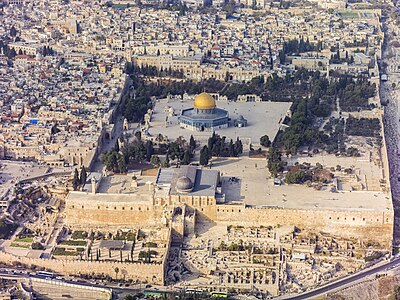
🕌Temple Mount / Al-Aqsa (Jerusalem)
Sacred to Judaism, Christianity, and Islam — the most contested holy site on Earth.
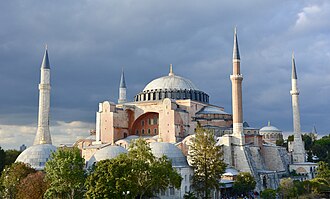
🏛️Hagia Sophia
A masterpiece that served as cathedral, mosque, and museum across centuries.