
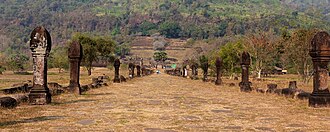
🏛️ Wat Phu (Champasak)
Laos
About This Sacred Site
Wat Phu is a ruined Khmer Hindu-Buddhist temple complex at the base of Mount Phu Kao in Champasak Province, southern Laos. A UNESCO World Heritage Site, the complex dates from the 5th to the 13th century and was originally dedicated to Shiva before being converted to Theravada Buddhism. The temple's sacred geography mirrors Angkor Wat, with a natural spring, a lingam-shaped mountain, and a processional causeway. The annual Wat Phu Festival in February draws thousands of pilgrims for Buddhist ceremonies.
History & Origins
Wat Phu, established around the 5th century CE, originated as a Hindu temple complex dedicated to Shiva, constructed by the Khmer Empire during the pre-Angkorian period. The site is situated at the base of Phu Kao mountain, whose natural shape resembles a lingam, a symbol of Shiva, integrating natural topography into religious architecture. The temple underwent significant expansions in the 11th and 12th centuries under Khmer kings such as Suryavarman II, who also built Angkor Wat. Following the decline of Hindu influence, Wat Phu was converted to serve Theravāda Buddhist worship by the 16th century, with modifications to the sanctuaries and the addition of Buddha statues. The complex was inscribed as a UNESCO World Heritage Site in 2001, recognizing its architectural significance and cultural syncretism. Excavations have revealed inscriptions in Sanskrit and Old Khmer, providing insights into the site's religious transitions and regional history.
Spiritual Significance
Originally dedicated to Shiva worship, the temple's layout aligns with Hindu cosmology, integrating the concept of Mount Meru through the sacred mountain Phu Kao, which acts as a natural lingam. The site hosts annual festivals such as the Wat Phu Festival in February and March, where Buddhist monks conduct ceremonies blending Hindu and Buddhist rituals, including chanting from the Ramayana and Pali Canon. Pilgrims ascend the stairway of 328 steps from the river to the main sanctuary, symbolizing the spiritual journey towards enlightenment and purification. The coexistence of Hindu lingam symbolism and Buddhist iconography illustrates syncretic religious practice unique to the region. Devotees participate in merit-making activities, including almsgiving and candle-lighting rituals, reinforcing the site's continued theological relevance across faith traditions.
Key Facts
- •UNESCO World Heritage Site since 2001
- •Originally a Hindu temple dedicated to Shiva, later converted to Buddhism
- •The sacred mountain Phu Kao resembles a natural lingam (Shiva symbol)
- •Predates Angkor Wat by several centuries
- •The annual Wat Phu Festival in February is a major Buddhist pilgrimage event
Location
Coordinates: 14.8497, 105.8156
Frequently Asked Questions
What religion is Wat Phu (Champasak) associated with?▾
Wat Phu (Champasak) is a Multi-faith holy site located in Laos. It was established c. 5th century CE and is ranked #204 in our global directory of sacred sites.
When was Wat Phu (Champasak) established?▾
Wat Phu (Champasak) dates back to c. 5th century CE. UNESCO World Heritage Site since 2001
How many people visit Wat Phu (Champasak) each year?▾
Wat Phu (Champasak) receives approximately 50,000+ visitors per year. Originally a Hindu temple dedicated to Shiva, later converted to Buddhism
What is Wat Phu (Champasak) known for?▾
A UNESCO-listed Hindu-Buddhist temple complex at the foot of Phu Kao mountain in southern Laos. Visitors come seeking spiritual enlightenment, pilgrimage, meditation, ancestral connection. The sacred mountain Phu Kao resembles a natural lingam (Shiva symbol)
Related Holy Sites
Sacred places connected by country, religion, and purpose
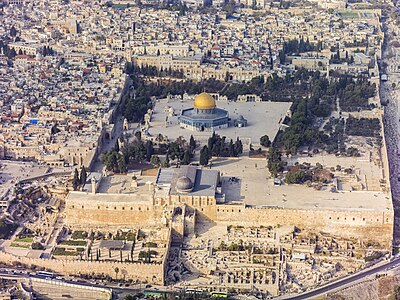
🕌Temple Mount / Al-Aqsa (Jerusalem)
Sacred to Judaism, Christianity, and Islam — the most contested holy site on Earth.
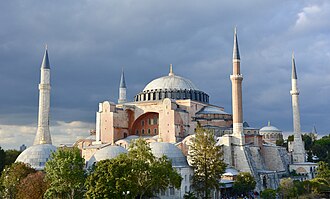
🏛️Hagia Sophia
A masterpiece that served as cathedral, mosque, and museum across centuries.
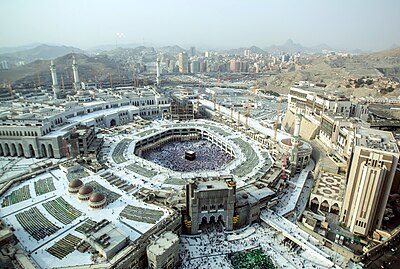
🕋Masjid al-Haram (Great Mosque of Mecca)
The holiest site in Islam, home of the Kaaba, and the destination for Hajj pilgrimage.
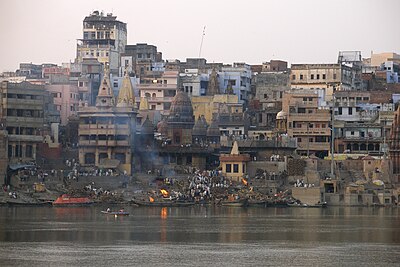
🙏Varanasi (Kashi Vishwanath Temple)
The holiest city in Hinduism, where the Ganges River purifies the soul.

