
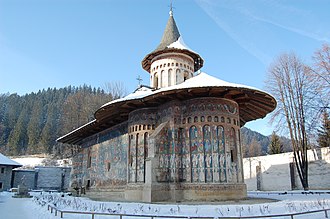
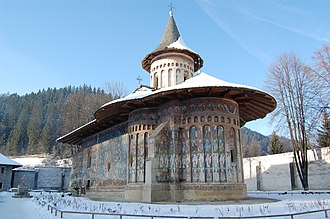
⛪ Voroneț Monastery
Romania
About This Sacred Site
Voroneț Monastery, founded in 1488 in Suceava County, Romania, is renowned for its exterior frescoes painted with a distinctive ultramarine pigment called 'Voroneț blue,' derived from lapis lazuli. Constructed under the reign of Stephen the Great, the monastery was built in just three months and three weeks, a rapid completion attributed to the advice of the hermit Daniil Sihastru. The church features a compact rectangular plan with a single nave and a pronounced barrel vault. The exterior walls are covered with intricate Byzantine-style frescoes depicting biblical scenes, including the Last Judgment on the western facade, measuring approximately 10 meters in height and 15 meters in width. The monastery walls are constructed from sandstone blocks with lime mortar, and the roof is covered with wooden shingles. The site also includes a bell tower and residential quarters for monks, surrounded by a defensive wall dating to the 16th century.
History & Origins
Voroneț Monastery was established in 1488 by Moldavian ruler Stephen the Great as a thanksgiving for victory over the Ottoman Empire. Constructed in under four months, it became a spiritual and artistic center during the Moldavian Renaissance. The monastery's exterior frescoes, painted shortly after its founding, depict apocalyptic and biblical themes using a distinctive, enduring blue pigment unique to the site. Over centuries, Voroneț underwent restorations preserving its medieval art and architecture. It survived political upheavals and remains a vital pilgrimage site and symbol of Romanian cultural heritage.
Spiritual Significance
Voroneț Monastery is a major pilgrimage site for Romanian Orthodox believers, especially during the feast of Saint George, celebrated on April 23rd, when special liturgies are held following the Byzantine Rite. The monastery's frescoes serve as a visual catechism, illustrating eschatological themes emphasized in the Orthodox tradition, such as the Last Judgment and the Second Coming, in accordance with teachings found in the Book of Revelation and writings of Church Fathers like Saint John Chrysostom. Pilgrims engage in the prayer of the Jesus Prayer within the monastery's church, seeking spiritual cleansing and renewal. The use of the unique 'Voroneț blue' pigment is tied to the theological symbolism of heaven and divine mystery, underscoring the community's connection to the celestial realm. The monastery also hosts the annual pilgrimage known as 'Pelerinajul de Voroneț,' attracting thousands who follow the traditional icon procession led by the abbot and visiting bishops. The monastic community continues the hesychastic tradition of contemplative prayer, reflecting the influence of Daniil Sihastru's ascetic advice on its founding.
Key Facts
- •Built in just three months and three weeks in 1488 on the advice of the hermit Daniil Sihastru
- •The distinctive 'Voroneț blue' pigment has never been precisely replicated
- •The Last Judgment fresco on the west wall is considered one of the finest medieval compositions in Europe
- •Exterior frescoes were added in 1547 by Metropolitan Grigore Roșca
- •Part of the UNESCO World Heritage group of painted churches of Moldavia
Location
Coordinates: 47.5167, 25.8650
Frequently Asked Questions
What religion is Voroneț Monastery associated with?▾
Voroneț Monastery is a Christianity holy site located in Romania. It was established 1488 and is ranked #436 in our global directory of sacred sites.
When was Voroneț Monastery established?▾
Voroneț Monastery dates back to 1488. Built in just three months and three weeks in 1488 on the advice of the hermit Daniil Sihastru
How many people visit Voroneț Monastery each year?▾
Voroneț Monastery receives approximately 200,000 visitors per year. The distinctive 'Voroneț blue' pigment has never been precisely replicated
What is Voroneț Monastery known for?▾
Called the 'Sistine Chapel of the East' for its extraordinary blue exterior frescoes. Visitors come seeking spiritual enlightenment, blessings, guidance, pilgrimage. The Last Judgment fresco on the west wall is considered one of the finest medieval compositions in Europe
Related Holy Sites
Sacred places connected by country, religion, and purpose
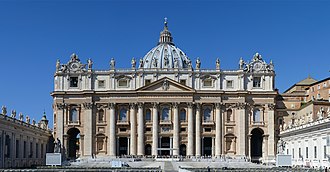
⛪Vatican City (St. Peter's Basilica)
The spiritual center of Roman Catholicism and home of the Pope.
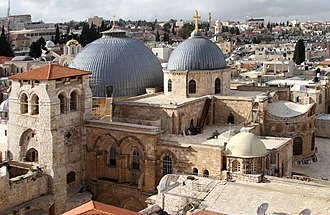
✝️Church of the Holy Sepulchre
The site where Jesus was crucified, buried, and resurrected.
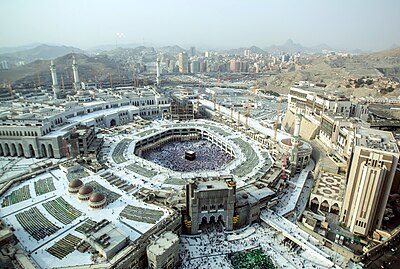
🕋Masjid al-Haram (Great Mosque of Mecca)
The holiest site in Islam, home of the Kaaba, and the destination for Hajj pilgrimage.
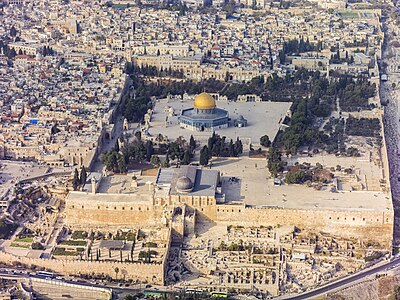
🕌Temple Mount / Al-Aqsa (Jerusalem)
Sacred to Judaism, Christianity, and Islam — the most contested holy site on Earth.

