🕌 Umayyad Mosque (Damascus)
Syria
About This Sacred Site
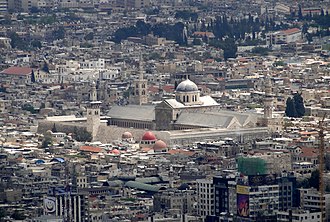
The Umayyad Mosque in Damascus, also known as the Great Mosque of Damascus, is one of the oldest, largest, and most significant mosques in the Islamic world. Built by Caliph al-Walid I between 706 and 715 CE on the site of a Roman temple and a Christian basilica, it contains a shrine believed to hold the head of John the Baptist, venerated by both Christians and Muslims. The mosque introduced architectural elements that became standard in mosque design, including the minaret, and its mosaics are considered masterpieces of Islamic art.
History & Origins
Constructed between 706 and 715 CE under Umayyad Caliph al-Walid I, the mosque stands on a site formerly occupied by a Roman temple dedicated to Jupiter and subsequently a Christian basilica of St. John the Baptist. The architectural plan incorporates Byzantine and Sassanian elements, reflecting Syria's diverse cultural history. The mosque underwent significant renovations in the 12th century during the Ayyubid dynasty and again in the Ottoman period in the 16th century, which added intricate tilework and minarets. It is historically noted for housing a shrine believed to contain the head of John the Baptist, a figure revered in both Christian and Islamic traditions. The courtyard and prayer hall were expanded in the 8th century to accommodate the growing Muslim population, marking Damascus as a religious capital. The Umayyad Mosque has survived earthquakes and conflicts, retaining its status as one of the oldest and largest mosques in the world.
Spiritual Significance
As one of Islam's holiest sites, the mosque serves as a pilgrimage destination during the annual fasting month of Ramadan, where nightly Taraweeh prayers draw thousands. The shrine of John the Baptist, known as Nabi Yahya in Islam, attracts visitors from various faiths, highlighting interreligious reverence. The mosque's mihrab, oriented towards Mecca, and the minbar, used by the Prophet Muhammad's successors, are central to Sunni liturgical practices. The building embodies theological principles of Islam, including Tawhid, through its harmonious geometric patterns and calligraphy of Quranic verses. Pilgrims often perform ritual ablutions in the ablution fountains before prayer, following the Sunnah. The mosque also holds commemorations during the Islamic month of Muharram in remembrance of the martyrdom of Husayn ibn Ali, reflecting its connection to Shia heritage. The Umayyad Mosque thus functions as both a spiritual hub and a symbol of Islamic unity and historical continuity.
Key Facts
- •Built between 706 and 715 CE by the Umayyad Caliph al-Walid I
- •Contains a shrine believed to hold the head of John the Baptist
- •Built on the site of a Roman temple to Jupiter and a Christian basilica
- •One of the first mosques to feature a minaret
- •The prayer hall can hold up to 5,000 worshippers
Location
Coordinates: 33.5114, 36.3067
Frequently Asked Questions
What religion is Umayyad Mosque (Damascus) associated with?▾
Umayyad Mosque (Damascus) is a Islam holy site located in Syria. It was established 715 CE and is ranked #179 in our global directory of sacred sites.
When was Umayyad Mosque (Damascus) established?▾
Umayyad Mosque (Damascus) dates back to 715 CE. Built between 706 and 715 CE by the Umayyad Caliph al-Walid I
How many people visit Umayyad Mosque (Damascus) each year?▾
Umayyad Mosque (Damascus) receives approximately 1 million visitors per year. Contains a shrine believed to hold the head of John the Baptist
What is Umayyad Mosque (Damascus) known for?▾
One of the oldest and largest mosques in the world, containing a shrine to John the Baptist. Visitors come seeking pilgrimage, peace, spiritual enlightenment, blessings. Built on the site of a Roman temple to Jupiter and a Christian basilica
Related Holy Sites
Sacred places connected by country, religion, and purpose