⛪ Church of Saint Simeon Stylites
Syria
About This Sacred Site
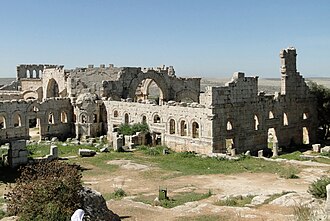
The Church of Saint Simeon Stylites (Qal'at Sim'an) near Aleppo was built in the 5th century around the pillar on which St. Simeon the Elder famously lived for 37 years in ascetic devotion. The cruciform basilica was one of the largest churches in the world when constructed and established the architectural model for many later churches. St. Simeon attracted thousands of pilgrims from across the Roman world, and his extreme asceticism influenced Christian monastic traditions for centuries. The remains of his pillar still stand at the center of the complex.
History & Origins
Constructed around 475 CE, the church complex was built to honor St. Simeon Stylites, who famously lived atop a pillar for 37 years from 423 to 459 CE as an extreme ascetic practice. The cruciform architectural plan, consisting of four basilicas arranged around the central pillar, was innovative and influenced later Byzantine church designs. The complex was one of the largest churches of its time, accommodating thousands of pilgrims who traveled to witness the site of Simeon's devotion. The construction was commissioned by Emperor Leo I and completed under the supervision of Bishop Theodoret of Cyrrhus. Although partially ruined by earthquakes and conflicts over centuries, the site remains an important archaeological and religious landmark, designated a UNESCO World Heritage Site. Excavations have revealed mosaics and inscriptions that provide insight into early Christian monasticism and pilgrimage practices.
Spiritual Significance
The church commemorates St. Simeon's asceticism, which inspired early Christian monastic traditions emphasizing physical endurance and spiritual purification. Pilgrims historically ascended to the base of the pillar where Simeon prayed, often performing vigils and recitations of Psalms as recorded in early Syriac Christian liturgy. Feast days on September 1st celebrate his life, involving processions and the chanting of hymns composed by St. Romanos the Melodist. The cruciform layout symbolizes the cross, reinforcing theological doctrines of sacrifice and resurrection central to Eastern Orthodox belief. The site also served as a center for pilgrimage healing rituals, where water collected near the pillar was believed to possess sanctifying properties. The church remains a testament to the impact of stylitism on Christian spirituality and the enduring legacy of extreme ascetic practices.
Key Facts
- •St. Simeon lived atop a pillar for 37 years (423-459 CE)
- •Was one of the largest churches in the world when built
- •The cruciform plan influenced later church architecture
- •The base of St. Simeon's pillar remains at the center
- •Became a UNESCO World Heritage Site as part of Ancient Villages of Northern Syria
Location
Coordinates: 36.3336, 36.8442
Frequently Asked Questions
What religion is Church of Saint Simeon Stylites associated with?▾
Church of Saint Simeon Stylites is a Christianity holy site located in Syria. It was established c. 475 CE and is ranked #281 in our global directory of sacred sites.
When was Church of Saint Simeon Stylites established?▾
Church of Saint Simeon Stylites dates back to c. 475 CE. St. Simeon lived atop a pillar for 37 years (423-459 CE)
How many people visit Church of Saint Simeon Stylites each year?▾
Church of Saint Simeon Stylites receives approximately 20,000 visitors per year. Was one of the largest churches in the world when built
What is Church of Saint Simeon Stylites known for?▾
Ruins of the 5th-century church built around the pillar where St. Simeon lived for 37 years. Visitors come seeking pilgrimage, meditation, spiritual enlightenment, peace. The cruciform plan influenced later church architecture
Related Holy Sites
Sacred places connected by country, religion, and purpose

⛪Vatican City (St. Peter's Basilica)
The spiritual center of Roman Catholicism and home of the Pope.
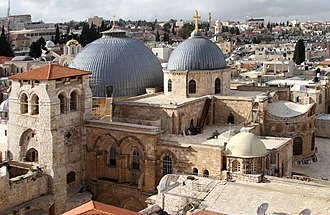
✝️Church of the Holy Sepulchre
The site where Jesus was crucified, buried, and resurrected.