
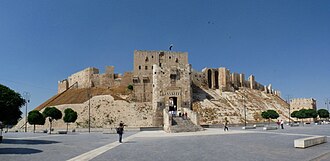
🏰 Aleppo Citadel
Syria
About This Sacred Site
The Citadel of Aleppo is a massive medieval fortified palace situated atop an artificial mound in the center of old Aleppo. Partially dating to the 3rd millennium BCE, the citadel contains the Mosque of Abraham (where Abraham is said to have milked his cow), a 12th-century palatial complex, and remains of earlier temples and churches. The citadel has been used by Greeks, Romans, Byzantines, Ayyubids, and Mamluks. Though damaged during the Syrian Civil War, it remains one of the most impressive medieval fortifications in the world.
Spiritual Significance
The Aleppo Citadel holds profound multi-faith spiritual significance, anchored by the Mosque of Abraham (Maqam Ibrahim), an ancient sanctuary believed to mark the site where the prophet Abraham prayed, as referenced in Islamic tradition and the Quran (Surah Al-Baqarah 2:124). Pilgrims often visit the maqam to perform dua (supplications) seeking blessings linked to Abrahamic heritage. The citadel's mound, occupied since the 3rd millennium BCE, reflects layers of religious history from pagan worship to Christian and Islamic practices, as evidenced by Byzantine churches and Umayyad-era structures found within. Annual festivals celebrating the Prophet's birthday (Mawlid) are held in Aleppo, with the citadel serving as a focal point for communal prayers. The site’s inclusion as a UNESCO World Heritage Site since 1986 underscores its theological importance across multiple faiths, serving as a symbol of shared spiritual lineage between Judaism, Christianity, and Islam. Rituals include night prayers during Ramadan within the mosque precincts, reinforcing the citadel’s ongoing role in Islamic devotional life.
Key Facts
- •UNESCO World Heritage Site as part of the Ancient City of Aleppo
- •The mound has been occupied since at least the 3rd millennium BCE
- •Contains the Mosque of Abraham (Maqam Ibrahim)
- •Significantly damaged during the Syrian Civil War (2012-2016)
- •One of the largest and oldest castles in the world
Location
Coordinates: 36.1986, 37.1614
Frequently Asked Questions
What religion is Aleppo Citadel associated with?▾
Aleppo Citadel is a Multi-faith holy site located in Syria. It was established c. 3000 BCE and is ranked #51 in our global directory of sacred sites.
When was Aleppo Citadel established?▾
Aleppo Citadel dates back to c. 3000 BCE. UNESCO World Heritage Site as part of the Ancient City of Aleppo
How many people visit Aleppo Citadel each year?▾
Aleppo Citadel receives approximately 100,000 visitors per year. The mound has been occupied since at least the 3rd millennium BCE
What is Aleppo Citadel known for?▾
One of the world's oldest and largest castles, housing mosques and a church within its walls. Visitors come seeking ancestral connection, protection, peace, guidance. Contains the Mosque of Abraham (Maqam Ibrahim)
Related Holy Sites
Sacred places connected by country, religion, and purpose
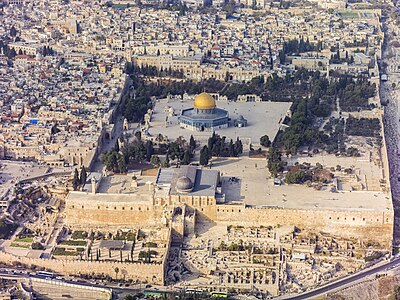
🕌Temple Mount / Al-Aqsa (Jerusalem)
Sacred to Judaism, Christianity, and Islam — the most contested holy site on Earth.
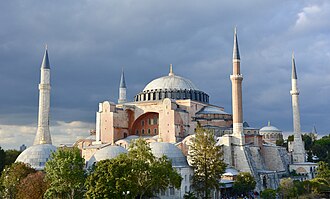
🏛️Hagia Sophia
A masterpiece that served as cathedral, mosque, and museum across centuries.
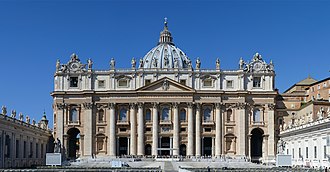
⛪Vatican City (St. Peter's Basilica)
The spiritual center of Roman Catholicism and home of the Pope.
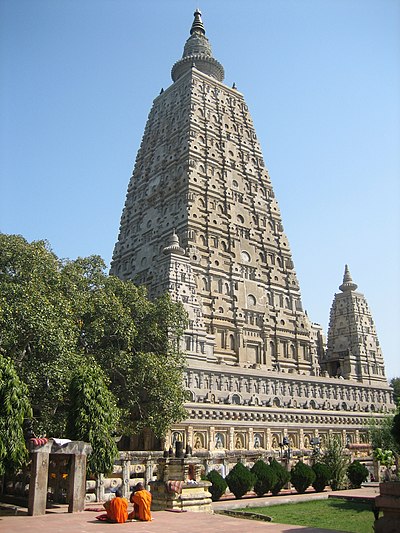
☸️Bodh Gaya (Mahabodhi Temple)
Where Siddhartha Gautama attained enlightenment and became the Buddha.

