⛪ Turku Cathedral
Finland
About This Sacred Site
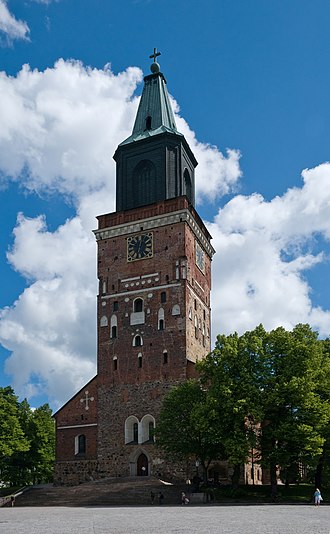
Turku Cathedral, situated on the banks of the Aura River in Finland’s oldest city, is the Mother Church of the Evangelical Lutheran Church of Finland. Originating around 1300, it is a prominent medieval structure combining Gothic and Romanesque elements. The cathedral’s towering spire and red brick façade are iconic features of Turku’s skyline. Inside, the cathedral houses an impressive altar, medieval murals, and numerous chapels dedicated to saints.
History & Origins
The origins of Turku Cathedral trace to the late 13th or early 14th century, evolving from a modest stone church to a grand cathedral over centuries. It became the seat of the Bishop of Turku and the religious heart of Finland during Swedish rule. The cathedral suffered damage from several fires, notably in 1827, but was restored and expanded. It played a critical role in the Reformation and the establishment of Lutheranism in Finland. The cathedral’s crypt contains tombs of medieval bishops and notable Finns, reinforcing its status as a sacred national symbol. Today, Turku Cathedral continues to serve as a vital religious and cultural landmark.
Spiritual Significance
Consecrated in 1300, the cathedral serves as the seat of the Archbishop of the Evangelical Lutheran Church of Finland, making it the central hub for Finland's Lutheran ecclesiastical authority. It hosts the annual celebration of Mikael Agricola Day on April 9th, honoring the father of literary Finnish and his translation of the New Testament, which is central to Finnish Lutheran identity. The cathedral's altar features a 14th-century crucifix and is the site of regular liturgical services following the Lutheran liturgy outlined in the Book of Concord. Pilgrims often visit during Christmas and Easter, participating in traditional Finnish hymns and the lighting of candles symbolizing Christ as the Light of the World. The cathedral's baptismal font continues to be used for infant baptisms, aligning with Lutheran sacramental theology emphasizing baptismal regeneration. Its role in national religious events, including ordinations and church synods, underscores its theological importance as a center for Lutheran doctrine and governance in Finland.
Key Facts
- •Consecrated in 1300, it is the seat of the Archbishop of the Evangelical Lutheran Church of Finland
- •The tower stands 101 meters tall and is a defining feature of the Turku skyline
- •Badly damaged in the Great Fire of Turku in 1827 and subsequently restored
- •The noon bell is broadcast on YLE Finnish radio every day
- •Houses the tomb of Queen Karin Månsdotter, the only Finnish-born queen of Sweden
Location
Coordinates: 60.4525, 22.2788
Frequently Asked Questions
What religion is Turku Cathedral associated with?▾
Turku Cathedral is a Christianity holy site located in Finland. It was established 1300 and is ranked #515 in our global directory of sacred sites.
When was Turku Cathedral established?▾
Turku Cathedral dates back to 1300. Consecrated in 1300, it is the seat of the Archbishop of the Evangelical Lutheran Church of Finland
How many people visit Turku Cathedral each year?▾
Turku Cathedral receives approximately 300,000 visitors per year. The tower stands 101 meters tall and is a defining feature of the Turku skyline
What is Turku Cathedral known for?▾
Finland's national shrine and mother church, a medieval cathedral in the country's oldest city. Visitors come seeking blessings, pilgrimage, guidance, ancestral connection. Badly damaged in the Great Fire of Turku in 1827 and subsequently restored
Related Holy Sites
Sacred places connected by country, religion, and purpose
⛪Vatican City (St. Peter's Basilica)
The spiritual center of Roman Catholicism and home of the Pope.
✝️Church of the Holy Sepulchre
The site where Jesus was crucified, buried, and resurrected.