☸️ Thiên Mụ Pagoda (Huế)
Vietnam
About This Sacred Site
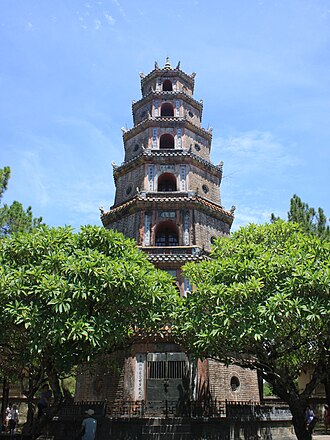
Thiên Mụ Pagoda (Pagoda of the Heavenly Lady) is a historic Buddhist pagoda on the banks of the Perfume River in Huế, the former imperial capital of Vietnam. Built in 1601, its iconic seven-story octagonal tower (Phước Duyên) rises 21 meters and is the tallest religious structure in Vietnam. According to legend, a celestial lady appeared on the hill and prophesied that a lord would build a pagoda to bring prosperity. The pagoda gained international attention in 1963 when its monk Thích Quảng Đức drove from here to his famous self-immolation in Saigon.
History & Origins
Established in 1601 under the Nguyễn Lords' rule, Thiên Mụ Pagoda was commissioned by Lord Nguyễn Hoàng, the first Nguyễn ruler of the region, to symbolize the prosperity of the Nguyễn dynasty in central Vietnam. The iconic seven-story Phước Duyên Tower was added in 1844 by Emperor Thiệu Trị, making it the tallest religious structure in Vietnam at 21 meters. The pagoda stands on Hà Khê hill overlooking the Perfume River in Huế, a location chosen for its auspicious feng shui qualities. Throughout the 19th century, the site underwent multiple renovations, including restoration after damage during the French colonial period. In 1963, the pagoda gained international attention when the monk Thích Quảng Đức self-immolated in Saigon, an event linked to the Buddhist protests inspired by the pagoda's community. Today, it remains an active religious site under the management of the Buddhist Sangha of Vietnam and a protected cultural heritage monument.
Spiritual Significance
Thiên Mụ Pagoda serves as a central hub for Buddhist worship in central Vietnam, hosting the annual Vu Lan festival, which honors deceased ancestors, reflecting the Mahayana Buddhist emphasis on filial piety. Monks at the pagoda follow the Theravāda and Mahāyāna traditions, reciting sutras such as the Lotus Sutra and practicing meditation rituals. The towering Phước Duyên pagoda is a pilgrimage target symbolizing the seven steps to enlightenment, representing the seven levels of Buddhist spiritual attainment. Pilgrims often light incense and participate in chanting sessions at dawn, reflecting the pagoda's role in promoting mindfulness and compassion, core teachings found in the Dhammapada. The site also contains relics and statues dedicated to Avalokiteshvara, the Bodhisattva of compassion, reinforcing its theological importance in Vietnamese Buddhism.
Key Facts
- •Built in 1601, the seven-story tower is the tallest religious structure in Vietnam
- •Located on a hill overlooking the Perfume River in Huế
- •The monk Thích Quảng Đức departed from here for his 1963 self-immolation
- •The Austin Westminster car used by Thích Quảng Đức is preserved at the pagoda
- •Part of the UNESCO-listed Complex of Huế Monuments
Location
Coordinates: 16.4536, 107.5440
Frequently Asked Questions
What religion is Thiên Mụ Pagoda (Huế) associated with?▾
Thiên Mụ Pagoda (Huế) is a Buddhism holy site located in Vietnam. It was established 1601 and is ranked #387 in our global directory of sacred sites.
When was Thiên Mụ Pagoda (Huế) established?▾
Thiên Mụ Pagoda (Huế) dates back to 1601. Built in 1601, the seven-story tower is the tallest religious structure in Vietnam
How many people visit Thiên Mụ Pagoda (Huế) each year?▾
Thiên Mụ Pagoda (Huế) receives approximately 500,000+ visitors per year. Located on a hill overlooking the Perfume River in Huế
What is Thiên Mụ Pagoda (Huế) known for?▾
A 400-year-old pagoda on the Perfume River, the tallest religious building in Vietnam. Visitors come seeking peace, spiritual enlightenment, guidance, meditation. The monk Thích Quảng Đức departed from here for his 1963 self-immolation
Related Holy Sites
Sacred places connected by country, religion, and purpose
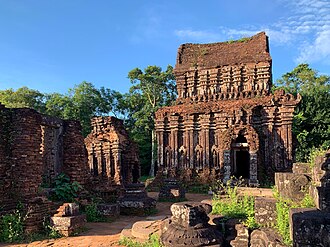
🏛️Mỹ Sơn Sanctuary
A UNESCO-listed complex of Hindu temples built by the Champa civilization in central Vietnam.
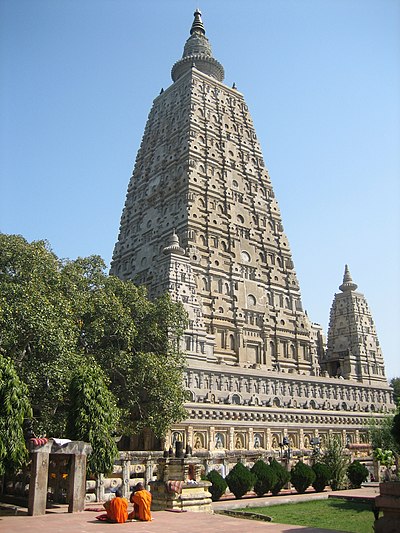
☸️Bodh Gaya (Mahabodhi Temple)
Where Siddhartha Gautama attained enlightenment and became the Buddha.
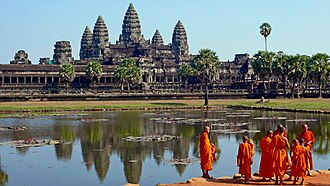
🛕Angkor Wat
The largest religious monument in the world, originally Hindu then Buddhist.