🏛️ Temple of Heaven (Tiantan)
China
About This Sacred Site
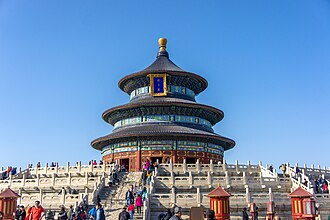
The Temple of Heaven in Beijing is a magnificent complex of religious buildings where Ming and Qing dynasty emperors performed annual ceremonies to pray to Heaven for good harvests. Built in 1420, the complex covers 273 hectares — nearly four times the size of the Forbidden City. The Hall of Prayer for Good Harvests, a triple-gabled circular building standing 38 meters tall, was constructed entirely without nails. The complex embodies the ancient Chinese cosmological concept that Heaven is round and Earth is square, reflected in its architectural design.
History & Origins
Constructed in 1420 CE during the reign of Emperor Yongle of the Ming dynasty, the complex spans 273 hectares and was designed for imperial ceremonies praying for good harvests. The Hall of Prayer for Good Harvests is notable for its triple-gabled circular structure built entirely without nails, showcasing Ming architectural ingenuity. Subsequent renovations occurred during the Qing dynasty, notably under Emperor Qianlong in the 18th century, who enhanced the surrounding park and added the Echo Wall. The site was used annually by emperors of Ming and Qing dynasties for the Heaven Worship Ceremony, symbolizing the emperor's role as Son of Heaven. After the fall of the Qing dynasty in 1911, the complex was preserved as a public park and designated a UNESCO World Heritage Site in 1998 for its cultural significance and architectural uniqueness.
Spiritual Significance
Dedicated to the worship of Tian, the supreme heaven deity in Taoism, the complex embodies cosmological principles integral to Chinese state rituals, where emperors performed prayers for bountiful harvests and harmony between heaven and earth. The Hall of Prayer for Good Harvests hosted the annual winter solstice ceremony, where the emperor offered sacrifices following strict liturgical protocols derived from the Zhou Li and Liji classics. The circular design represents heaven, while surrounding square terraces symbolize earth, reflecting Taoist cosmology. The Echo Wall allows whispered prayers to travel clearly across distances, enabling pilgrims and officials to communicate with the divine through sound. The Temple of Heaven remains a site for Taoist practitioners and pilgrims who engage in Tai Chi and meditation within its grounds, maintaining continuity with its spiritual heritage.
Key Facts
- •Built in 1420 during the Ming dynasty, covering 273 hectares
- •The Hall of Prayer for Good Harvests was built entirely without nails
- •The Echo Wall allows whispers to travel clearly along its 65-meter circumference
- •Emperors fasted for three days before performing ceremonies here
- •UNESCO World Heritage Site since 1998
Location
Coordinates: 39.8822, 116.4066
Frequently Asked Questions
What religion is Temple of Heaven (Tiantan) associated with?▾
Temple of Heaven (Tiantan) is a Taoism holy site located in China. It was established 1420 CE and is ranked #168 in our global directory of sacred sites.
When was Temple of Heaven (Tiantan) established?▾
Temple of Heaven (Tiantan) dates back to 1420 CE. Built in 1420 during the Ming dynasty, covering 273 hectares
How many people visit Temple of Heaven (Tiantan) each year?▾
Temple of Heaven (Tiantan) receives approximately 8+ million visitors per year. The Hall of Prayer for Good Harvests was built entirely without nails
What is Temple of Heaven (Tiantan) known for?▾
A masterpiece of Ming dynasty architecture where emperors prayed for good harvests. Visitors come seeking prosperity, blessings, purification, ancestral connection. The Echo Wall allows whispers to travel clearly along its 65-meter circumference
Related Holy Sites
Sacred places connected by country, religion, and purpose

🏔️Mount Kailash
Sacred to four religions, considered the center of the universe.
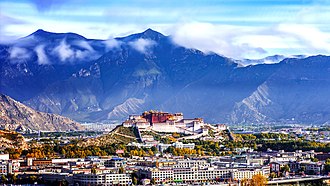
🏯Potala Palace
Former winter residence of the Dalai Lama, towering over Lhasa.