
👑 Sultanate of Damagaram
Niger
About This Sacred Site
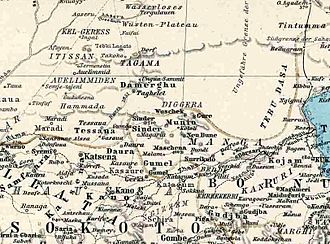
The Sultanate of Damagaram, based in Zinder, was one of the most powerful states in the central Sahel during the 19th century. The Sultan's palace complex remains the seat of traditional authority and Islamic governance in the region. The palace, with its elaborate Hausa architectural style, serves as a center for Islamic festivals, dispute resolution according to Sharia, and preservation of Hausa-Islamic cultural traditions. The annual Sallah celebrations held at the palace, marking the end of Ramadan, feature elaborate cavalry charges and are among the most spectacular traditional ceremonies in West Africa.
History & Origins
The Sultanate of Damagaram was founded around 1731 by Mallam Sulaiman, a Kanuri-speaking warrior, after displacing earlier Hausa rulers in the Zinder region. By the mid-19th century under Sultan Tanimoune, Damagaram became the dominant military and commercial power of the central Sahel, controlling trans-Saharan trade routes linking Tripoli to Kano. The French colonial army captured Zinder in 1899 after the Battle of Tirmini, and the city served as capital of French Niger until 1926 when the seat moved to Niamey. Despite colonial rule, the Sultan retained religious authority over Islamic courts and customary law. The current palace complex was rebuilt in the early 20th century in traditional Hausa banco (mudbrick) style, featuring ornate geometric relief carvings on its facades. After Niger's independence in 1960, the Sultanate was preserved as a traditional chieftaincy, and the 39th Sultan continues to preside over Islamic festivals and mediate community disputes.
Spiritual Significance
The Sultanate of Damagaram serves as the highest traditional Islamic authority in the Zinder region, where the Sultan functions as both a spiritual leader and a custodian of Maliki jurisprudence. Friday prayers led by the Sultan at the palace mosque draw hundreds of worshippers and reinforce his role as Amir al-Mu'minin (Commander of the Faithful) for the local community. The annual Sallah (Eid al-Fitr) celebration is the spiritual pinnacle of the year: after dawn prayers, the Sultan leads a procession on horseback from the palace to the prayer grounds, accompanied by mounted guards in medieval chain mail and turbans, performing a fantasia cavalry charge that symbolizes the defense of the faith. The palace also houses a Quranic school where young men study tajweed (Quran recitation) and fiqh (Islamic jurisprudence) under scholars appointed by the Sultan. During Mawlid (the Prophet's birthday), the palace courtyard hosts all-night recitations of qasidas (devotional poems) in Hausa and Arabic. For the people of Zinder, the Sultan's blessing is sought for marriages, naming ceremonies, and harvest seasons, making the palace the spiritual heartbeat of daily life in the region.
Key Facts
- •Zinder was the capital of the French colony of Niger until 1926
- •The Sultanate was one of the most powerful Sahelian states in the 19th century
- •The palace features distinctive Hausa architectural decoration
- •Annual Sallah celebrations feature dramatic cavalry displays
- •The Sultan continues to serve as a traditional and spiritual authority
Location
Coordinates: 13.8000, 8.9833
Frequently Asked Questions
What religion is Sultanate of Damagaram associated with?▾
Sultanate of Damagaram is a Islam holy site located in Niger. It was established c. 1731 and is ranked #971 in our global directory of sacred sites.
When was Sultanate of Damagaram established?▾
Sultanate of Damagaram dates back to c. 1731. Zinder was the capital of the French colony of Niger until 1926
How many people visit Sultanate of Damagaram each year?▾
Sultanate of Damagaram receives approximately 20,000 visitors per year. The Sultanate was one of the most powerful Sahelian states in the 19th century
What is Sultanate of Damagaram known for?▾
The historic palace of the Sultan of Zinder, a center of Islamic authority in Niger. Visitors come seeking ancestral connection, guidance, protection. The palace features distinctive Hausa architectural decoration
Related Holy Sites
Sacred places connected by country, religion, and purpose
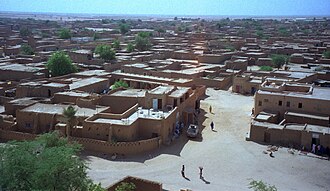
🕌Agadez Grand Mosque
A striking Sudano-Sahelian mud-brick mosque with the tallest minaret of its kind.
⛪Vatican City (St. Peter's Basilica)
The spiritual center of Roman Catholicism and home of the Pope.
☸️Bodh Gaya (Mahabodhi Temple)
Where Siddhartha Gautama attained enlightenment and became the Buddha.

