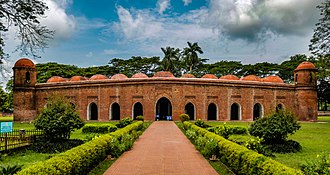
🕌 Sixty Dome Mosque (Bagerhat)
Bangladesh
About This Sacred Site
The Sixty Dome Mosque (Shat Gombuj Masjid) in Bagerhat, Bangladesh, is the largest intact mosque from the Bengal Sultanate period, built around 1459 by Khan Jahan Ali. Despite its name, it actually has 77 domes supported by 60 stone pillars, displaying an impressive architectural feat. The mosque’s thick walls, pointed arches, and terracotta ornamentation blend Islamic and Bengali artistic traditions. It serves as a major center for Muslim worship and community activities and is recognized as a UNESCO World Heritage Site. The mosque’s design reflects the advanced engineering and aesthetic sensibilities of 15th-century Bengal, making it a landmark of Islamic architecture in South Asia.
Spiritual Significance
The Sixty Dome Mosque, built by the 15th-century saint-warrior Khan Jahan Ali, functions as a major center for congregational prayers and Islamic learning in the Bengal Sultanate tradition. Despite its name, the mosque has 77 domes and seven arched entrances, facilitating communal worship as prescribed in the Hanafi school of Sunni Islam dominant in the region. The large central prayer hall accommodates hundreds of worshippers, enabling the performance of the five daily Salah prayers and special congregational prayers during Eid al-Fitr and Eid al-Adha festivals. The mosque's mihrab faces Mecca, orienting worshippers for Qibla, and its thick terracotta walls provide acoustic amplification for Quranic recitations. The mosque complex historically served as a madrasa, where students studied the Quran and Hadith, reflecting the educational role emphasized in Islamic theology. Annual urs commemorations celebrate Khan Jahan Ali as a wali (saint), attracting pilgrims who engage in dhikr (remembrance of God) and Sufi devotional practices, reinforcing the mosque's spiritual significance as both a worship and mystical center.
Key Facts
- •UNESCO World Heritage Site since 1985
- •Despite its name, the mosque actually has 77 domes
- •Built by Khan Jahan Ali, a revered saint-warrior of the 15th century
- •The largest mosque from the Sultanate period in Bangladesh
- •Khan Jahan Ali's tomb nearby is a major pilgrimage site
Location
Coordinates: 22.6717, 89.7461
Frequently Asked Questions
What religion is Sixty Dome Mosque (Bagerhat) associated with?▾
Sixty Dome Mosque (Bagerhat) is a Islam holy site located in Bangladesh. It was established c. 1459 and is ranked #279 in our global directory of sacred sites.
When was Sixty Dome Mosque (Bagerhat) established?▾
Sixty Dome Mosque (Bagerhat) dates back to c. 1459. UNESCO World Heritage Site since 1985
How many people visit Sixty Dome Mosque (Bagerhat) each year?▾
Sixty Dome Mosque (Bagerhat) receives approximately 200,000+ visitors per year. Despite its name, the mosque actually has 77 domes
What is Sixty Dome Mosque (Bagerhat) known for?▾
A UNESCO-listed 15th-century mosque city built by Khan Jahan Ali in the Sundarbans region. Visitors come seeking pilgrimage, spiritual enlightenment, blessings, peace. Built by Khan Jahan Ali, a revered saint-warrior of the 15th century
Related Holy Sites
Sacred places connected by country, religion, and purpose
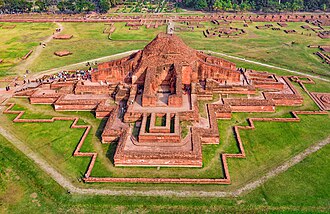
☸️Somapura Mahavihara (Paharpur)
A UNESCO-listed 8th-century Buddhist monastery, one of the largest in the Indian subcontinent.
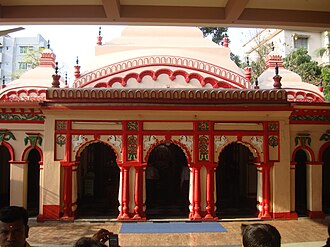
🙏Dhakeshwari Temple (Dhaka)
The national temple of Bangladesh, dedicated to the goddess Dhakeshwari, protector of Dhaka.