
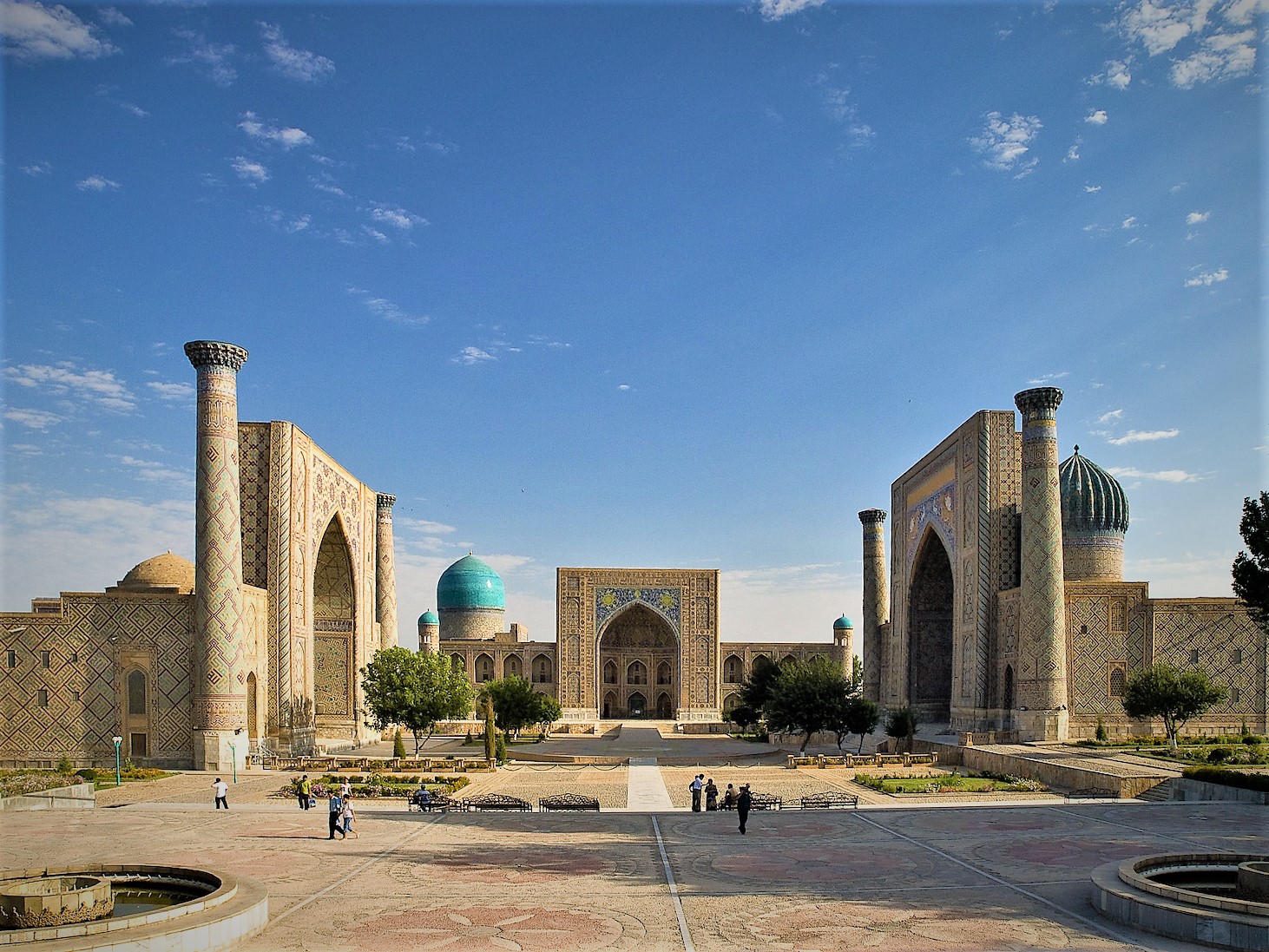
🕌 Registan (Samarkand)
Uzbekistan
About This Sacred Site
The Registan in Samarkand is one of the most spectacular public squares in the Islamic world, framed by three grand madrasas (Islamic schools) with soaring portals, minarets, and dazzling tilework. The Ulugh Beg Madrasa (1420), the Sher-Dor Madrasa (1636), and the Tilya-Kori Madrasa (1660) create an ensemble of monumental architecture that represents the zenith of Central Asian Islamic art. The square was the heart of the Timurid Empire under Tamerlane and his successors, serving as a center of learning and worship.
History & Origins
The Registan in Samarkand, established prominently with the Ulugh Beg Madrasa in 1420 CE, is one of the most magnificent public squares in the Islamic world. Commissioned by Ulugh Beg, the Timurid ruler and astronomer, the complex was designed to serve as a center for education, jurisprudence, and public gatherings. The square is framed by three grand madrasas: Ulugh Beg Madrasa (1420), Sher-Dor Madrasa (1619), and Tilya-Kori Madrasa (1646), each showcasing intricate tilework, calligraphy, and majestic portals. The Registan became a symbol of Timurid architectural innovation, blending Persian, Mongol, and Islamic influences. Over centuries, it has witnessed political events, celebrations, and scholarly pursuits, remaining a cultural heart of Central Asia and a UNESCO World Heritage Site.
Spiritual Significance
The Registan in Samarkand, dominated by the Ulugh Beg Madrasa established in 1420 CE, was a renowned center for Islamic learning, particularly within the Timurid Empire. Ulugh Beg, a Timurid ruler and astronomer, founded the madrasa to advance Islamic sciences, including Quranic studies and astronomy, attracting scholars across the Muslim world. Pilgrims and students traditionally engage in Quranic recitation within the madrasas' courtyards during Ramadan, emphasizing memorization and interpretation aligned with Hanafi jurisprudence prevalent in Central Asia. The complex hosts celebrations of Mawlid, the Prophet Muhammad's birthday, where gatherings include recitations from classical Islamic texts such as Sahih al-Bukhari. The site's integration into the UNESCO World Heritage listing of Samarkand underscores its role as a spiritual and educational beacon, linking the sacred study of the Quran with Timurid architectural grandeur. The three madrasas, spanning the 15th to 17th centuries, embody evolving Islamic educational traditions, blending Sufi doctrines with orthodox Sunni teachings.
Key Facts
- •Three madrasas spanning the 15th to 17th centuries
- •The Ulugh Beg Madrasa was one of the best Islamic universities
- •UNESCO World Heritage Site as part of Samarkand
- •The Sher-Dor Madrasa features rare figural depictions on its facade
- •The Tilya-Kori Madrasa's interior is covered in gold leaf
Location
Coordinates: 39.6547, 66.9758
Frequently Asked Questions
What religion is Registan (Samarkand) associated with?▾
Registan (Samarkand) is a Islam holy site located in Uzbekistan. It was established 1420 CE (Ulugh Beg Madrasa) and is ranked #266 in our global directory of sacred sites.
When was Registan (Samarkand) established?▾
Registan (Samarkand) dates back to 1420 CE (Ulugh Beg Madrasa). Three madrasas spanning the 15th to 17th centuries
How many people visit Registan (Samarkand) each year?▾
Registan (Samarkand) receives approximately 1.5 million visitors per year. The Ulugh Beg Madrasa was one of the best Islamic universities
What is Registan (Samarkand) known for?▾
One of the finest public squares in the Islamic world, framed by three grand madrasas. Visitors come seeking spiritual enlightenment, ancestral connection, peace, guidance. UNESCO World Heritage Site as part of Samarkand
Related Holy Sites
Sacred places connected by country, religion, and purpose
🕌Hazrat Imam Complex (Tashkent)
Tashkent's spiritual center, housing one of the world's oldest Quran manuscripts.
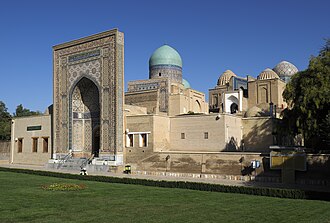
🕌Shah-i-Zinda
A stunning avenue of mausoleums in Samarkand, known as the 'Street of the Living King.'
⛪Vatican City (St. Peter's Basilica)
The spiritual center of Roman Catholicism and home of the Pope.

🕌Temple Mount / Al-Aqsa (Jerusalem)
Sacred to Judaism, Christianity, and Islam — the most contested holy site on Earth.

