🕌 Putra Mosque (Putrajaya)
Malaysia
About This Sacred Site
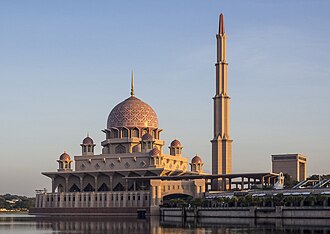
Constructed in 1999, Putra Mosque in Putrajaya features pink-tinted granite quarried locally, giving its walls a distinctive rosy hue. The mosque’s 116-meter minaret ranks among the tallest in Southeast Asia, inspired by the design of the Sheikh Lotfollah Mosque in Isfahan, Iran, reflecting Safavid-era Persian architectural elements. Its large prayer hall accommodates up to 15,000 worshippers, with intricate calligraphic inscriptions of Quranic verses decorating the interior dome. The mosque complex includes a reflecting pool and surrounding gardens that complement the building’s harmonious symmetry, situated beside Putrajaya Lake, enhancing its serene atmosphere. The mosque’s use of geometric patterns and arabesques exemplifies traditional Islamic art infused with modern Malaysian design sensibilities.
History & Origins
Construction of the Putra Mosque began in 1997 and was completed in 1999 as part of the development of Putrajaya, Malaysia's planned federal administrative center. Designed by architect Tengku Ahmad Rithauddeen under the supervision of the Malaysian Public Works Department, the mosque was intended to serve the new administrative city’s population. It integrates influences from Persian, Arab, and Malay Islamic architecture, reflecting Malaysia’s multicultural Islamic heritage. Since its inauguration, the mosque has been a focal point for religious activities and state functions, symbolizing the fusion of tradition and modernity in Malaysia’s evolving capital.
Spiritual Significance
Putra Mosque, inaugurated in 1999, serves as a central site for Sunni Islamic worship in Malaysia, hosting the five daily prayers and larger congregational gatherings on Fridays in accordance with the Jumu'ah prayer tradition. Its design draws theological inspiration from Persian mosque architecture, symbolizing the unity of the Ummah through its spatial arrangement and the minaret’s prominence, which functions as a call to prayer (adhan) site. The mosque is a focal point during Ramadan for Iftar and Taraweeh prayers, with sermons often referencing Quranic surahs such as Al-Baqarah and Al-Mulk. It also facilitates Islamic educational programs that include Qur’anic memorization (Hifz) classes and Tafsir lectures based on classical Sunni scholars like Imam Al-Ghazali. Pilgrims and worshippers engage in ablutions at the mosque’s wudu facilities before prayers, following Islamic jurisprudence regarding ritual purity.
Key Facts
- •Built in 1999 with pink-tinted granite from local quarries
- •Inspired by Safavid-era Persian mosque architecture
- •The 116-meter minaret is one of the tallest in Southeast Asia
- •Can accommodate 15,000 worshippers
- •Located on the shores of the scenic Putrajaya Lake
Location
Coordinates: 2.9361, 101.6939
Frequently Asked Questions
What religion is Putra Mosque (Putrajaya) associated with?▾
Putra Mosque (Putrajaya) is a Islam holy site located in Malaysia. It was established 1999 and is ranked #812 in our global directory of sacred sites.
When was Putra Mosque (Putrajaya) established?▾
Putra Mosque (Putrajaya) dates back to 1999. Built in 1999 with pink-tinted granite from local quarries
How many people visit Putra Mosque (Putrajaya) each year?▾
Putra Mosque (Putrajaya) receives approximately 500,000+ visitors per year. Inspired by Safavid-era Persian mosque architecture
What is Putra Mosque (Putrajaya) known for?▾
A stunning pink-granite mosque on the Putrajaya lakefront, the principal mosque of Malaysia's administrative capital. Visitors come seeking pilgrimage, peace, blessings, meditation. The 116-meter minaret is one of the tallest in Southeast Asia
Related Holy Sites
Sacred places connected by country, religion, and purpose
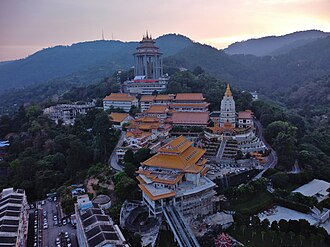
☸️Kek Lok Si Temple (Penang)
The largest Buddhist temple in Malaysia, a stunning multi-tiered complex in the hills of Penang.
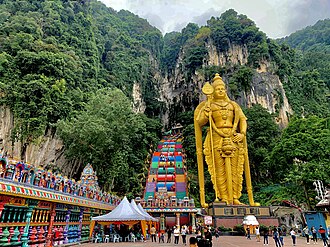
🙏Batu Caves
A limestone cave temple complex with a 42.7-meter golden Lord Murugan statue, Malaysia's main Hindu shrine.