🙏 Mahamuni Buddha Temple
Myanmar
About This Sacred Site
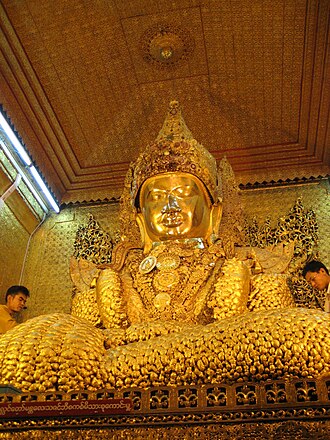
The Mahamuni Buddha Temple in Mandalay houses one of the most revered Buddha images in Myanmar. The Mahamuni image, believed to be one of only five likenesses made during the Buddha's lifetime, is now thickly encrusted with layers of gold leaf applied by countless devotees over centuries, giving it a lumpy, irregular appearance. The statue originally came from the Arakan region and was brought to Mandalay by King Bodawpaya in 1784. Every morning at 4:30 AM, monks perform a face-washing ceremony for the image, a ritual that draws large crowds of worshippers.
History & Origins
The current Mahamuni Buddha Temple in Mandalay was constructed in 1784 CE under King Bodawpaya of the Konbaung dynasty, replacing an earlier shrine believed to house the original Mahamuni Buddha image. The statue itself is believed to have been cast during the Buddha’s lifetime and brought to Myanmar in the 1st century CE, making it one of only five such images. Over centuries, the statue has been coated with layers of gold leaf applied by devotees, causing it to increase by approximately 15 centimeters in thickness, a unique physical testament to ongoing veneration. The temple complex was expanded in the 19th century with the addition of assembly halls and monastic quarters, supporting its function as an active religious center. Despite damage during World War II, restoration efforts preserved its teakwood carvings and gilded embellishments, maintaining its status as a pilgrimage destination.
Spiritual Significance
The temple’s Buddha image is a focal point for daily ritual washing and gold leaf application by both monks and laypeople, practices rooted in the Theravada tradition that symbolize purification and devotion. The Mahamuni image is central to the annual pagoda festival held in February, during which extensive chanting of the Abhidhamma Pitaka occurs alongside offerings of flowers, candles, and food. Pilgrims perform circumambulation as a meritorious act described in the Visuddhimagga, intending to accrue positive karma. The temple serves as a site for meditation instruction and Dhamma talks led by senior monks, reinforcing doctrinal teachings. The presence of the image, believed to embody the Buddha’s spiritual essence, makes the temple a powerful locus for intercessory prayer and pilgrimage in Myanmar Buddhism.
Key Facts
- •The Buddha image is believed to be one of only five made during the Buddha's lifetime
- •Layers of gold leaf have made the statue approximately 15 cm thicker than the original
- •Monks wash the Buddha's face every morning at 4:30 AM in a sacred ritual
- •The original statue was cast in the Arakan kingdom around 554 BCE according to tradition
- •Six bronze Khmer figures in the courtyard are believed to have healing powers when touched
Location
Coordinates: 21.9200, 96.0700
Frequently Asked Questions
What religion is Mahamuni Buddha Temple associated with?▾
Mahamuni Buddha Temple is a Buddhism holy site located in Myanmar. It was established 1784 CE (current temple) and is ranked #698 in our global directory of sacred sites.
When was Mahamuni Buddha Temple established?▾
Mahamuni Buddha Temple dates back to 1784 CE (current temple). The Buddha image is believed to be one of only five made during the Buddha's lifetime
How many people visit Mahamuni Buddha Temple each year?▾
Mahamuni Buddha Temple receives approximately 1+ million visitors per year. Layers of gold leaf have made the statue approximately 15 cm thicker than the original
What is Mahamuni Buddha Temple known for?▾
Home to one of Myanmar's most venerated Buddha images, thickly encrusted with gold leaf. Visitors come seeking blessings, healing, pilgrimage, protection. Monks wash the Buddha's face every morning at 4:30 AM in a sacred ritual
Related Holy Sites
Sacred places connected by country, religion, and purpose
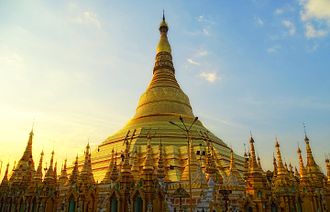
🪷Shwedagon Pagoda
Myanmar's most sacred Buddhist pagoda, gilded with 60 tons of gold.
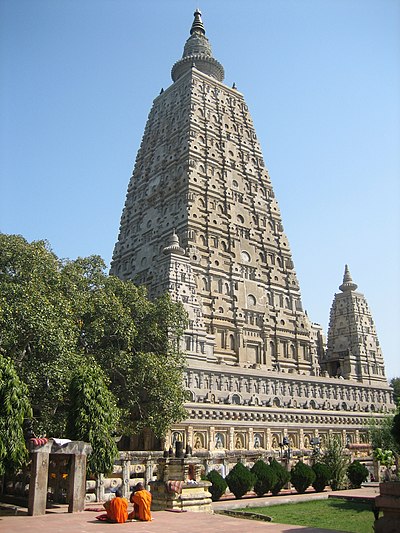
☸️Bodh Gaya (Mahabodhi Temple)
Where Siddhartha Gautama attained enlightenment and became the Buddha.
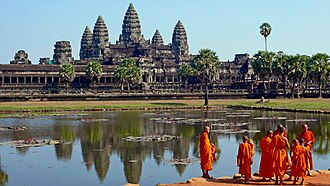
🛕Angkor Wat
The largest religious monument in the world, originally Hindu then Buddhist.