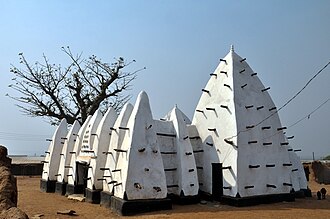
🕌 Larabanga Mosque
Ghana
About This Sacred Site
The Larabanga Mosque, located near Mole National Park in Ghana's Savannah Region, is one of West Africa's oldest mosques, dating back to 1421. Built in the Sudano-Sahelian architectural style, it features mud walls, wooden beams, and distinctive pyramidal towers. The mosque is a vital place of worship and Islamic education for the local community and is revered for its historical and spiritual significance, attracting visitors interested in Islamic heritage and traditional architecture.
Spiritual Significance
Constructed in 1421, the Larabanga Mosque stands as one of West Africa’s oldest Islamic places of worship, exemplifying the Sudano-Sahelian architectural style characterized by mud walls, timber beams, and protruding wooden stakes that facilitate annual replastering rituals vital for its preservation. The mosque houses a Quran traditionally believed to date back to the early 15th century, regarded by local Muslims as imbued with barakah (blessings), and is kept under strict custodial care by the mosque’s imam. Religious practices include daily Salat prayers performed facing Mecca, with congregants gathering for Jumu'ah (Friday prayers) that reinforce community bonds and Islamic teachings from the Maliki school of jurisprudence prevalent in the region. The mosque’s founding is attributed to Islamic scholars who propagated Islam through trans-Saharan trade routes, making it a pilgrimage site for adherents seeking spiritual merit and historical connection. Annual festivals marking Mawlid (the Prophet Muhammad’s birthday) involve Quranic recitations and communal feasts, highlighting the mosque’s role as a center for religious education and cultural identity among Ghana’s Muslim population.
Key Facts
- •Traditionally dated to 1421, making it one of West Africa's oldest mosques
- •Built in the Sudano-Sahelian mud-and-timber style
- •Houses a Quran believed by local tradition to have descended from heaven
- •Located near Mole National Park, Ghana's largest wildlife reserve
- •Known as the 'Mecca of West Africa' by some local Muslims
Location
Coordinates: 9.2167, -1.8500
Frequently Asked Questions
What religion is Larabanga Mosque associated with?▾
Larabanga Mosque is a Islam holy site located in Ghana. It was established 1421 and is ranked #537 in our global directory of sacred sites.
When was Larabanga Mosque established?▾
Larabanga Mosque dates back to 1421. Traditionally dated to 1421, making it one of West Africa's oldest mosques
How many people visit Larabanga Mosque each year?▾
Larabanga Mosque receives approximately 50,000+ visitors per year. Built in the Sudano-Sahelian mud-and-timber style
What is Larabanga Mosque known for?▾
One of the oldest mosques in West Africa, built in the Sudano-Sahelian style. Visitors come seeking pilgrimage, blessings, guidance, peace. Houses a Quran believed by local tradition to have descended from heaven
Related Holy Sites
Sacred places connected by country, religion, and purpose