🗼 Kalon Minaret and Mosque (Bukhara)
Uzbekistan
About This Sacred Site
The Kalon Minaret in Bukhara, standing 48 meters tall, was built in 1127 CE and is one of the most iconic monuments of Central Asian Islam. According to legend, Genghis Khan was so impressed by the minaret that he ordered it spared when he destroyed Bukhara in 1220. The adjacent Kalon Mosque, rebuilt in the 16th century, can accommodate 12,000 worshippers. Together with the Mir-i Arab Madrasa opposite, the Poi-Kalon complex forms one of the most magnificent architectural ensembles in the Islamic world.
History & Origins
The Kalon Minaret was constructed in 1127 CE by the architect Bako, commissioned by the Karakhanid ruler Arslan Khan. Standing 48 meters tall, it served as both a call to prayer tower and a watchtower, showcasing advanced brickwork techniques including decorative bands of Kufic inscriptions. The minaret remarkably survived the 1220 CE Mongol invasion when Genghis Khan ordered the destruction of Bukhara but spared this structure, reportedly impressed by its grandeur. The adjacent Kalon Mosque, built later in the 16th century under the Shaybanid dynasty, was designed to accommodate up to 12,000 worshippers, reflecting Bukhara's importance as a religious center. The complex underwent restoration during the Soviet era to preserve its intricate tilework and inscriptions. Its placement in Bukhara's historic center integrates it into the Silk Road's spiritual and cultural heritage. The minaret's tapering silhouette has influenced Islamic architecture throughout Central Asia.
Spiritual Significance
The Kalon Minaret and Mosque complex serves as a focal point for Islamic worship and community gathering in Bukhara, with the minaret historically used for the adhan, or call to prayer, five times daily as prescribed in the Quran. The mosque accommodates large congregations during Jummah prayers and Islamic holidays like Eid al-Fitr and Eid al-Adha, reinforcing its role in communal spiritual life. Pilgrims and worshippers observe ritual cleansing in the mosque's ablution areas before prayers, reflecting adherence to Islamic purity laws. The site is a pilgrimage destination associated with Sufi saints of Bukhara, and it hosts annual festivals celebrating the Prophet Muhammad's birth, with recitations from the Quran and sermons referencing the Hanafi madhhab. The minaret's survival through invasions symbolizes divine protection, inspiring local theological interpretations of faith resilience. The mosque's vast prayer hall facilitates dhikr ceremonies, emphasizing remembrance of God through repetitive chanting, a Sufi practice prevalent in the region.
Key Facts
- •Built in 1127 CE, standing 48 meters tall
- •Legend says Genghis Khan spared it during the destruction of Bukhara
- •The adjacent mosque can accommodate 12,000 worshippers
- •Bukhara was one of the leading centers of Islamic scholarship
- •The Mir-i Arab Madrasa opposite is still an active Islamic seminary
Location
Coordinates: 39.7753, 64.4147
Frequently Asked Questions
What religion is Kalon Minaret and Mosque (Bukhara) associated with?▾
Kalon Minaret and Mosque (Bukhara) is a Islam holy site located in Uzbekistan. It was established 1127 CE and is ranked #600 in our global directory of sacred sites.
When was Kalon Minaret and Mosque (Bukhara) established?▾
Kalon Minaret and Mosque (Bukhara) dates back to 1127 CE. Built in 1127 CE, standing 48 meters tall
How many people visit Kalon Minaret and Mosque (Bukhara) each year?▾
Kalon Minaret and Mosque (Bukhara) receives approximately 600,000 visitors per year. Legend says Genghis Khan spared it during the destruction of Bukhara
What is Kalon Minaret and Mosque (Bukhara) known for?▾
A 12th-century minaret in Bukhara so magnificent that Genghis Khan spared it from destruction. Visitors come seeking pilgrimage, spiritual enlightenment, peace, guidance. The adjacent mosque can accommodate 12,000 worshippers
Related Holy Sites
Sacred places connected by country, religion, and purpose
🕌Hazrat Imam Complex (Tashkent)
Tashkent's spiritual center, housing one of the world's oldest Quran manuscripts.
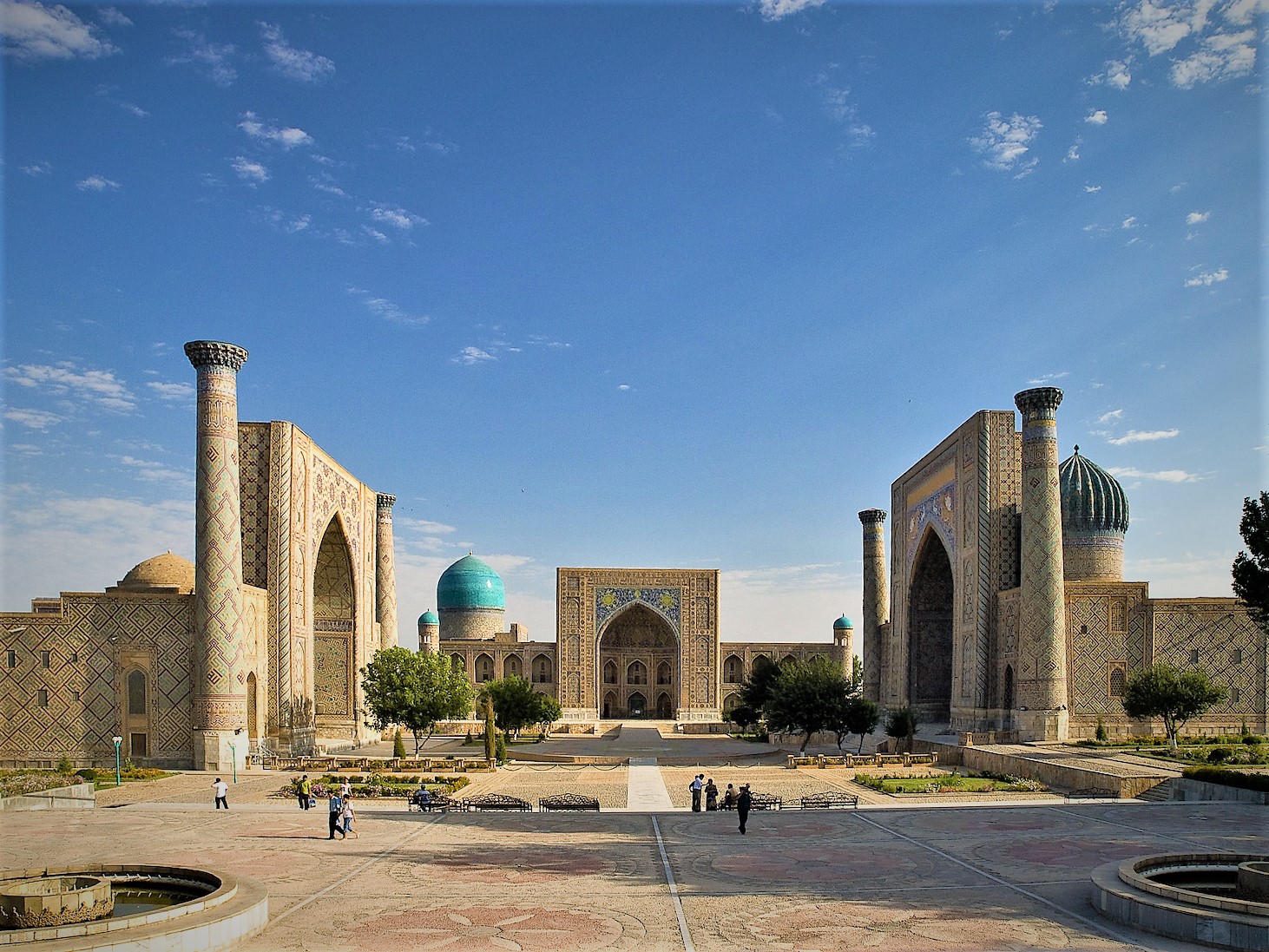
🕌Registan (Samarkand)
One of the finest public squares in the Islamic world, framed by three grand madrasas.