☸️ Jogyesa Temple (Seoul)
South Korea
About This Sacred Site
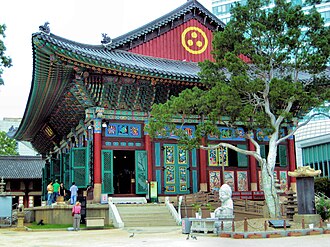
Jogyesa Temple is the chief temple of the Jogye Order, the largest Buddhist denomination in South Korea, located in the Jongno district of central Seoul. Although the current temple dates to 1938, its lineage traces to a Joseon-dynasty temple founded in 1395. Jogyesa serves as the administrative and spiritual headquarters of Korean Buddhism, making decisions that affect more than 3,000 temples nationwide. The grounds feature a 26-meter Daeungjeon (main dharma hall) adorned with elaborate dancheong (traditional painted patterns), and the temple is home to a white pine tree over 500 years old, designated a Korean Natural Monument. Jogyesa is most spectacular during the Lotus Lantern Festival surrounding Buddha's Birthday in May, when thousands of brilliantly colored paper lanterns transform the temple and surrounding streets into one of Seoul's most celebrated visual spectacles.
History & Origins
The history of Jogyesa Temple intertwines with Korea's complex relationship with Buddhism. Korean Buddhism flourished during the Goryeo dynasty (918-1392), but the succeeding Joseon dynasty adopted Confucianism as state ideology and actively suppressed Buddhist institutions for five centuries, banning monks from entering the capital. Buddhism's revival began during the Japanese colonial period (1910-1945), when Korean monks fought to reclaim their temples from Japanese-appointed clergy. The current Jogyesa Temple was established in 1938 under the name 'Taegosa' as a center for this independence movement within Korean Buddhism. After liberation in 1945, it became the headquarters of the purification movement that sought to restore Korean Buddhist traditions. In 1954, the temple was renamed Jogyesa, after the Jogye mountain in China where the Sixth Patriarch of Chan (Zen) Buddhism taught. The temple played a visible role in South Korean pro-democracy movements in the 1980s, offering sanctuary to dissidents. Today, Jogyesa continues to serve as the administrative hub from which the Jogye Order governs Korean Buddhism's extensive network of temples, schools, and cultural programs.
Spiritual Significance
Jogyesa's significance within Korean Buddhism is both institutional and deeply personal. As the seat of the Jogye Order, it is where the most important decisions about Korean Buddhist doctrine, education, and temple governance are made. But for everyday visitors, its appeal lies in offering an accessible entry point to Buddhist practice in the heart of a fast-paced modern city. The temple offers regular meditation sessions in English and Korean, and its temple-stay program allows visitors to experience a day or overnight in monastic life, including pre-dawn chanting, communal meals, and guided meditation. The massive golden Buddha statue inside Daeungjeon Hall is the focal point of daily worship. Many visitors purchase lotus-shaped prayer candles or write wishes on wooden plaques. The Lotus Lantern Festival (Yeondeunghoe) on or around Buddha's Birthday is not merely decorative but deeply spiritual: each lantern represents a prayer for enlightenment, and the parade of 100,000 lanterns through central Seoul has been inscribed by UNESCO as an Intangible Cultural Heritage of Humanity. The juxtaposition of this ancient Buddhist practice with the skyscrapers and neon lights of modern Seoul makes Jogyesa a powerful symbol of Korea's ability to honor its spiritual past while embracing its technological future.
Key Facts
- •Headquarters of the Jogye Order, Korea's largest Buddhist denomination
- •Founded in 1395 in central Seoul
- •Buddha's Birthday lantern festival in May is a major national celebration
- •Houses a white pine tree over 500 years old, designated a Natural Monument
- •Offers temple-stay programs for visitors to experience monastic life
Visitor Guide
Jogyesa Temple is open daily from approximately 4:00 AM to 9:00 PM, and there is no entrance fee. The temple is steps from Anguk Station (Seoul Metro Line 3, Exit 6), making it extremely easy to reach. Remove shoes before entering the main hall (Daeungjeon) and any other prayer buildings. Photography is permitted on the grounds but not during active ceremonies. Dress modestly, though enforcement is relaxed compared to some other Asian temple complexes. The temple offers free English-language temple-stay programs (typically requiring advance reservation through the Jogye Order's website), which include meditation instruction, tea ceremony, and making lotus-lantern crafts. If you visit during the Lotus Lantern Festival in late April or early May, arrive early to secure a viewing spot for the evening lantern parade along Jongno street; the festival also includes craft workshops, cultural performances, and traditional food. Combine your Jogyesa visit with nearby Insadong's traditional art galleries, Bukchon Hanok Village, and Gyeongbokgung Palace, all within walking distance. The temple's on-site tea house serves Buddhist temple food in a meditative setting.
Location
Coordinates: 37.5728, 126.9833
Frequently Asked Questions
What religion is Jogyesa Temple (Seoul) associated with?▾
Jogyesa Temple (Seoul) is a Buddhism holy site located in South Korea. It was established 1395 and is ranked #364 in our global directory of sacred sites.
When was Jogyesa Temple (Seoul) established?▾
Jogyesa Temple (Seoul) dates back to 1395. Headquarters of the Jogye Order, Korea's largest Buddhist denomination
How many people visit Jogyesa Temple (Seoul) each year?▾
Jogyesa Temple (Seoul) receives approximately 2+ million visitors per year. Founded in 1395 in central Seoul
What is Jogyesa Temple (Seoul) known for?▾
The chief temple of the Jogye Order, Korea's largest Buddhist denomination, in the heart of Seoul. Visitors come seeking peace, blessings, meditation, guidance. Buddha's Birthday lantern festival in May is a major national celebration
Related Holy Sites
Sacred places connected by country, religion, and purpose
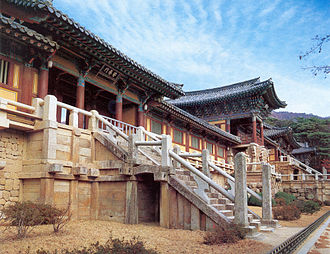
☸️Bulguksa Temple
Korea's most celebrated Buddhist temple, a UNESCO masterpiece of Silla-dynasty architecture.
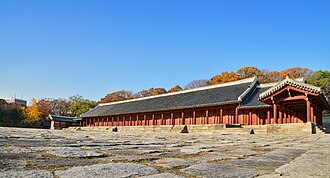
🏛️Jongmyo Shrine (Seoul)
A UNESCO-listed Confucian royal ancestral shrine, the oldest and most authentic of its kind in the world.
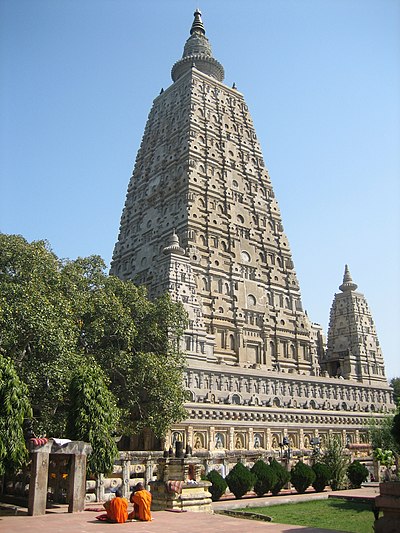
☸️Bodh Gaya (Mahabodhi Temple)
Where Siddhartha Gautama attained enlightenment and became the Buddha.
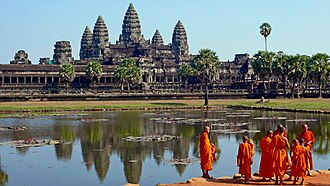
🛕Angkor Wat
The largest religious monument in the world, originally Hindu then Buddhist.