✝️ Hill of Crosses
Lithuania
About This Sacred Site
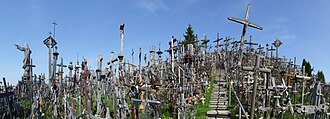
The Hill of Crosses (Kryžių kalnas) near Šiauliai in northern Lithuania is a small hillock upon which pilgrims have placed over 200,000 crosses, crucifixes, carvings, and rosaries. The tradition began after the failed uprisings against Russian Imperial rule in 1831 and 1863. Soviet authorities bulldozed the hill at least three times, but crosses reappeared overnight each time — making the site a powerful symbol of peaceful resistance and Catholic devotion. Pope John Paul II visited and prayed here in 1993.
History & Origins
The Hill of Crosses near Šiauliai, Lithuania, emerged as a pilgrimage site around 1831 after the November Uprising against Russian rule. Locals began placing crosses on a small hill to commemorate fallen rebels and express religious devotion. Despite repeated attempts by Soviet authorities to remove the crosses during the 20th century, the site persisted and grew into a powerful symbol of Lithuanian national identity and faith. Today, it holds over 200,000 crosses, crucifixes, and religious icons, representing resilience and spiritual freedom. The hill attracts pilgrims worldwide and was visited by Pope John Paul II in 1993, who blessed the site and called it a beacon of hope.
Spiritual Significance
Established around 1831, Lithuania's Hill of Crosses bears over 200,000 crosses of varying sizes, symbolizing enduring Christian faith and national identity. Despite Soviet bulldozing attempts in 1961, 1973, and 1975 to eradicate the site, crosses have been continuously replaced by pilgrims, demonstrating resilience rooted in the biblical injunction of Matthew 16:24 to take up one's cross. The site attracts pilgrims who perform rituals such as the lighting of candles, the recitation of the Rosary, and the placing of new crosses, especially during the annual pilgrimage on the Feast of the Assumption. Pope John Paul II's 1993 visit highlighted the hill's significance, consecrating it as a place of prayer and hope, referencing the Beatitudes from Matthew 5. The Hill of Crosses has become a symbol of peaceful resistance and spiritual perseverance, integrating Lithuanian folk traditions with Roman Catholic devotion. Confession and Mass are regularly celebrated on-site, reinforcing its role as a living pilgrimage destination.
Key Facts
- •Over 200,000 crosses of all sizes cover the hill, and the number grows daily
- •Soviet authorities bulldozed the hill in 1961, 1973, and 1975, but crosses always returned
- •Pope John Paul II visited in 1993 and called it a place of 'hope, peace, love, and sacrifice'
- •The practice began in the 1830s after failed anti-Russian uprisings
- •A Franciscan monastery was established at the foot of the hill in 2000
Location
Coordinates: 56.0153, 23.4167
Frequently Asked Questions
What religion is Hill of Crosses associated with?▾
Hill of Crosses is a Christianity holy site located in Lithuania. It was established c. 1831 and is ranked #771 in our global directory of sacred sites.
When was Hill of Crosses established?▾
Hill of Crosses dates back to c. 1831. Over 200,000 crosses of all sizes cover the hill, and the number grows daily
How many people visit Hill of Crosses each year?▾
Hill of Crosses receives approximately 500,000 visitors per year. Soviet authorities bulldozed the hill in 1961, 1973, and 1975, but crosses always returned
What is Hill of Crosses known for?▾
A pilgrimage site near Šiauliai where over 200,000 crosses have been placed as a testament to Lithuanian faith and resistance. Visitors come seeking protection, pilgrimage, peace, blessings. Pope John Paul II visited in 1993 and called it a place of 'hope, peace, love, and sacrifice'
Related Holy Sites
Sacred places connected by country, religion, and purpose
⛪Vilnius Cathedral
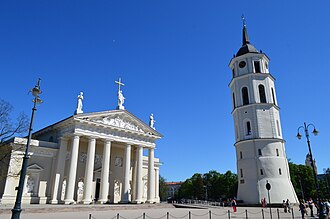
The principal Roman Catholic cathedral of Lithuania, built on the site of a pagan temple.
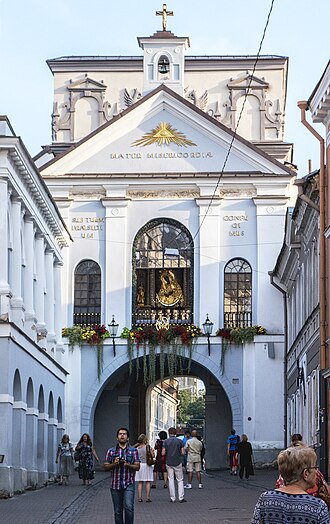
⛪Gate of Dawn (Vilnius)
A surviving medieval city gate in Vilnius housing a miracle-working icon of the Blessed Virgin Mary.
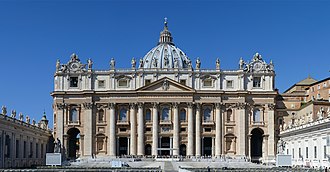
⛪Vatican City (St. Peter's Basilica)
The spiritual center of Roman Catholicism and home of the Pope.
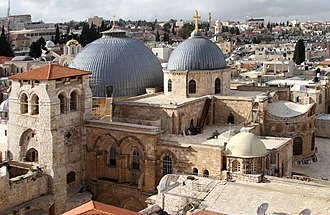
✝️Church of the Holy Sepulchre
The site where Jesus was crucified, buried, and resurrected.