🕌 Great Mosque of Samarra
Iraq
About This Sacred Site
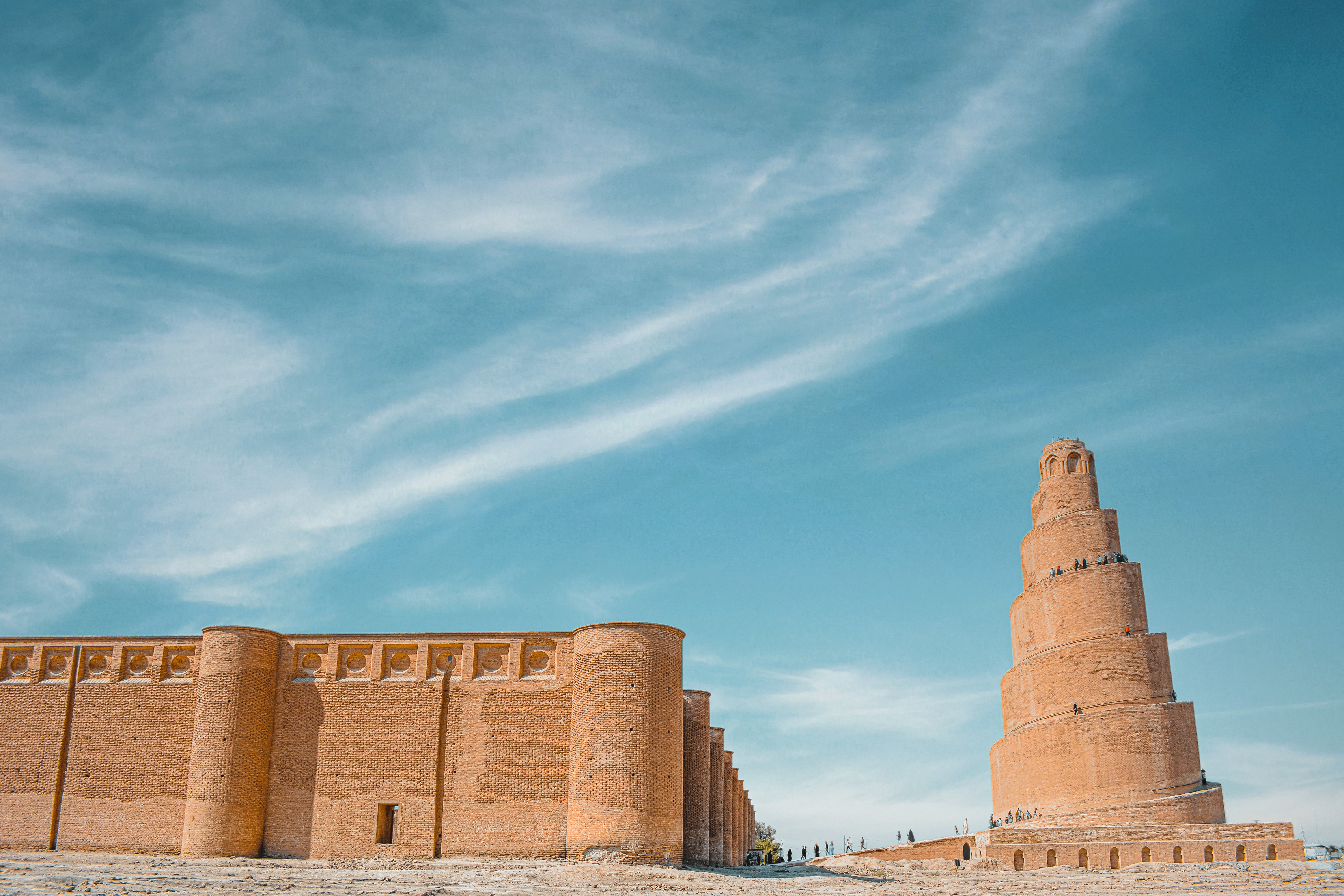
The Great Mosque of Samarra in Iraq, built in 851 CE during the Abbasid Caliphate, was once the largest mosque in the world. Its most iconic feature is the Malwiya Minaret, a massive spiral tower rising about 52 meters high. The mosque’s vast courtyard and hypostyle prayer hall exemplify early Islamic architecture. Though partially in ruins, it remains a significant historical and religious landmark, reflecting the Abbasids’ architectural innovation and political power.
History & Origins
Commissioned by Abbasid Caliph Al-Mutawakkil, the Great Mosque of Samarra was constructed between 848 and 851 CE, covering an area of approximately 42 acres, making it the world's largest mosque at the time. The mosque originally featured a vast prayer hall capable of accommodating 60,000 worshippers and included the iconic Malwiya Minaret, a spiraling tower reaching 52 meters in height, designed as a landmark visible from miles. The mosque underwent damage during the Mongol invasions in the 13th century but was partially restored by local rulers. Ottoman-era renovations in the 16th century preserved the minaret, although the mosque's main prayer halls remain largely in ruins. Archaeological excavations in the 20th century have helped document its unique spiral minaret and the mosque's original layout.
Spiritual Significance
The mosque served as the principal congregational mosque for the Abbasid Caliphate, symbolizing the political and religious authority of the caliphate in Islamic history. The Malwiya Minaret is unique for its spiral ramp, which pilgrims and worshippers historically ascended for the call to prayer, signifying the elevation of the adhan to a physical and symbolic height. The mosque was a center for Sunni Islamic scholarship and jurisprudence during the Abbasid period, hosting scholars who contributed to Quranic exegesis and Hadith studies. Rituals included large Friday congregational prayers (Jumu'ah) attended by the caliph and his court, reinforcing the unity of religious and political leadership. The site remains a symbol of Abbasid architectural innovation and the centralization of Islamic governance.
Key Facts
- •Was the largest mosque in the world when built in 848-851 CE
- •The Malwiya spiral minaret is 52 meters tall
- •Originally covered over 42 acres
- •Built by Abbasid Caliph al-Mutawakkil
- •UNESCO World Heritage Site since 2007
Location
Coordinates: 34.2058, 43.8783
Frequently Asked Questions
What religion is Great Mosque of Samarra associated with?▾
Great Mosque of Samarra is a Islam holy site located in Iraq. It was established 851 CE and is ranked #193 in our global directory of sacred sites.
When was Great Mosque of Samarra established?▾
Great Mosque of Samarra dates back to 851 CE. Was the largest mosque in the world when built in 848-851 CE
How many people visit Great Mosque of Samarra each year?▾
Great Mosque of Samarra receives approximately 200,000 visitors per year. The Malwiya spiral minaret is 52 meters tall
What is Great Mosque of Samarra known for?▾
A 9th-century Abbasid mosque famous for its massive spiral minaret, the Malwiya Tower. Visitors come seeking pilgrimage, spiritual enlightenment, ancestral connection, peace. Originally covered over 42 acres
Related Holy Sites
Sacred places connected by country, religion, and purpose