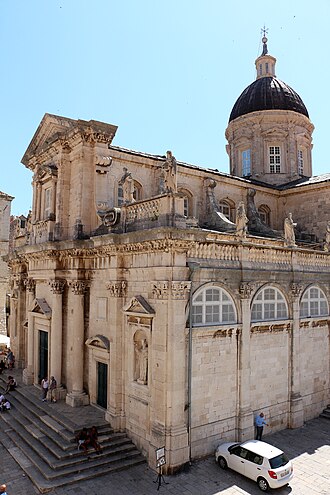
⛪ Cathedral of the Assumption (Dubrovnik)
Croatia
About This Sacred Site
The Cathedral of the Assumption of the Virgin Mary, located in Dubrovnik's UNESCO-listed old town, is a prominent Baroque church built between 1671 and 1713 on the site of earlier cathedrals dating back to the 7th century. Its richly decorated interior houses a treasury with relics, including a crucifix attributed to medieval sculptor Michaelangelo Lupi. The cathedral's harmonious design, with its grand dome and elegant façade, symbolizes the city's enduring Catholic faith and resilience through multiple reconstructions after earthquakes.
History & Origins
The Cathedral of the Assumption in Dubrovnik, originally founded in the 7th century, underwent total reconstruction after the catastrophic earthquake of 1667 destroyed the Romanesque structure. The current Baroque cathedral was completed in 1713 under architect Andrea Buffalini, commissioned by the Dubrovnik Republic government. Legend holds that Richard the Lionheart funded the original church in 1192 following his shipwreck near the Dalmatian coast, linking the site to Crusader history. The cathedral houses the treasury containing relics such as the arm of St. Blaise, the city’s patron saint, whose cult was central to Dubrovnik's medieval Christian identity. The bell tower was added in the 18th century, complementing the cathedral's vaulted nave and marble altars. Subsequent restorations in the 20th century addressed earthquake damage from 1979, preserving its Baroque features. The cathedral remains a symbol of Dubrovnik’s resilience through seismic events and political upheavals over centuries.
Spiritual Significance
The Cathedral of the Assumption functions as the spiritual heart of Dubrovnik’s Catholic community, hosting the annual Feast of St. Blaise on February 3, which includes processions and the traditional blessing of the city. The liturgy follows the Roman Rite, with the cathedral’s high altar dedicated to the Virgin Mary, emphasizing Marian devotion central to local theology. Pilgrims often venerate the relics of St. Blaise, believed to protect the city from harm, reflecting medieval hagiographical traditions. The cathedral's liturgical calendar features solemn celebrations of Easter and Christmas, incorporating Gregorian chant as prescribed by the Vatican Council of Trent reforms. Confessionals in the cathedral facilitate the sacrament of reconciliation, an important practice for the faithful visiting from across the Adriatic region. The cathedral's role in anchoring Dubrovnik’s religious identity is reinforced by its continuous use for episcopal ordinations and diocesan synods.
Key Facts
- •The previous Romanesque cathedral was destroyed in the catastrophic 1667 earthquake
- •Legend says Richard the Lionheart funded the original church after being shipwrecked nearby in 1192
- •The treasury contains the skull reliquary of St. Blaise, patron saint of Dubrovnik
- •Houses a polyptych of the Assumption attributed to the workshop of Titian
- •The Baroque rebuilding was designed by Italian architect Andrea Buffalini
Location
Coordinates: 42.6407, 18.1092
Frequently Asked Questions
What religion is Cathedral of the Assumption (Dubrovnik) associated with?▾
Cathedral of the Assumption (Dubrovnik) is a Christianity holy site located in Croatia. It was established 1713 (original 7th century) and is ranked #405 in our global directory of sacred sites.
When was Cathedral of the Assumption (Dubrovnik) established?▾
Cathedral of the Assumption (Dubrovnik) dates back to 1713 (original 7th century). The previous Romanesque cathedral was destroyed in the catastrophic 1667 earthquake
How many people visit Cathedral of the Assumption (Dubrovnik) each year?▾
Cathedral of the Assumption (Dubrovnik) receives approximately 500,000 visitors per year. Legend says Richard the Lionheart funded the original church after being shipwrecked nearby in 1192
What is Cathedral of the Assumption (Dubrovnik) known for?▾
A Baroque cathedral in Dubrovnik's old town housing a treasury of sacred relics from the Republic of Ragusa. Visitors come seeking blessings, protection, guidance, pilgrimage. The treasury contains the skull reliquary of St. Blaise, patron saint of Dubrovnik
Related Holy Sites
Sacred places connected by country, religion, and purpose
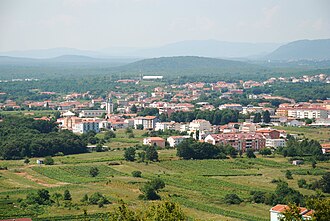
⛪Medjugorje
A pilgrimage town in Bosnia and Herzegovina where reported Marian apparitions began in 1981.
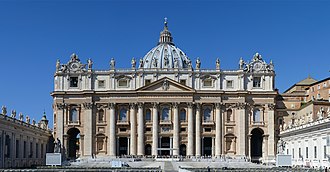
⛪Vatican City (St. Peter's Basilica)
The spiritual center of Roman Catholicism and home of the Pope.
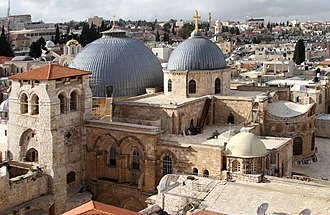
✝️Church of the Holy Sepulchre
The site where Jesus was crucified, buried, and resurrected.