⛪ Curtea de Argeș Monastery
Romania
About This Sacred Site
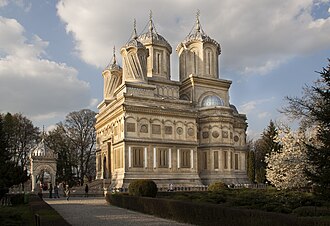
Curtea de Argeș Monastery, built between 1514 and 1517 by Wallachian prince Neagoe Basarab, stands as a masterpiece of Romanian ecclesiastical architecture blending Byzantine, Ottoman, and local styles. Located in Argeș County, the monastery is famous for its intricate stone carvings, decorative motifs, and legend of the master builder Manole. It serves as a royal necropolis and remains a significant pilgrimage site. The monastery's church showcases a unique architectural synthesis reflecting Wallachia’s cultural crossroads during the early 16th century.
History & Origins
Constructed between 1514 and 1517 under the direction of Prince Neagoe Basarab, the monastery was built on the site of an earlier church and designed by the architect Manole, according to Romanian chronicles. It is an example of late Byzantine and early Renaissance architecture featuring intricate stone and wood carvings. The monastery became the royal necropolis for Romanian monarchs, including Kings Carol I and Ferdinand I, and Queens Elisabeth and Maria, who were interred there in the 19th and 20th centuries. The site experienced damage during Ottoman invasions and was restored in the 20th century, maintaining its status as a national symbol. The monastery also inspired Romanian folklore, notably the legend of Master Manole, which reflects themes of sacrifice and creation associated with its construction.
Spiritual Significance
The burial of Romanian royalty within the church underscores its role as a sacred site intertwining national identity and Orthodox spirituality. The monastery hosts annual commemorations on May 16th, the feast of St. Nicholas, dedicated to the patron saint of the church. Liturgical services follow the Eastern Orthodox rite, and the monastery houses relics important for veneration. The architectural symbolism, including the cross-shaped floor plan and iconostasis, emphasizes the resurrection doctrine fundamental to Orthodox theology. Pilgrims visit to pay respects to royal tombs and participate in prayers seeking intercession for the nation’s well-being. The monastery is also associated with legends that reinforce the sanctity of sacrifice and faith in Romanian Orthodox tradition.
Key Facts
- •Built between 1514 and 1517 under Prince Neagoe Basarab
- •Serves as the royal necropolis: Kings Carol I, Ferdinand I, and Queens Elisabeth and Maria are buried here
- •Associated with the legend of Master Builder Manole, one of Romania's most famous folk tales
- •The architecture uniquely blends Byzantine, Moorish, and Romanian decorative elements
- •Extensively restored in the 1870s by French architect André Lecomte du Noüy
Location
Coordinates: 45.1396, 24.6729
Frequently Asked Questions
What religion is Curtea de Argeș Monastery associated with?▾
Curtea de Argeș Monastery is a Christianity holy site located in Romania. It was established 1517 and is ranked #794 in our global directory of sacred sites.
When was Curtea de Argeș Monastery established?▾
Curtea de Argeș Monastery dates back to 1517. Built between 1514 and 1517 under Prince Neagoe Basarab
How many people visit Curtea de Argeș Monastery each year?▾
Curtea de Argeș Monastery receives approximately 200,000 visitors per year. Serves as the royal necropolis: Kings Carol I, Ferdinand I, and Queens Elisabeth and Maria are buried here
What is Curtea de Argeș Monastery known for?▾
Romania's royal necropolis, a masterpiece of 16th-century architecture linked to the legend of Master Manole. Visitors come seeking blessings, ancestral connection, pilgrimage, protection. Associated with the legend of Master Builder Manole, one of Romania's most famous folk tales
Related Holy Sites
Sacred places connected by country, religion, and purpose
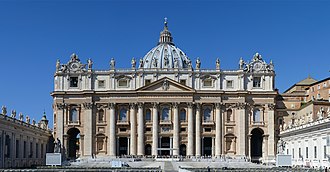
⛪Vatican City (St. Peter's Basilica)
The spiritual center of Roman Catholicism and home of the Pope.
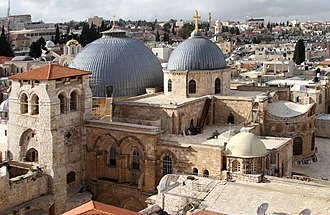
✝️Church of the Holy Sepulchre
The site where Jesus was crucified, buried, and resurrected.