🕌 Central Mosque Abuja (National Mosque)
Nigeria
About This Sacred Site
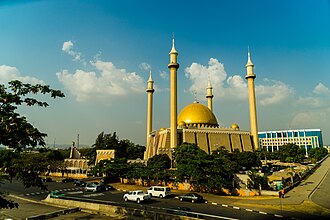
The Abuja National Mosque, completed in 1984, is a prominent Islamic landmark in Nigeria's capital. Featuring a large golden dome and four towering minarets, the mosque serves as the central place of worship for Nigeria's Muslim community. Its architecture blends traditional Islamic design with modern elements, symbolizing unity and faith. The mosque accommodates thousands of worshippers, hosting daily prayers, religious festivals, and educational events. It stands as a national symbol of Nigeria’s Islamic heritage and interfaith harmony.
History & Origins
Completed in 1984, shortly after Abuja was designated Nigeria's new capital in 1976, the Central Mosque Abuja was commissioned under President Shehu Shagari’s administration as a national symbol of Islamic faith. The mosque's construction utilized reinforced concrete and white marble, reflecting modern Islamic architectural influences combined with Nigerian motifs. Its large golden dome, measuring approximately 20 meters in diameter, and four minarets rising to 55 meters, distinguish its skyline prominence. The mosque underwent significant renovations in 2002 to expand capacity and improve facilities, enabling it to accommodate over 5,000 worshippers simultaneously. The mosque has hosted key religious events such as Eid prayers and interfaith dialogues, reinforcing its role as a unifying Islamic institution in Nigeria's capital city.
Spiritual Significance
Functioning as the central place of worship for Muslims in Nigeria's capital region, the mosque serves as a focal point for Jummah prayers, Eid celebrations, and Ramadan Iftar gatherings attended by thousands. The mosque follows Sunni traditions, with sermons often referencing the Quranic chapters Al-Fatiha and Al-Baqarah, emphasizing community and ethical conduct. Pilgrims and worshippers observe ablution rituals at the mosque's marble fountains before prayer, adhering to hadith teachings on cleanliness. The National Mosque also serves as a venue for Islamic education programs, including Quranic recitation classes and lectures by prominent Nigerian Islamic scholars such as Sheikh Dahiru Bauchi. Its spiritual significance is amplified by its symbolic status as a national mosque representing the unity of Nigeria’s Muslim populace.
Key Facts
- •Completed in 1984, shortly after Abuja became Nigeria's capital
- •Features a large golden dome and four prominent minarets
- •Can accommodate over 5,000 worshippers at a time
- •Located near the Nigerian National Christian Centre, symbolizing coexistence
- •Hosts major Islamic celebrations and interfaith dialogues
Location
Coordinates: 9.0580, 7.4891
Frequently Asked Questions
What religion is Central Mosque Abuja (National Mosque) associated with?▾
Central Mosque Abuja (National Mosque) is a Islam holy site located in Nigeria. It was established 1984 and is ranked #740 in our global directory of sacred sites.
When was Central Mosque Abuja (National Mosque) established?▾
Central Mosque Abuja (National Mosque) dates back to 1984. Completed in 1984, shortly after Abuja became Nigeria's capital
How many people visit Central Mosque Abuja (National Mosque) each year?▾
Central Mosque Abuja (National Mosque) receives approximately 1 million+ visitors per year. Features a large golden dome and four prominent minarets
What is Central Mosque Abuja (National Mosque) known for?▾
Nigeria's national mosque in the capital, one of the largest in West Africa. Visitors come seeking pilgrimage, peace, blessings, guidance. Can accommodate over 5,000 worshippers at a time
Related Holy Sites
Sacred places connected by country, religion, and purpose