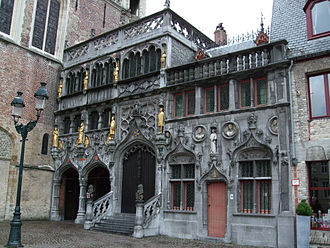
⛪ Basilica of the Holy Blood (Bruges)
Belgium
About This Sacred Site
The Basilica of the Holy Blood (Heilig-Bloedbasiliek) in Bruges, Belgium, is a remarkable two-level medieval chapel tucked into a corner of the Burg square, the historic heart of the city. Its fame rests on a single extraordinary relic: a phial said to contain a cloth stained with the blood of Jesus Christ, brought to Bruges from the Holy Land in 1149 by Thierry of Alsace, Count of Flanders, after the Second Crusade. The basilica’s lower chapel is one of the best-preserved Romanesque interiors in the Low Countries, with thick stone columns, barrel vaults, and a stark, crypt-like atmosphere dating from the 12th century. The upper chapel, rebuilt in Gothic Revival style in the 19th century, is an ornate contrast of gold leaf, painted arches, and luminous stained-glass windows. Every year on Ascension Day, the relic is paraded through the streets of Bruges in the Procession of the Holy Blood, a tradition dating to at least 1303.
History & Origins
The basilica’s origins lie in the mid-12th century, when Thierry of Alsace returned from the Second Crusade bearing what was claimed to be a cloth with drops of Christ’s blood, reportedly given to him by the Patriarch of Jerusalem. A chapel was built in 1149 specifically to house this relic, incorporated into the existing Chapel of Saint Basil on the Burg square. The lower chapel, dedicated to Saint Basil, retains its original Romanesque architecture virtually unchanged since the 12th century, making it one of the oldest surviving church interiors in Western Flanders. The upper chapel was originally Gothic but was heavily damaged during the French Revolutionary period, when Republican forces seized church property and the relic was hidden by a local priest. After the Napoleonic era, the relic was returned and the upper chapel was rebuilt in an elaborate Gothic Revival style between 1829 and 1923. The Procession of the Holy Blood, held annually on Ascension Day, features biblical tableaux, medieval costumes, and the ceremonial carrying of the relic through Bruges’s cobblestone streets. UNESCO inscribed this procession on its Intangible Cultural Heritage list in 2009, recognizing it as one of Europe’s most significant surviving medieval religious pageants.
Spiritual Significance
The relic of the Holy Blood is among the most venerated objects in European Christianity. For believing Catholics, the phial contains material evidence of Christ’s physical presence on earth, making it a direct connection to the central mystery of Christian faith: the incarnation and sacrifice of God made flesh. The relic is displayed to visitors every Friday afternoon and daily during the period from Easter to November. Pilgrims approach in a line, briefly touch or kiss the glass-enclosed reliquary, and offer personal prayers. The annual Procession of the Holy Blood on Ascension Day transforms the entire city into a moving sacred drama, with costumed participants reenacting biblical scenes from the Old and New Testaments before the relic is carried through the streets by the Bishop of Bruges. The procession draws tens of thousands of spectators and participants, many of whom view their attendance as an annual spiritual obligation rather than merely a cultural event. The basilica also serves as a destination for those seeking healing, and the small museum adjacent to the upper chapel houses reliquaries, paintings, and liturgical objects related to the relic’s history.
Key Facts
- •Houses a relic said to contain the blood of Christ, brought from Jerusalem in 1149
- •The relic is displayed to the faithful every Friday afternoon
- •The annual Procession of the Holy Blood, held on Ascension Day, dates to at least 1303
- •The Procession was inscribed on UNESCO's Intangible Cultural Heritage list in 2009
- •The basilica has two levels: a Romanesque lower chapel and a neo-Gothic upper chapel
Visitor Guide
The Basilica of the Holy Blood is located on the Burg square in central Bruges, adjacent to the Gothic city hall. The lower chapel is free to visit; the upper chapel and small museum charge a modest fee (around 2.50 euros). The basilica is open daily, though hours vary by season, typically 10:00 AM to 5:00 PM with a midday closure. The relic is displayed to the faithful every Friday afternoon (roughly 2:00 to 4:00 PM) and daily from Easter through October. Photography is not permitted in the upper chapel when the relic is on display. The lower Romanesque chapel is easily missed by visitors who head straight upstairs; do not skip it, as its austere medieval atmosphere is one of the basilica’s highlights. If you plan to attend the Procession of the Holy Blood on Ascension Day (a Thursday, 39 days after Easter), book accommodation well in advance as Bruges fills completely. The procession route is published in advance and grandstand seating can be purchased. Bruges is easily reached by train from Brussels (one hour), Ghent (25 minutes), or the coast. The Burg square also holds the city hall and the Basilica treasury.
Location
Coordinates: 51.2083, 3.2266
Frequently Asked Questions
What religion is Basilica of the Holy Blood (Bruges) associated with?▾
Basilica of the Holy Blood (Bruges) is a Christianity holy site located in Belgium. It was established 1149 and is ranked #316 in our global directory of sacred sites.
When was Basilica of the Holy Blood (Bruges) established?▾
Basilica of the Holy Blood (Bruges) dates back to 1149. Houses a relic said to contain the blood of Christ, brought from Jerusalem in 1149
How many people visit Basilica of the Holy Blood (Bruges) each year?▾
Basilica of the Holy Blood (Bruges) receives approximately 400,000 visitors per year. The relic is displayed to the faithful every Friday afternoon
What is Basilica of the Holy Blood (Bruges) known for?▾
A chapel in Bruges housing a venerated relic of the Blood of Christ brought from the Holy Land. Visitors come seeking miracles, healing, pilgrimage, blessings. The annual Procession of the Holy Blood, held on Ascension Day, dates to at least 1303
Related Holy Sites
Sacred places connected by country, religion, and purpose
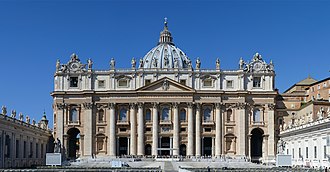
⛪Vatican City (St. Peter's Basilica)
The spiritual center of Roman Catholicism and home of the Pope.
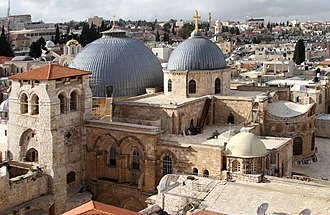
✝️Church of the Holy Sepulchre
The site where Jesus was crucified, buried, and resurrected.