🙏 Wat Pho (Temple of the Reclining Buddha)
Thailand
About This Sacred Site
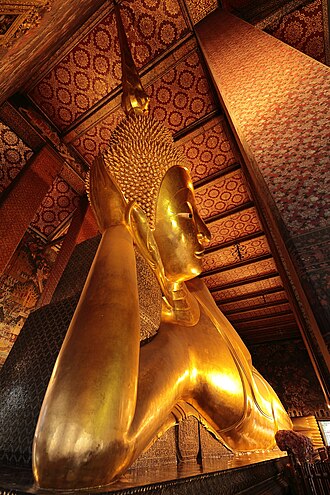
Wat Pho is one of the oldest and largest temple complexes in Bangkok, famous for its enormous Reclining Buddha statue — 46 meters long and 15 meters high, covered in gold leaf. The statue depicts the Buddha at the moment of achieving Nirvana, with its 5-meter-long feet inlaid with 108 mother-of-pearl auspicious symbols. Wat Pho is also the birthplace of traditional Thai massage, recognized by UNESCO as an Intangible Cultural Heritage. The temple houses over 1,000 Buddha images — more than any other temple in Thailand — and 91 chedis (stupas). It was also Thailand's first public university, with inscribed stone tablets throughout the complex teaching medicine, history, and literature.
History & Origins
Wat Pho, rebuilt in its current form circa 1788 under King Rama I, was extensively expanded and renovated during King Rama III's reign in the early 19th century to include over 1,000 Buddha images, making it one of Thailand's largest temple complexes. It is renowned for housing the Reclining Buddha statue, completed in 1832, measuring 46 meters in length and 15 meters in height, covered in pure gold leaf. The temple complex also contains Thailand's earliest public education center, established by King Rama III, which promoted traditional medicine, Thai massage, and Buddhist scriptures. The site underwent restoration in the 20th century funded by the Thai government to preserve its architectural and cultural heritage. Wat Pho remains a major center for Buddhist learning and traditional healing arts, recognized by UNESCO for its intangible cultural heritage. Its location adjacent to the Grand Palace in Bangkok situates it prominently within Thai religious and royal history.
Spiritual Significance
The Reclining Buddha symbolizes the Buddha's entry into Parinirvana and the transcendence beyond suffering, inspiring meditation on impermanence among devotees. Wat Pho is the birthplace of traditional Thai massage, officially recognized by UNESCO in 2019 as intangible cultural heritage, where monks historically practiced and taught healing techniques combining physical therapy with spiritual mindfulness. Daily rituals include chanting of the Pali Canon in the temple's viharns and offerings of lotus flowers and candles. Pilgrims perform circumambulation around the statue and the temple's chedis, invoking merit accumulation as taught in Theravada Buddhism. The temple also hosts annual Buddhist festivals such as Visakha Bucha Day, commemorating the Buddha's birth, enlightenment, and passing. The extensive murals and inscriptions illustrate Buddhist cosmology and ethical teachings, serving as educational tools for both monastics and lay visitors.
Key Facts
- •The Reclining Buddha is 46 meters long and 15 meters high, covered in gold leaf
- •Birthplace of traditional Thai massage, now UNESCO Intangible Cultural Heritage
- •Contains over 1,000 Buddha images — more than any other Thai temple
- •Considered Thailand's first public university, with educational stone inscriptions
- •The soles of the Buddha's feet display 108 mother-of-pearl auspicious symbols
Location
Coordinates: 13.7463, 100.4930
Frequently Asked Questions
What religion is Wat Pho (Temple of the Reclining Buddha) associated with?▾
Wat Pho (Temple of the Reclining Buddha) is a Buddhism holy site located in Thailand. It was established c. 1788 (current form) and is ranked #94 in our global directory of sacred sites.
When was Wat Pho (Temple of the Reclining Buddha) established?▾
Wat Pho (Temple of the Reclining Buddha) dates back to c. 1788 (current form). The Reclining Buddha is 46 meters long and 15 meters high, covered in gold leaf
How many people visit Wat Pho (Temple of the Reclining Buddha) each year?▾
Wat Pho (Temple of the Reclining Buddha) receives approximately 5+ million visitors per year. Birthplace of traditional Thai massage, now UNESCO Intangible Cultural Heritage
What is Wat Pho (Temple of the Reclining Buddha) known for?▾
Home to a 46-meter golden reclining Buddha and the birthplace of Thai massage. Visitors come seeking healing, spiritual enlightenment, meditation, blessings. Contains over 1,000 Buddha images — more than any other Thai temple
Related Holy Sites
Sacred places connected by country, religion, and purpose
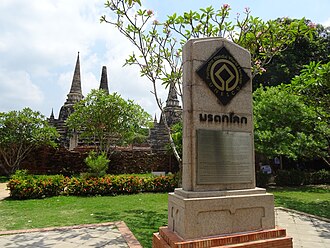
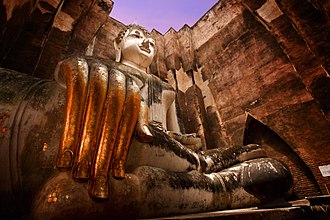
🏛️Ayutthaya Historical Park
The ruins of Thailand's ancient capital, with hundreds of Buddhist temple remains.
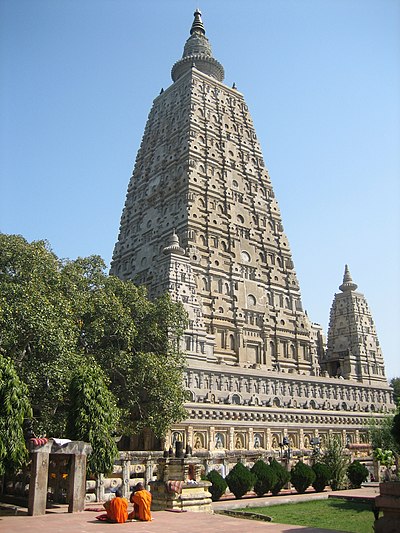
☸️Bodh Gaya (Mahabodhi Temple)
Where Siddhartha Gautama attained enlightenment and became the Buddha.
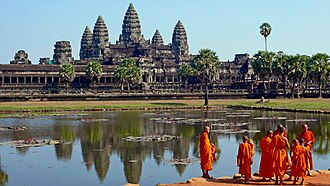
🛕Angkor Wat
The largest religious monument in the world, originally Hindu then Buddhist.