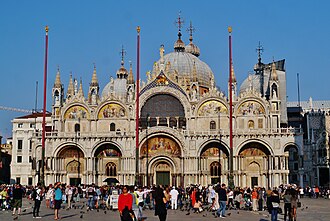
🦁 Basilica of San Marco, Venice
Italy
About This Sacred Site
The Basilica of San Marco is the cathedral church of Venice and one of the finest examples of Italo-Byzantine architecture in the world. Built to house the relics of St. Mark the Evangelist, which Venetian merchants smuggled out of Alexandria in 828 CE, the basilica is adorned with over 8,000 square meters of golden mosaics spanning from the 12th to the 19th century. The Pala d'Oro behind the high altar is a masterwork of Byzantine goldsmithing set with hundreds of gems. The four bronze horses on the façade were looted from Constantinople during the Fourth Crusade in 1204.
History & Origins
The Basilica of San Marco was originally founded in 828 CE to house the relics of Saint Mark the Evangelist, brought from Alexandria. Rebuilt multiple times, the current Italo-Byzantine structure dates to the 11th century, showcasing opulent mosaics and domes emblematic of Venice's wealth and connections to the East. The basilica served as the Doge's chapel and a symbol of Venetian power. Its façade features Byzantine, Gothic, and Renaissance elements, reflecting centuries of artistic evolution. The basilica remains Venice’s religious heart and a masterpiece of medieval architecture.
Spiritual Significance
Basilica di San Marco, established in 828 CE to house the relics of Saint Mark, serves as a profound center of Venetian Christian worship, with over 8,000 square meters of golden mosaics illustrating biblical scenes from both the Old and New Testaments, such as the Resurrection and the Last Judgment. The relics of Saint Mark were famously smuggled from Alexandria in 828 CE, concealed under layers of pork to avoid Muslim inspections, underscoring the relic's significance in Venetian religious identity and the protection of Christian heritage. The Pala d'Oro, an ornate Byzantine altar screen composed of thousands of precious stones and enamels, is central to liturgical celebrations, especially during the Feast of Saint Mark on April 25th. The basilica's role in the Venetian Republic included hosting state ceremonies blending religious and civic duties, reflecting the theological concept of Christ as ruler, a doctrine supported by the basilica's iconography. Pilgrims often engage in the veneration of Saint Mark's relics, and the basilica's liturgical calendar features Byzantine rites that preserve Eastern Christian traditions within Western Catholicism.
Key Facts
- •Over 8,000 square meters of golden mosaics cover the interior
- •St. Mark's relics were smuggled from Alexandria in 828 CE, hidden under pork to deter Muslim inspectors
- •The Pala d'Oro contains 1,927 precious stones including rubies, sapphires, and emeralds
- •The four bronze horses were looted from Constantinople during the Fourth Crusade (1204)
- •The floor contains over 2,000 square meters of intricate marble mosaic
Location
Coordinates: 45.4345, 12.3396
Frequently Asked Questions
What religion is Basilica of San Marco, Venice associated with?▾
Basilica of San Marco, Venice is a Christianity holy site located in Italy. It was established 828 CE (first church) and is ranked #328 in our global directory of sacred sites.
When was Basilica of San Marco, Venice established?▾
Basilica of San Marco, Venice dates back to 828 CE (first church). Over 8,000 square meters of golden mosaics cover the interior
How many people visit Basilica of San Marco, Venice each year?▾
Basilica of San Marco, Venice receives approximately 5 million visitors per year. St. Mark's relics were smuggled from Alexandria in 828 CE, hidden under pork to deter Muslim inspectors
What is Basilica of San Marco, Venice known for?▾
Venice's golden-domed basilica, housing the relics of St. Mark and 8,000 square meters of mosaics. Visitors come seeking blessings, pilgrimage, peace, protection. The Pala d'Oro contains 1,927 precious stones including rubies, sapphires, and emeralds
Related Holy Sites
Sacred places connected by country, religion, and purpose

⛪Vatican City (St. Peter's Basilica)
The spiritual center of Roman Catholicism and home of the Pope.
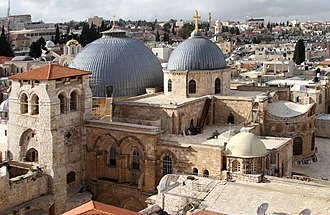
✝️Church of the Holy Sepulchre
The site where Jesus was crucified, buried, and resurrected.