🕊️ St. Peter's Square
Vatican City
About This Sacred Site
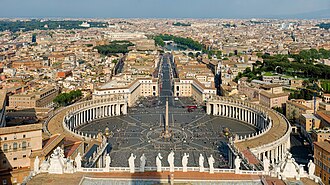
St. Peter's Square (Piazza San Pietro) is the grand elliptical plaza before St. Peter's Basilica, designed by Gian Lorenzo Bernini between 1656 and 1667. The square is enclosed by two massive semicircular colonnades of 284 Doric columns and 88 pilasters, topped by 140 statues of saints. Bernini described the design as the arms of the Church embracing the world. The square can hold over 300,000 people and is where the Pope delivers his weekly audience and special blessings, including the Urbi et Orbi blessing at Christmas and Easter.
History & Origins
St. Peter's Square, designed by Gian Lorenzo Bernini between 1656 and 1667, was commissioned by Pope Alexander VII to create a grand forecourt for St. Peter's Basilica in Vatican City. The elliptical plaza is bordered by a colossal colonnade of 284 Doric columns arranged in four rows, symbolizing the embracing arms of the church. The central obelisk, dating from ancient Egypt, was erected in the 16th century and repositioned to the square's center by Bernini. The square serves as a pivotal gathering place for papal audiences and major Catholic events, reflecting Baroque urban planning and religious symbolism.
Spiritual Significance
Designed by Gian Lorenzo Bernini between 1656 and 1667, the square features 284 Doric columns arranged in four rows symbolizing the embracing arms of the Church, a metaphor drawn from the Gospel of Matthew 28:19 concerning the Great Commission. The central obelisk, originally erected in Egypt and brought to Rome by Emperor Caligula in 37 CE, was installed in the square in 1586 under Pope Sixtus V, representing the triumph of Christianity over paganism. The square hosts the Papal Urbi et Orbi blessing, delivered from the central balcony of St. Peter's Basilica on Easter and Christmas, drawing tens of thousands of pilgrims annually. The design facilitates large-scale liturgical celebrations, including canonizations and conclaves, and pilgrims often perform the Stations of the Cross along its perimeter during Good Friday ceremonies, reflecting Catholic devotion to Christ’s Passion as outlined in the Roman Missal.
Key Facts
- •Designed by Bernini between 1656 and 1667 with 284 columns in four rows
- •The obelisk at the center was brought from Egypt by Emperor Caligula in 37 CE
- •Two specific points on the pavement make the four rows of columns align into one
- •The square can hold over 300,000 people for papal audiences
- •140 statues of saints crown the colonnades, each about 3.2 meters tall
Location
Coordinates: 41.9022, 12.4567
Frequently Asked Questions
What religion is St. Peter's Square associated with?▾
St. Peter's Square is a Christianity holy site located in Vatican City. It was established 1667 and is ranked #467 in our global directory of sacred sites.
When was St. Peter's Square established?▾
St. Peter's Square dates back to 1667. Designed by Bernini between 1656 and 1667 with 284 columns in four rows
How many people visit St. Peter's Square each year?▾
St. Peter's Square receives approximately 7 million visitors per year. The obelisk at the center was brought from Egypt by Emperor Caligula in 37 CE
What is St. Peter's Square known for?▾
Bernini's iconic colonnade embracing the faithful before St. Peter's Basilica. Visitors come seeking blessings, pilgrimage, peace, guidance. Two specific points on the pavement make the four rows of columns align into one
Related Holy Sites
Sacred places connected by country, religion, and purpose
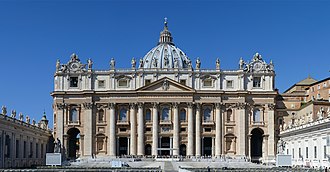
⛪Vatican City (St. Peter's Basilica)
The spiritual center of Roman Catholicism and home of the Pope.
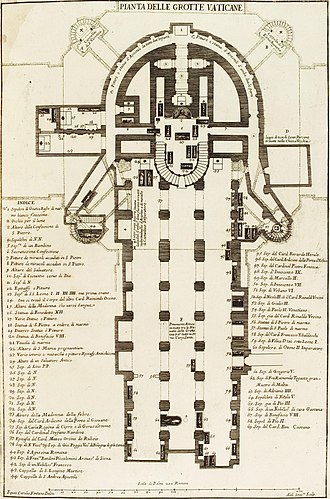
⚰️Vatican Grottoes
The underground burial chambers beneath St. Peter's Basilica, final resting place of numerous popes.
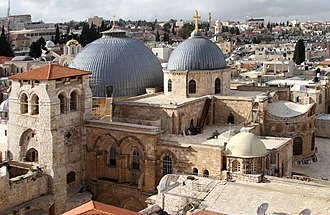
✝️Church of the Holy Sepulchre
The site where Jesus was crucified, buried, and resurrected.
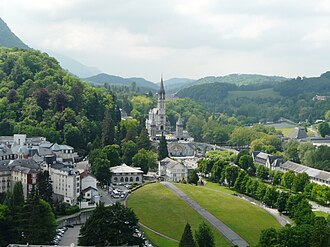
💧Lourdes (Sanctuary of Our Lady)
Where the Virgin Mary appeared 18 times, famous for miraculous healings.