🕯️ Church of Our Lady of Regla (Santería Site)
Cuba
About This Sacred Site
The Church of Our Lady of Regla in Regla, Cuba, established in 1687 with its current 19th-century structure, is a pivotal site of religious syncretism where Catholicism and Afro-Cuban Santería converge. The church is dedicated to the Virgin of Regla, identified with Yemayá, the Yoruba goddess of the sea. Worshippers celebrate with vibrant ceremonies blending Catholic liturgy and Santería rituals, including music, dance, and offerings. This sacred space exemplifies Cuba’s complex spiritual heritage, honoring both European and African religious traditions.
History & Origins
The Church of Our Lady of Regla was originally established in 1687 in the town of Regla, Cuba, under Spanish colonial rule. The current structure, built in the 19th century, replaced earlier wooden and modest stone chapels dating from the 17th century. Its architecture features neoclassical elements combined with baroque altarpieces added during renovations in the 1800s. The church became a syncretic site where Catholicism and African Yoruba traditions merged, particularly during the 19th century as enslaved Africans practiced Santería. The statue of the Black Madonna, central to the church, is said to have been brought by Spanish sailors and became syncretized with Yemayá, the Yoruba goddess of the sea, symbolizing protection for fishermen and sailors. Throughout the 20th century, the site underwent restorations, notably in 1954 and 1987, preserving its religious art and cultural significance. The church remains an active place of worship and pilgrimage, officially recognized as a historical monument by Cuban cultural authorities.
Spiritual Significance
The annual September 7 festival at this site uniquely combines Catholic processions honoring the Virgin Mary with Santería ceremonies invoking Yemayá, the Yoruba sea goddess. Devotees perform ritual drumming using batá drums, traditional in Santería, accompanied by offerings of flowers, candles, and food placed before the Black Madonna statue. Pilgrims often seek blessings for protection over the sea, reflecting the deity Yemayá's role as mother of oceans and protector of fishermen. The syncretism is rooted in the blending of Catholic Marian doctrines with Yoruba spiritual cosmology, where Yemayá is regarded as the spiritual mother and nurturer. Prayers and chants in Lucumí language are recited alongside Catholic rosaries, demonstrating a dual devotional practice. The site is also significant for Santería priests (babalawos) who conduct initiations and divinations referencing the Ifá corpus, while Catholic masses emphasize the Virgin's intercession according to traditional Roman Catholic liturgy.
Key Facts
- •The Black Madonna of Regla is syncretized with Yemayá, the Yoruba goddess of the sea
- •September 7 celebrations blend Catholic processions with Santería drumming and offerings
- •Devotees wear blue and white — the colors associated with Yemayá
- •The original hermitage dates to 1687; the current church was built in the 19th century
- •Regla is considered one of the most important centers of Santería practice in Cuba
Location
Coordinates: 23.1253, -82.3376
Frequently Asked Questions
What religion is Church of Our Lady of Regla (Santería Site) associated with?▾
Church of Our Lady of Regla (Santería Site) is a Multi-faith holy site located in Cuba. It was established 1687 (current structure 19th century) and is ranked #683 in our global directory of sacred sites.
When was Church of Our Lady of Regla (Santería Site) established?▾
Church of Our Lady of Regla (Santería Site) dates back to 1687 (current structure 19th century). The Black Madonna of Regla is syncretized with Yemayá, the Yoruba goddess of the sea
How many people visit Church of Our Lady of Regla (Santería Site) each year?▾
Church of Our Lady of Regla (Santería Site) receives approximately 300,000 visitors per year. September 7 celebrations blend Catholic processions with Santería drumming and offerings
What is Church of Our Lady of Regla (Santería Site) known for?▾
A church across Havana harbor where Catholic Marian devotion and Yoruba Santería worship of Yemayá converge. Visitors come seeking protection, healing, blessings, guidance. Devotees wear blue and white — the colors associated with Yemayá
Related Holy Sites
Sacred places connected by country, religion, and purpose
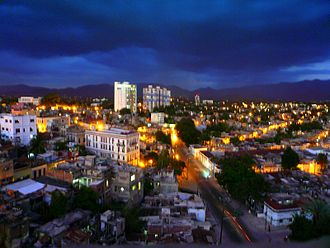
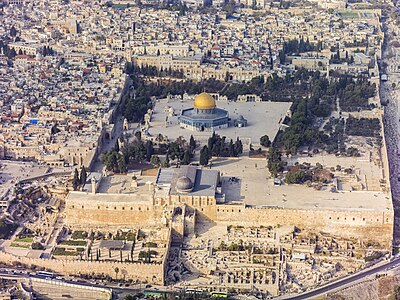
🕌Temple Mount / Al-Aqsa (Jerusalem)
Sacred to Judaism, Christianity, and Islam — the most contested holy site on Earth.
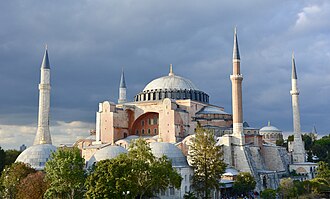
🏛️Hagia Sophia
A masterpiece that served as cathedral, mosque, and museum across centuries.