🕌 Qolşärif Mosque (Kazan Kremlin)
Russia
About This Sacred Site
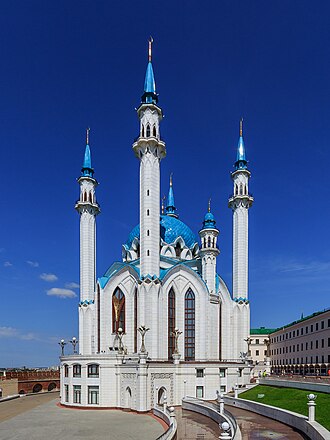
The Qolşärif Mosque, located within the Kazan Kremlin, is a magnificent symbol of Tatar culture and Islamic faith in Russia. Originally built in the 16th century, it was destroyed during Ivan the Terrible’s conquest of Kazan in 1552 and reconstructed in 2005. The mosque features a blend of traditional Tatar and Islamic architecture with modern influences. It stands alongside Orthodox landmarks, exemplifying religious coexistence. It functions as a center for worship, education, and cultural events within the Muslim community.
History & Origins
The original Qolşärif Mosque was constructed in the 16th century within the Kazan Kremlin and served as one of the largest mosques in Russia before its destruction during Ivan the Terrible's siege of Kazan in 1552. The modern mosque was rebuilt and officially reopened in 2005 as part of Kazan's millennium celebrations, symbolizing the revival of Tatar Islamic culture. Architecturally, it combines traditional Tatar elements with contemporary design, featuring minarets up to 57 meters tall and a large central dome. Named after Qol Sharif, a prominent religious scholar and defender who died during the siege, the mosque includes a library and a museum dedicated to Islamic history in the region. It functions as both a place of worship and a cultural center within the Kazan Kremlin, a UNESCO World Heritage Site.
Spiritual Significance
As the spiritual heart for Tatar Muslims, the mosque hosts daily prayers according to the Hanafi school, with congregational Jumu'ah prayers on Fridays drawing large gatherings. The mosque plays a central role during Eid al-Fitr and Eid al-Adha celebrations, featuring communal prayers and charitable activities. The recitation of the Qur'an is a daily ritual, with special sessions for Tajweed studies held in the mosque’s educational center. The mosque honors Qol Sharif’s legacy by hosting lectures on Islamic jurisprudence and history, emphasizing the Tatar community's religious heritage. Pilgrims and worshippers perform ritual ablutions in the mosque’s facilities before prayers, adhering to Islamic purity laws. The mosque also participates in interfaith dialogues, reflecting its role in promoting religious tolerance in the region.
Key Facts
- •The original mosque was destroyed in 1552 during Ivan the Terrible's siege of Kazan
- •Rebuilt and reopened in 2005 for Kazan's millennium celebrations
- •Named after Qol Sharif, a scholar-imam killed defending the original mosque
- •Sits within the Kazan Kremlin alongside the Annunciation Cathedral, symbolizing coexistence
- •Can accommodate up to 1,500 worshippers inside with space for 10,000 outside
Location
Coordinates: 55.7987, 49.1050
Frequently Asked Questions
What religion is Qolşärif Mosque (Kazan Kremlin) associated with?▾
Qolşärif Mosque (Kazan Kremlin) is a Islam holy site located in Russia. It was established 2005 (original c. 16th century) and is ranked #764 in our global directory of sacred sites.
When was Qolşärif Mosque (Kazan Kremlin) established?▾
Qolşärif Mosque (Kazan Kremlin) dates back to 2005 (original c. 16th century). The original mosque was destroyed in 1552 during Ivan the Terrible's siege of Kazan
How many people visit Qolşärif Mosque (Kazan Kremlin) each year?▾
Qolşärif Mosque (Kazan Kremlin) receives approximately 800,000 visitors per year. Rebuilt and reopened in 2005 for Kazan's millennium celebrations
What is Qolşärif Mosque (Kazan Kremlin) known for?▾
The principal mosque of Kazan, rebuilt within the UNESCO-listed Kremlin as a symbol of Tatar heritage. Visitors come seeking pilgrimage, peace, spiritual enlightenment, blessings. Named after Qol Sharif, a scholar-imam killed defending the original mosque
Related Holy Sites
Sacred places connected by country, religion, and purpose