✨ Orvieto Cathedral
Italy
About This Sacred Site
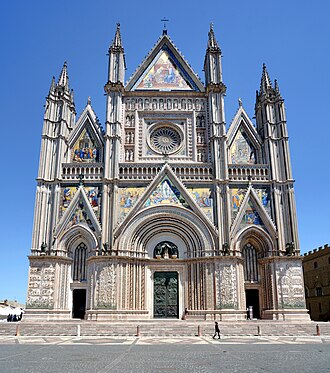
The Cathedral of Orvieto is one of the great Gothic churches of central Italy, built to commemorate the Miracle of Bolsena in 1263, when a doubting priest saw the communion host bleed onto the corporal cloth during Mass. Pope Urban IV, who was in Orvieto at the time, commissioned the cathedral and established the Feast of Corpus Christi in response. The façade, with its golden mosaics, sculpted reliefs, and rose window, is considered one of the masterpieces of Italian Gothic architecture. Inside, the Chapel of San Brizio contains Luca Signorelli's frescoes of the Last Judgment, which influenced Michelangelo.
History & Origins
Orvieto Cathedral, begun in 1290 under the direction of architect Arnolfo di Cambio, was constructed to enshrine the bloodstained corporal from the Miracle of Bolsena in 1263, a Eucharistic miracle that prompted Pope Urban IV to institute the Feast of Corpus Christi in 1264. The cathedral's façade, completed over the 14th and 15th centuries, features intricate bas-reliefs and mosaics commissioned by prominent patrons such as the Papacy and local nobility. The interior contains the Chapel of the Corporal, built specifically to house the relic, and the frescos of Luca Signorelli's Last Judgment completed between 1499 and 1504, which represent one of the earliest Renaissance depictions of the Apocalypse. The cathedral underwent restorations in the 19th century to preserve its Gothic and Romanesque architectural elements, maintaining its status as a major religious landmark in Umbria.
Spiritual Significance
The cathedral serves as a pilgrimage site centered around the Eucharist, commemorating the Miracle of Bolsena where a consecrated host bled onto a corporal, affirming Catholic doctrine of transubstantiation as defined by the Council of Trent. The Feast of Corpus Christi, celebrated annually, involves a procession carrying the Blessed Sacrament through the city, reflecting medieval and contemporary liturgical traditions. Pilgrims venerate the corporal relic in the dedicated chapel, reinforcing beliefs in the real presence of Christ in the Eucharist. The chapel's location and the cathedral’s art, including Signorelli's frescoes, provide catechetical instruction on eschatology and salvation, central themes in Catholic theology. The cathedral also hosts masses, confessions, and Eucharistic adoration, supporting ongoing spiritual life and devotion linked to the site’s unique relic.
Key Facts
- •Built to house the bloodstained corporal from the Miracle of Bolsena (1263)
- •The miracle led Pope Urban IV to establish the Feast of Corpus Christi
- •Signorelli's Last Judgment frescoes in the San Brizio Chapel influenced Michelangelo
- •The golden mosaic façade is considered the finest in Italian Gothic art
- •Over 150 sculptors, painters, and architects worked on the cathedral over 300 years
Location
Coordinates: 42.7178, 12.1128
Frequently Asked Questions
What religion is Orvieto Cathedral associated with?▾
Orvieto Cathedral is a Christianity holy site located in Italy. It was established 1290 and is ranked #608 in our global directory of sacred sites.
When was Orvieto Cathedral established?▾
Orvieto Cathedral dates back to 1290. Built to house the bloodstained corporal from the Miracle of Bolsena (1263)
How many people visit Orvieto Cathedral each year?▾
Orvieto Cathedral receives approximately 800,000 visitors per year. The miracle led Pope Urban IV to establish the Feast of Corpus Christi
What is Orvieto Cathedral known for?▾
A Gothic masterpiece in Umbria, built to house the Eucharistic miracle of Bolsena. Visitors come seeking miracles, spiritual enlightenment, pilgrimage, blessings. Signorelli's Last Judgment frescoes in the San Brizio Chapel influenced Michelangelo
Related Holy Sites
Sacred places connected by country, religion, and purpose
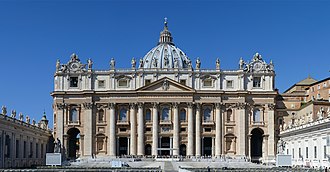
⛪Vatican City (St. Peter's Basilica)
The spiritual center of Roman Catholicism and home of the Pope.
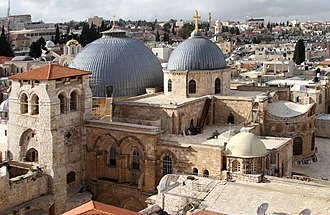
✝️Church of the Holy Sepulchre
The site where Jesus was crucified, buried, and resurrected.