🏜️ M'zab Valley
Algeria
About This Sacred Site
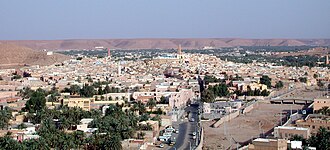
The M'zab Valley in Algeria is a UNESCO World Heritage Site since 1982, consisting of five fortified ksour (villages) established by Ibadi Muslims around 1012 CE. The architecture features compact, whitewashed stone buildings arranged in terraced layouts on rocky plateaus, designed for defense and communal living. Each ksar includes a mosque, a marketplace, and residential quarters with narrow alleys facilitating social interaction. The use of local limestone and mudbrick reflects adaptation to the Saharan environment. The valley’s urban design exemplifies Ibadi principles of egalitarianism and collective responsibility, with water management systems and granaries supporting sustainability in an arid climate.
History & Origins
Around 1012 CE, the Ibadi Muslims of the M'zab Valley established five fortified towns—Ghardaïa, Beni Isguen, Melika, Bou Noura, and El Atteuf—following migrations prompted by religious persecution. These communities developed a distinctive architectural style emphasizing defense, communal living, and environmental adaptation. The valley remained relatively isolated but preserved traditional social structures and religious practices. Over centuries, the M'zab served as a center for Ibadi Islam and trans-Saharan trade. The area was inscribed on the UNESCO World Heritage list in 1982 for its cultural and architectural significance.
Spiritual Significance
The valley is a center of Ibadi Islam, a distinct branch neither Sunni nor Shia, emphasizing puritanical monotheism, community consensus, and asceticism. The five ksour were founded as spiritual and social experiments to preserve Ibadi doctrines during the 11th century. Daily prayers, Friday congregational services, and Ramadan fasting are observed according to Ibadi jurisprudence, which stresses moderation and communal harmony. Pilgrims visit the valley to study Ibadi texts and attend religious lectures led by local imams trained in the Ibadi tradition. The architecture itself reflects religious principles, with communal spaces fostering brotherhood and simplicity. The valley is a living repository of Ibadi legal and theological heritage, sustaining a unique Islamic identity in North Africa.
Key Facts
- •UNESCO World Heritage Site since 1982
- •The five ksour were founded by Ibadi Muslims in the 11th century
- •Ibadi Islam is a distinct branch, neither Sunni nor Shia
- •Each town is centered on a mosque that serves as the social and spiritual core
- •The M'zab's architecture influenced Le Corbusier and other modernist architects
Location
Coordinates: 32.4900, 3.6730
Frequently Asked Questions
What religion is M'zab Valley associated with?▾
M'zab Valley is a Islam holy site located in Algeria. It was established c. 1012 CE and is ranked #462 in our global directory of sacred sites.
When was M'zab Valley established?▾
M'zab Valley dates back to c. 1012 CE. UNESCO World Heritage Site since 1982
How many people visit M'zab Valley each year?▾
M'zab Valley receives approximately 50,000+ visitors per year. The five ksour were founded by Ibadi Muslims in the 11th century
What is M'zab Valley known for?▾
A UNESCO-listed valley of five fortified Ibadi Islamic towns in the Algerian Sahara. Visitors come seeking pilgrimage, spiritual enlightenment, peace, purification. Ibadi Islam is a distinct branch, neither Sunni nor Shia
Related Holy Sites
Sacred places connected by country, religion, and purpose
🏛️Timgad
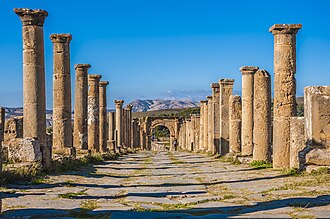
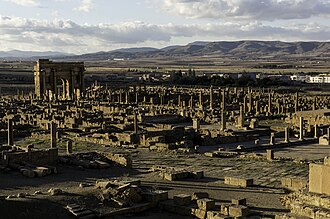
A UNESCO-listed Roman colonial city in Algeria with a grand temple and early Christian basilica.