🙏 Moulay Idriss Zerhoun
Morocco
About This Sacred Site
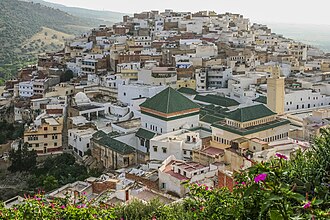
Moulay Idriss Zerhoun is Morocco's holiest town, perched dramatically on two hills overlooking the Roman ruins of Volubilis. It is named after Moulay Idriss I, a descendant of the Prophet Muhammad who founded the Idrisid dynasty — Morocco's first Islamic dynasty — in 789 CE. His tomb, contained within an ornate green-roofed sanctuary in the heart of the town, is the most important pilgrimage destination in Morocco. For centuries, five visits to Moulay Idriss were considered the equivalent of one Hajj to Mecca for Moroccans who could not afford the journey. Until 2005, non-Muslims were not allowed to stay overnight in the town. The annual moussem (festival) draws tens of thousands of pilgrims.
History & Origins
Moulay Idriss Zerhoun, established in 789 CE, is Morocco’s holiest town named after Moulay Idriss I, the great-grandson of the Prophet Muhammad and founder of the Idrisid dynasty. After fleeing the Abbasid persecution in the east, Idriss I settled here and laid the foundations for the first Moroccan Islamic state. The town developed around his mausoleum, which became a revered pilgrimage site. Its unique location on twin hills overlooking the Roman ruins of Volubilis symbolizes the blending of Morocco’s pre-Islamic and Islamic heritage. Over centuries, the site attracted Sufi scholars and pilgrims, reinforcing its spiritual role. The town’s architecture preserves traditional Moroccan elements, with narrow alleyways and whitewashed buildings. Despite historical challenges, including restrictions on non-Muslim access to the shrine, Moulay Idriss Zerhoun remains a vibrant center for religious devotion and Moroccan identity.
Spiritual Significance
Founded in 789 CE, Moulay Idriss Zerhoun is considered Morocco's holiest town due to housing the tomb of Moulay Idriss I, the founder of Morocco's first Islamic dynasty, the Idrisid dynasty. Historically, pilgrimage to this site was so revered that performing five pilgrimages here was deemed spiritually equivalent to one Hajj to Mecca, a practice rooted in local Islamic traditions documented by medieval historians like Ibn Abi Zar. The town's religious significance is accentuated during the annual moussem festival, which honors Moulay Idriss I with processions, Quranic recitations, and Sufi zikr ceremonies, reflecting the spiritual syncretism of Moroccan Islam. Non-Muslims have traditionally been prohibited from entering the sacred mausoleum, preserving its sanctity according to Islamic jurisprudence. The site also integrates Berber religious customs, highlighting the fusion between indigenous beliefs and Islam, as seen in continued veneration practices that emphasize loyalty to the Prophet’s family lineage and the legitimacy of the Idrisid dynasty.
Key Facts
- •Morocco's holiest town, containing the tomb of the founder of its first Islamic dynasty
- •Five pilgrimages here were considered equivalent to one Hajj to Mecca
- •Non-Muslims were not permitted to stay overnight until 2005
- •Moulay Idriss I was a great-grandson of Prophet Muhammad
- •The annual moussem (festival) is one of Morocco's largest religious gatherings
Location
Coordinates: 34.0556, -5.5228
Frequently Asked Questions
What religion is Moulay Idriss Zerhoun associated with?▾
Moulay Idriss Zerhoun is a Islam holy site located in Morocco. It was established 789 CE and is ranked #198 in our global directory of sacred sites.
When was Moulay Idriss Zerhoun established?▾
Moulay Idriss Zerhoun dates back to 789 CE. Morocco's holiest town, containing the tomb of the founder of its first Islamic dynasty
How many people visit Moulay Idriss Zerhoun each year?▾
Moulay Idriss Zerhoun receives approximately 500,000 visitors per year. Five pilgrimages here were considered equivalent to one Hajj to Mecca
What is Moulay Idriss Zerhoun known for?▾
Morocco's holiest town, containing the tomb of the founder of the first Moroccan dynasty. Visitors come seeking pilgrimage, blessings, healing, forgiveness. Non-Muslims were not permitted to stay overnight until 2005
Related Holy Sites
Sacred places connected by country, religion, and purpose