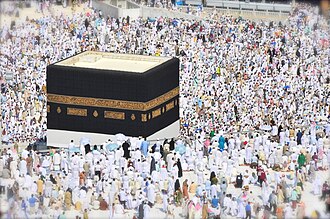
⛺ Mina (Tent City)
Saudi Arabia
About This Sacred Site
Mina is a valley east of Mecca that transforms into the world's largest tent city during the annual Hajj pilgrimage, housing over two million pilgrims in more than 100,000 air-conditioned tents. The key ritual at Mina is the Ramy al-Jamarat — the symbolic stoning of the devil, where pilgrims throw pebbles at three pillars representing the temptations that Satan placed before the Prophet Ibrahim (Abraham). This ritual commemorates Ibrahim's rejection of Satan's attempts to dissuade him from sacrificing his son Ismail as commanded by God. The Eid al-Adha sacrifice also takes place here.
History & Origins
Mina, a valley located approximately 8 kilometers east of Mecca in Saudi Arabia, holds profound significance in Islamic tradition, particularly during the annual Hajj pilgrimage. Historically referenced in Abrahamic texts, Mina has transformed over centuries into the world’s largest tent city, accommodating over two million pilgrims during Hajj. Its role is deeply connected to the ritual of the Stoning of the Devil, where pilgrims symbolically reject evil by casting stones at three pillars representing Satan. Modern developments began in the mid-20th century, when the Saudi government introduced fire-resistant tents to replace earlier makeshift shelters, enhancing safety and comfort. Infrastructure improvements continue, including expanded pathways and sanitation facilities, to manage the massive influx of worshippers. Mina’s evolution from a simple valley to an organized pilgrimage hub reflects its enduring religious importance and the logistical challenges of accommodating millions in a sacred space.
Spiritual Significance
Mina Tent City, established according to ancient Abrahamic traditions and expanded in modern times to accommodate over 2 million pilgrims in more than 100,000 air-conditioned tents, is a critical site for the Hajj pilgrimage rituals. Pilgrims stay in Mina during the days of Hajj, particularly between the 8th and 13th of Dhu al-Hijjah, to perform essential rites such as the stoning of the Jamarat pillars, which symbolize Satan's three temptations of Prophet Ibrahim as narrated in hadith collections like Sahih Muslim. This ritual, known as Ramy al-Jamarat, is performed sequentially at the three pillars: Al-Aqaba, Al-Wusta, and Al-Sughra, representing the rejection of evil. The organization of Mina with numbered tents facilitates communal living and fellowship among pilgrims, fostering a shared experience of devotion. The site is also the staging ground for the Eid al-Adha sacrifice, commemorating Ibrahim’s willingness to sacrifice his son, which is a foundational narrative for Islamic faith. Mina's role in Hajj encapsulates obedience, sacrifice, and spiritual renewal as prescribed in the Quran (Surah Al-Hajj 22:27-29).
Key Facts
- •Houses over 2 million pilgrims in more than 100,000 air-conditioned tents
- •The Jamarat pillars represent Satan's three temptations of Prophet Ibrahim
- •The stoning ritual (Ramy al-Jamarat) is performed on three consecutive days
- •The world's largest tent city, covering approximately 20 square kilometers
- •The site of the Eid al-Adha animal sacrifice commemorating Ibrahim's obedience
Location
Coordinates: 21.4133, 39.8933
Frequently Asked Questions
What religion is Mina (Tent City) associated with?▾
Mina (Tent City) is a Islam holy site located in Saudi Arabia. It was established c. ancient (Abrahamic tradition) and is ranked #489 in our global directory of sacred sites.
When was Mina (Tent City) established?▾
Mina (Tent City) dates back to c. ancient (Abrahamic tradition). Houses over 2 million pilgrims in more than 100,000 air-conditioned tents
How many people visit Mina (Tent City) each year?▾
Mina (Tent City) receives approximately 2+ million (during Hajj) visitors per year. The Jamarat pillars represent Satan's three temptations of Prophet Ibrahim
What is Mina (Tent City) known for?▾
A vast tent city where millions of Hajj pilgrims perform the symbolic stoning of the devil. Visitors come seeking pilgrimage, forgiveness, purification, salvation. The stoning ritual (Ramy al-Jamarat) is performed on three consecutive days
Related Holy Sites
Sacred places connected by country, religion, and purpose
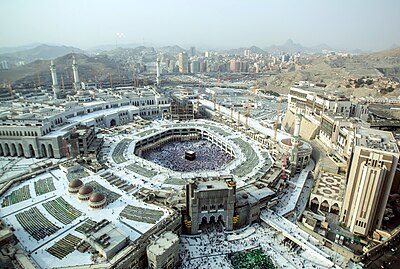
🕋Masjid al-Haram (Great Mosque of Mecca)
The holiest site in Islam, home of the Kaaba, and the destination for Hajj pilgrimage.
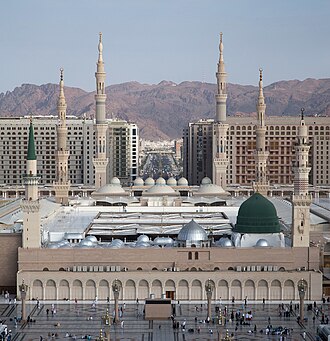
🕌Al-Masjid an-Nabawi (Prophet's Mosque)
The second holiest mosque in Islam, containing the tomb of Prophet Muhammad.