🏔️ Kedarnath Temple
India
About This Sacred Site
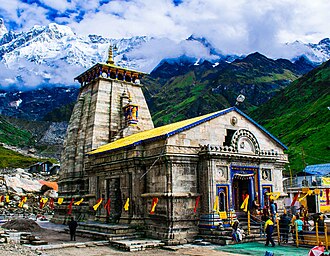
Kedarnath Temple is one of the most revered Hindu temples, dedicated to Lord Shiva and located at an altitude of 3,583 meters in the Garhwal Himalayas of Uttarakhand. It is one of the twelve Jyotirlingas and one of the four Char Dham pilgrimage sites. The temple is believed to have been built by the Pandavas from the Mahabharata and later restored by Adi Shankaracharya in the 8th century. Despite devastating floods in 2013 that destroyed much of the surrounding area, the ancient temple survived virtually intact.
Spiritual Significance
Situated at 3,583 meters in the Garhwal Himalayan range, the temple is dedicated to Lord Shiva and is one of the twelve Jyotirlingas mentioned in the Shiva Purana. Pilgrims undertake a rigorous 16 km trek from Gaurikund, believed to purify the soul through physical effort and devotion. Annual celebrations during Maha Shivaratri draw thousands who perform Rudra Abhishek rituals using holy water from the Mandakini River. It is traditionally believed that the Pandavas built the original shrine, while the current stone structure dates to the 8th century CE, attributed to Adi Shankaracharya’s revival of Shaivism. The temple’s theology centers on Shiva as the destroyer and transformer, with the Jyotirlinga symbolizing Shiva’s infinite nature. Devotees circumambulate the sanctum and chant the Om Namah Shivaya mantra, reflecting Vedic and Puranic injunctions for spiritual cleansing.
Key Facts
- •Located at 3,583 meters altitude, accessible only by a 16 km trek from Gaurikund
- •One of the twelve sacred Jyotirlingas of Lord Shiva in India
- •Believed to have been built by the Pandavas over 5,000 years ago
- •The temple miraculously survived the catastrophic 2013 Uttarakhand floods
- •Remains open only six months a year due to extreme winter conditions
Location
Coordinates: 30.7352, 79.0669
Frequently Asked Questions
What religion is Kedarnath Temple associated with?▾
Kedarnath Temple is a Hinduism holy site located in India. It was established c. 8th century CE (current structure) and is ranked #303 in our global directory of sacred sites.
When was Kedarnath Temple established?▾
Kedarnath Temple dates back to c. 8th century CE (current structure). Located at 3,583 meters altitude, accessible only by a 16 km trek from Gaurikund
How many people visit Kedarnath Temple each year?▾
Kedarnath Temple receives approximately 1+ million visitors per year. One of the twelve sacred Jyotirlingas of Lord Shiva in India
What is Kedarnath Temple known for?▾
One of the twelve Jyotirlingas of Lord Shiva, perched high in the Himalayas. Visitors come seeking pilgrimage, salvation, purification, spiritual enlightenment. Believed to have been built by the Pandavas over 5,000 years ago
Related Holy Sites
Sacred places connected by country, religion, and purpose