🙏 Jambay Lhakhang
Bhutan
About This Sacred Site
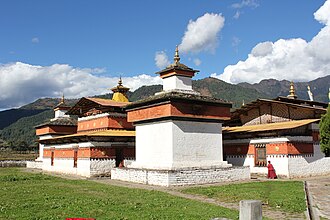
Jambay Lhakhang in the Bumthang Valley is one of the oldest temples in Bhutan, believed to have been built in 659 CE by Tibetan King Songtsen Gampo as part of a network of 108 temples constructed to pin down a giant demoness. The temple is dedicated to Jamba (Maitreya, the future Buddha) and contains ancient sacred relics and images. It is most famous for its annual Jambay Lhakhang Drup festival, which features the spectacular naked fire dance (Mewang and Tercham), where monks dance through flames in the dark to bless infertile women.
History & Origins
Jambay Lhakhang was constructed in 659 CE by Tibetan King Songtsen Gampo as part of a strategic network of 108 temples to subdue local spirits and establish Buddhism in the region. It stands as one of Bhutan's oldest temples, predating the introduction of Guru Rinpoche's teachings in the 8th century. The temple underwent significant restoration in the 15th century under the patronage of Bhutanese religious leaders to preserve its ancient murals and structural integrity. Located in the Bumthang Valley, the temple's architecture features traditional Bhutanese stonework with a distinctive trapezoidal plan. Historical records from the 17th century mention the temple as a center for monastic education and as a site for royal ceremonies. The temple complex also includes ancient statues and relics linked to early Buddhist propagation in Bhutan. Its survival through multiple natural disasters, including earthquakes in the 20th century, attests to its resilient construction techniques.
Spiritual Significance
The temple is renowned for the annual Jambay Lhakhang Drup festival held every November, featuring masked dances that reenact the subjugation of local spirits, a ritual derived from the Tibetan Buddhist tradition. Devotees perform circumambulations while reciting mantras from the Kangyur scriptures, believed to invoke blessings of protection and prosperity. The temple is dedicated to the deity Avalokiteshvara, whose statue is central to worship and is said to possess miraculous powers for healing. Pilgrims often bring offerings of butter lamps and barley to participate in pujas led by resident monks following the Nyingma tradition. The temple's spiritual prominence is also linked to its association with Guru Rinpoche, whose presence in Bhutanite Buddhism is foundational. Specific rituals include the burning of juniper to cleanse negative energies, reflecting Vajrayana practices unique to Bhutanese monasticism.
Key Facts
- •Built in 659 CE by Tibetan King Songtsen Gampo as part of a network of 108 temples
- •One of the oldest temples in Bhutan, predating the arrival of Guru Rinpoche
- •Famous for its annual naked fire dance performed by monks to bless the infertile
- •Contains ancient relics and images of Jamba (Maitreya Buddha)
- •Part of a legendary network of temples said to pin down a giant demoness
Location
Coordinates: 27.5803, 90.7336
Frequently Asked Questions
What religion is Jambay Lhakhang associated with?▾
Jambay Lhakhang is a Buddhism holy site located in Bhutan. It was established 659 CE and is ranked #546 in our global directory of sacred sites.
When was Jambay Lhakhang established?▾
Jambay Lhakhang dates back to 659 CE. Built in 659 CE by Tibetan King Songtsen Gampo as part of a network of 108 temples
How many people visit Jambay Lhakhang each year?▾
Jambay Lhakhang receives approximately 50,000+ visitors per year. One of the oldest temples in Bhutan, predating the arrival of Guru Rinpoche
What is Jambay Lhakhang known for?▾
One of Bhutan's oldest temples, built in the 7th century by the Tibetan King Songtsen Gampo. Visitors come seeking healing, blessings, protection, fertility. Famous for its annual naked fire dance performed by monks to bless the infertile
Related Holy Sites
Sacred places connected by country, religion, and purpose
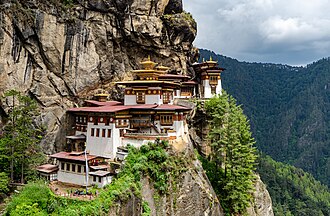
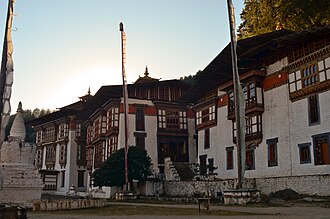
☸️Kurjey Lhakhang
A sacred temple complex where Guru Rinpoche left his body imprint in a cave wall.
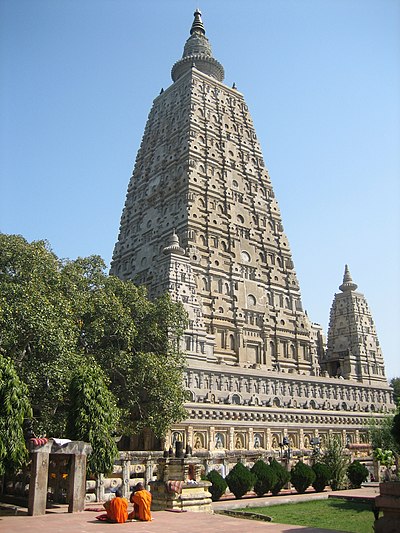
☸️Bodh Gaya (Mahabodhi Temple)
Where Siddhartha Gautama attained enlightenment and became the Buddha.
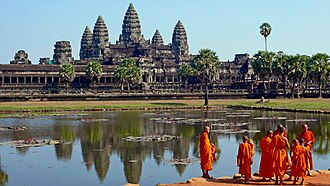
🛕Angkor Wat
The largest religious monument in the world, originally Hindu then Buddhist.