
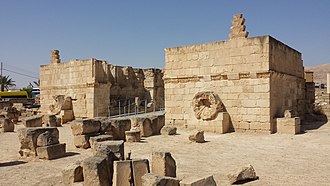
🏛️ Hisham's Palace (Khirbet al-Mafjar)
Palestine
About This Sacred Site
Hisham's Palace (Khirbet al-Mafjar), located north of Jericho, is one of the most significant Umayyad palaces in the Islamic world. Built in the 8th century during the reign of Caliph Hisham ibn Abd al-Malik, the complex includes a palace, mosque, and an elaborate bathhouse containing what is widely considered one of the greatest floor mosaics in existence. The 'Tree of Life' mosaic in the bathhouse diwan depicts a tree with a lion attacking a deer on one side and deer grazing peacefully on the other — symbolizing war and peace. An earthquake destroyed much of the palace before it was completed, preserving its extraordinary art beneath rubble for over a millennium. A new museum now protects the mosaic.
Spiritual Significance
Hisham's Palace, constructed during the Umayyad Caliphate between 724 and 743 CE, exemplifies early Islamic art and architecture, symbolizing the caliphate's cultural and religious aspirations. The palace's renowned 'Tree of Life' mosaic floor represents the Qur'anic concept of paradise, reflecting cosmological and spiritual symbolism significant in Islamic theology. Although primarily a secular royal residence, the palace's design incorporates elements aligned with Islamic aesthetics, such as intricate geometric patterns and vegetal motifs, which convey divine unity and order. The site was likely used for administrative and potentially religious gatherings, with its proximity to Jericho enhancing its role in regional governance and spiritual life. The 749 CE earthquake that destroyed the palace halted its function, but the ruins continue to inspire visitors and scholars interested in Umayyad-era religious art and the integration of Quranic themes into monumental architecture. Modern pilgrimages to the site often include scholarly tours focusing on the palace's mosaics and inscriptions, connecting visitors with the early Islamic vision of sacred space.
Key Facts
- •Contains the 'Tree of Life' mosaic, one of the greatest floor mosaics in the world
- •Built in the 8th century during the Umayyad Caliphate
- •An earthquake destroyed the palace before completion, preserving art beneath rubble
- •The bathhouse complex was one of the most elaborate in the Islamic world
- •A new museum was built to protect and display the extraordinary mosaic
Location
Coordinates: 31.8797, 35.4572
Frequently Asked Questions
What religion is Hisham's Palace (Khirbet al-Mafjar) associated with?▾
Hisham's Palace (Khirbet al-Mafjar) is a Islam holy site located in Palestine. It was established c. 724-743 CE and is ranked #687 in our global directory of sacred sites.
When was Hisham's Palace (Khirbet al-Mafjar) established?▾
Hisham's Palace (Khirbet al-Mafjar) dates back to c. 724-743 CE. Contains the 'Tree of Life' mosaic, one of the greatest floor mosaics in the world
How many people visit Hisham's Palace (Khirbet al-Mafjar) each year?▾
Hisham's Palace (Khirbet al-Mafjar) receives approximately 100,000 visitors per year. Built in the 8th century during the Umayyad Caliphate
What is Hisham's Palace (Khirbet al-Mafjar) known for?▾
An Umayyad palace near Jericho with the 'Tree of Life' — one of the world's greatest floor mosaics. Visitors come seeking ancestral connection, spiritual enlightenment, peace, guidance. An earthquake destroyed the palace before completion, preserving art beneath rubble
Related Holy Sites
Sacred places connected by country, religion, and purpose
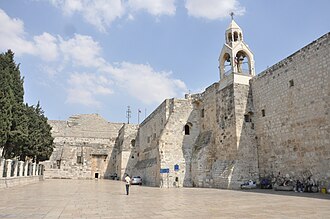
⭐Church of the Nativity
Built over the cave where Jesus Christ is believed to have been born.
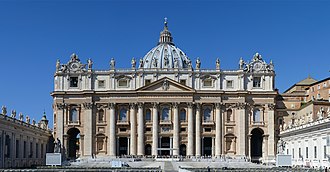
⛪Vatican City (St. Peter's Basilica)
The spiritual center of Roman Catholicism and home of the Pope.
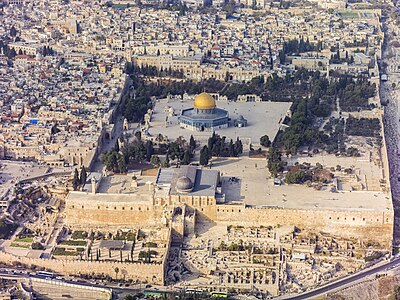
🕌Temple Mount / Al-Aqsa (Jerusalem)
Sacred to Judaism, Christianity, and Islam — the most contested holy site on Earth.

