
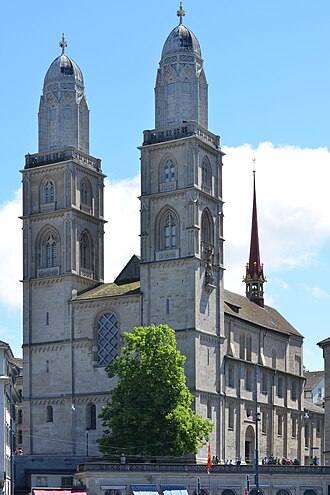
⛪ Grossmünster (Zurich)
Switzerland
About This Sacred Site
Grossmünster (Great Minster) is a Romanesque-style Protestant church in Zurich and the birthplace of the Swiss Reformation. According to legend, it was founded by Charlemagne, but it is historically associated with Huldrych Zwingli, who began preaching reformed theology here in 1519, sparking the Reformation in German-speaking Switzerland. The church's twin towers are an iconic element of the Zurich skyline, and its modern stained-glass windows were designed by Augusto Giacometti and Sigmar Polke.
History & Origins
The present Romanesque structure of Grossmünster in Zurich was constructed circa 1100, replacing an earlier Carolingian church reportedly founded by Charlemagne on the graves of Saints Felix and Regula, Zurich's patron saints. The twin towers, standing approximately 62 meters high, were completed in the 13th century and remain a defining feature of the city skyline. Huldrych Zwingli launched the Swiss Reformation from this church in 1519, instituting liturgical reforms and iconoclastic measures that transformed Swiss Protestantism. The church underwent Neo-Gothic renovations in the 19th century, including stained glass windows by artist Augusto Giacometti installed between 1932 and 1935. The Grossmünster’s crypt preserves medieval frescoes and relics, reflecting its historical ecclesiastical significance. The church continues to function as a Reformed Protestant parish, upholding Zwingli’s theological legacy.
Spiritual Significance
Grossmünster is central to Reformed Christian worship in Zurich, where the weekly Sunday services emphasize sermons rooted in the Scriptures, particularly the Pauline epistles, reflecting Zwingli’s theological focus on justification by faith. The church hosts annual commemorations of the Swiss Reformation on January 1st, featuring public readings of Zwingli’s writings and congregational singing of psalms in German. The legend of Charlemagne founding the church on the graves of Zurich’s patron saints Felix and Regula underpins local veneration and pilgrimage practices, with the saints’ feast day celebrated on September 11th by liturgies and processions. The church’s crypt is a pilgrimage stop for those honoring early Christian martyrs. Grossmünster’s theological importance lies in its role as a birthplace of Protestantism in Switzerland, where congregants engage in scriptural study groups and ecumenical dialogues reflecting Zwingli’s reformist ideals.
Key Facts
- •Huldrych Zwingli began the Swiss Reformation from this church in 1519
- •Legend says Charlemagne founded the church on the graves of Zurich's patron saints, Felix and Regula
- •The twin Romanesque towers are the most recognizable feature of the Zurich skyline
- •Modern stained-glass windows were designed by Augusto Giacometti (1933) and Sigmar Polke (2009)
- •A bronze door by Otto Münch (1935–1950) depicts key scenes from the Reformation
Location
Coordinates: 47.3699, 8.5437
Frequently Asked Questions
What religion is Grossmünster (Zurich) associated with?▾
Grossmünster (Zurich) is a Christianity holy site located in Switzerland. It was established c. 1100 (present structure) and is ranked #610 in our global directory of sacred sites.
When was Grossmünster (Zurich) established?▾
Grossmünster (Zurich) dates back to c. 1100 (present structure). Huldrych Zwingli began the Swiss Reformation from this church in 1519
How many people visit Grossmünster (Zurich) each year?▾
Grossmünster (Zurich) receives approximately 500,000 visitors per year. Legend says Charlemagne founded the church on the graves of Zurich's patron saints, Felix and Regula
What is Grossmünster (Zurich) known for?▾
The Romanesque church in Zurich from which Huldrych Zwingli launched the Swiss Reformation. Visitors come seeking spiritual enlightenment, guidance, pilgrimage, peace. The twin Romanesque towers are the most recognizable feature of the Zurich skyline
Related Holy Sites
Sacred places connected by country, religion, and purpose
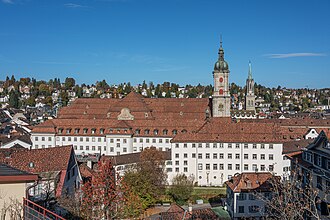
⛪Abbey of Saint Gall
A Baroque abbey complex housing one of the world's oldest and richest monastic libraries.
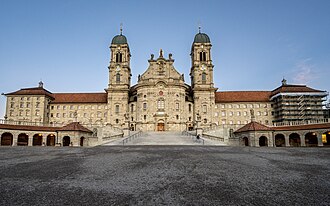
⛪Einsiedeln Abbey
Switzerland's principal pilgrimage site, a Benedictine abbey venerating the Black Madonna of Einsiedeln.

⛪Vatican City (St. Peter's Basilica)
The spiritual center of Roman Catholicism and home of the Pope.
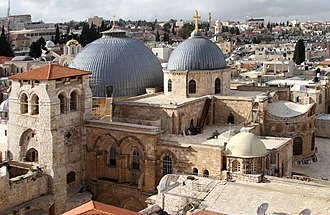
✝️Church of the Holy Sepulchre
The site where Jesus was crucified, buried, and resurrected.
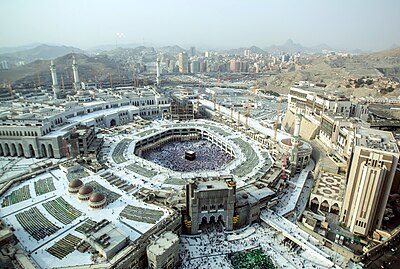
🕋Masjid al-Haram (Great Mosque of Mecca)
The holiest site in Islam, home of the Kaaba, and the destination for Hajj pilgrimage.

🕌Temple Mount / Al-Aqsa (Jerusalem)
Sacred to Judaism, Christianity, and Islam — the most contested holy site on Earth.

