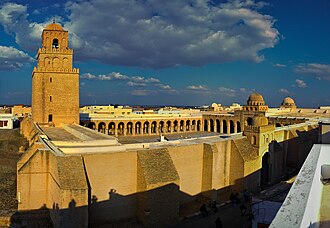
🕌 Great Mosque of Kairouan
Tunisia
About This Sacred Site
The Great Mosque of Kairouan, also known as the Mosque of Uqba, founded in 670 CE in Tunisia, is the oldest mosque in North Africa and a pivotal monument in Islamic history. It features massive stone construction, a vast hypostyle prayer hall, and an iconic minaret considered the prototype for Maghrebi mosque architecture. The mosque has served as a center of Islamic scholarship, religious practice, and pilgrimage, embodying the spread of Islam across the Maghreb and acting as a spiritual beacon for centuries.
Spiritual Significance
Founded in 670 CE by the Arab general Uqba ibn Nafi, the mosque is considered the fourth holiest site in Islam after Mecca, Medina, and Jerusalem. It hosts the annual pilgrimage known as the "Seven pilgrimages to Kairouan," a tradition where pilgrims perform multiple circuit prayers around the mosque’s vast courtyard, emulating the Tawaf of the Kaaba. The mosque’s minbar, carved in 860 CE, is one of the oldest surviving pulpits in the Muslim world and is used during Friday sermons to explain Quranic injunctions, especially those from Surah Al-Baqarah. The mosque also contains the well of Uqba, believed to have been dug by the founder himself, which pilgrims visit for blessings. Its role as a center for Maliki jurisprudence has influenced North African Islamic practice, with scholars like Sahnun al-Tanukhi teaching there in the 9th century. The mosque’s architecture, with its vast prayer hall and massive marble columns, symbolizes the spread of Islam and its theological doctrines across the Maghreb.
Key Facts
- •Founded in 670 CE, making it the oldest mosque in North Africa
- •UNESCO World Heritage Site as part of the medina of Kairouan (1988)
- •Seven pilgrimages to Kairouan are traditionally considered equal to one Hajj
- •The mosque's hypostyle prayer hall contains 414 ancient columns
- •Its massive buttressed walls and 31.5-meter minaret are iconic in Islamic architecture
Location
Coordinates: 35.6815, 10.1036
Frequently Asked Questions
What religion is Great Mosque of Kairouan associated with?▾
Great Mosque of Kairouan is a Islam holy site located in Tunisia. It was established 670 CE and is ranked #142 in our global directory of sacred sites.
When was Great Mosque of Kairouan established?▾
Great Mosque of Kairouan dates back to 670 CE. Founded in 670 CE, making it the oldest mosque in North Africa
How many people visit Great Mosque of Kairouan each year?▾
Great Mosque of Kairouan receives approximately 500,000+ visitors per year. UNESCO World Heritage Site as part of the medina of Kairouan (1988)
What is Great Mosque of Kairouan known for?▾
The oldest mosque in North Africa and the fourth holiest site in Islam, founded in 670 CE. Visitors come seeking pilgrimage, spiritual enlightenment, blessings, purification. Seven pilgrimages to Kairouan are traditionally considered equal to one Hajj
Related Holy Sites
Sacred places connected by country, religion, and purpose
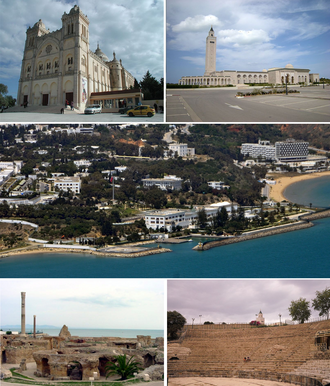
🏛️Carthage
The ruins of the great Phoenician city with the Tophet sanctuary and Roman temples, a UNESCO site.
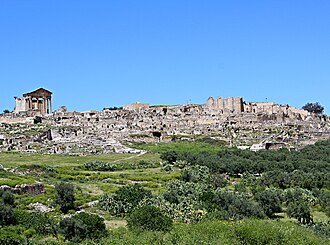
🏛️Dougga
The best-preserved Roman town in North Africa, with a stunning Capitol temple, a UNESCO site.