🕌 Djamaa el Djazaïr (Great Mosque of Algiers)
Algeria
About This Sacred Site
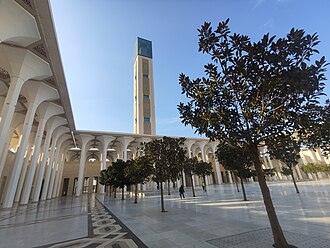
Djamaa el Djazaïr, known as the Great Mosque of Algiers, is a monumental Islamic site completed in 2019 on the Bay of Algiers. It is the third-largest mosque in the world and the largest in Africa, featuring a minaret that rises 265 meters, making it the tallest globally. The mosque complex includes a vast prayer hall, Quranic school, library, and museum, reflecting contemporary Islamic architecture blended with traditional Algerian design. It serves as both a religious center and a symbol of national identity and modern Islamic culture.
Spiritual Significance
The Great Mosque of Algiers, completed in 2019, serves as a monumental center for Islamic worship and education in Algeria, accommodating up to 120,000 worshippers, making it the third-largest mosque worldwide by capacity. Its 265-meter minaret, the tallest globally, is a visible symbol of Islamic presence and piety. The mosque hosts the five daily prayers (Salah), Friday Jumu'ah congregational prayers, and Ramadan Taraweeh prayers, following Sunni Maliki jurisprudence prevalent in Algeria. The mosque complex includes a Quranic school (madrasa) and a library, reinforcing the importance of Islamic scholarship in local religious life. Annual Mawlid celebrations marking the Prophet Muhammad's birth are held here, drawing pilgrims from across the country. The architectural design integrates traditional Maghrebi styles with modern engineering, reflecting continuity of Islamic tradition and community identity.
Key Facts
- •The third-largest mosque in the world by capacity (120,000 worshippers)
- •Its 265-meter minaret is the tallest in the world
- •Completed in 2019 after over a decade of construction
- •Designed to withstand magnitude 9 earthquakes
- •The complex includes a 2,000-seat Quran school, a library, and a museum of Islamic art
Location
Coordinates: 36.7484, 3.0643
Frequently Asked Questions
What religion is Djamaa el Djazaïr (Great Mosque of Algiers) associated with?▾
Djamaa el Djazaïr (Great Mosque of Algiers) is a Islam holy site located in Algeria. It was established 2019 and is ranked #568 in our global directory of sacred sites.
When was Djamaa el Djazaïr (Great Mosque of Algiers) established?▾
Djamaa el Djazaïr (Great Mosque of Algiers) dates back to 2019. The third-largest mosque in the world by capacity (120,000 worshippers)
How many people visit Djamaa el Djazaïr (Great Mosque of Algiers) each year?▾
Djamaa el Djazaïr (Great Mosque of Algiers) receives approximately 1+ million visitors per year. Its 265-meter minaret is the tallest in the world
What is Djamaa el Djazaïr (Great Mosque of Algiers) known for?▾
The third-largest mosque in the world, with the tallest minaret ever built, completed in 2019. Visitors come seeking pilgrimage, blessings, peace, guidance. Completed in 2019 after over a decade of construction
Related Holy Sites
Sacred places connected by country, religion, and purpose