
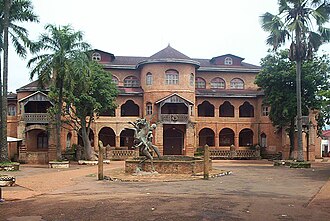
👑 Foumban Royal Palace
Cameroon
About This Sacred Site
The Foumban Royal Palace is the seat of the Sultan of the Bamoun people in western Cameroon. Built in the early 20th century by Sultan Njoya, who also invented a unique alphabet and founded a syncretic religion blending Islam, Christianity, and Bamoun traditions, the palace is a museum and spiritual center. The annual Nguon festival, centered on the palace, celebrates Bamoun heritage and includes spiritual rituals, mask dances, and the renewal of the relationship between the Sultan and his people.
History & Origins
Constructed circa 1910 by Sultan Njoya (1876–1933), the Foumban Royal Palace serves as the historic seat of the Bamoun Kingdom in Cameroon. Sultan Njoya, renowned for inventing the Bamoun script around 1910, oversaw the palace's creation to consolidate his political and cultural influence. The palace complex underwent expansions during his reign, integrating traditional Bamoun architectural styles with Islamic and European influences. It withstood colonial pressures during the French protectorate period established in 1916. In the late 20th century, restoration projects were initiated to preserve its intricate bas-reliefs and royal artifacts. Today, it functions as a museum and a cultural center, safeguarding the legacy of the Bamoun dynasty and its unique scriptural heritage.
Spiritual Significance
The palace is a center for a syncretic religion developed by Sultan Njoya, blending Islamic teachings, Christian elements, and indigenous Bamoun beliefs. Annually, the Nguon festival, established in the early 20th century, takes place on the palace grounds to honor the royal ancestors and renew the spiritual covenant with the Bamoun people. Rituals involve offerings, drumming, and recitations in the Bamoun script, reflecting theological doctrines unique to the kingdom. Pilgrims from across Cameroon attend to seek blessings and participate in divination practices guided by palace priests who interpret the sacred Bamoun manuscripts. The palace's religious role bridges multiple faith traditions, making it a rare multi-faith spiritual hub.
Key Facts
- •Built by Sultan Njoya (1876–1933), who invented the Bamoun script
- •Sultan Njoya created a syncretic religion blending Islam, Christianity, and Bamoun beliefs
- •The annual Nguon festival is a major spiritual and cultural celebration
- •The palace museum houses over 3,000 artifacts of Bamoun heritage
- •Foumban is known as the 'city of art' for its rich tradition of craftsmanship
Location
Coordinates: 5.7264, 10.8981
Frequently Asked Questions
What religion is Foumban Royal Palace associated with?▾
Foumban Royal Palace is a Multi-faith holy site located in Cameroon. It was established c. 1910 and is ranked #877 in our global directory of sacred sites.
When was Foumban Royal Palace established?▾
Foumban Royal Palace dates back to c. 1910. Built by Sultan Njoya (1876–1933), who invented the Bamoun script
How many people visit Foumban Royal Palace each year?▾
Foumban Royal Palace receives approximately 50,000+ visitors per year. Sultan Njoya created a syncretic religion blending Islam, Christianity, and Bamoun beliefs
What is Foumban Royal Palace known for?▾
The palace of the Bamoun Sultan, a center of spiritual and cultural life blending Islamic and traditional Bamoun practices. Visitors come seeking ancestral connection, guidance, protection, blessings. The annual Nguon festival is a major spiritual and cultural celebration
Related Holy Sites
Sacred places connected by country, religion, and purpose
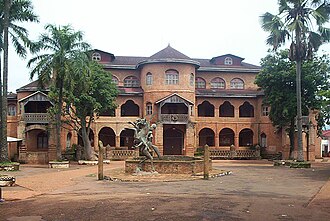
👑Foumban Royal Palace
The palace of the Bamoun kingdom blending Islamic and traditional African spirituality.

🕌Temple Mount / Al-Aqsa (Jerusalem)
Sacred to Judaism, Christianity, and Islam — the most contested holy site on Earth.
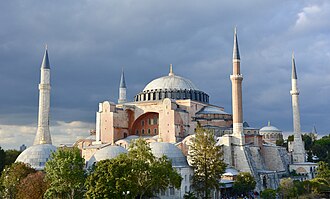
🏛️Hagia Sophia
A masterpiece that served as cathedral, mosque, and museum across centuries.

⛪Vatican City (St. Peter's Basilica)
The spiritual center of Roman Catholicism and home of the Pope.
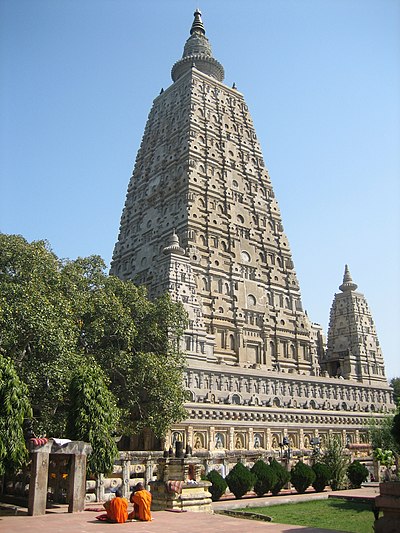
☸️Bodh Gaya (Mahabodhi Temple)
Where Siddhartha Gautama attained enlightenment and became the Buddha.

