🏰 Dar al-Hajar (Rock Palace)
Yemen
About This Sacred Site
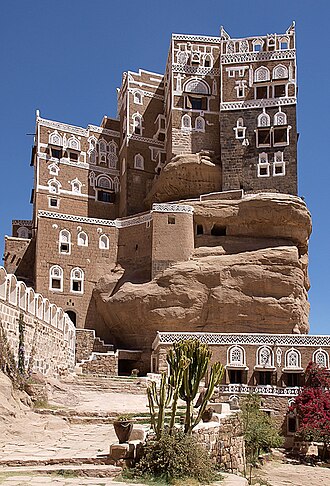
Dar al-Hajar, the Rock Palace, is an iconic Yemeni structure perched dramatically atop a rock pillar in Wadi Dhahr near Sana'a. Originally built as a summer retreat for the Imam of Yemen in the 1930s on the foundations of an earlier structure, the palace features a mosque and prayer rooms within its five stories. The building incorporates traditional Yemeni Islamic architecture with stained glass qamariyya windows and carved gypsum decorations. It has become one of the most iconic symbols of Yemen.
History & Origins
Constructed in the 1930s on the foundations of an older structure, Dar al-Hajar, or Rock Palace, was commissioned by Imam Yahya Muhammad Hamid ed-Din, ruler of Yemen from 1904 to 1948. The palace is uniquely perched atop a natural rock pillar in the Wadi Dhahr valley, measuring approximately 65 meters in height, providing strategic visibility and defense. The building's architecture integrates traditional Yemeni elements, including intricately carved stonework and the use of qamariyya stained glass windows, which create colorful interior lighting effects. The palace served as a summer retreat and a symbol of the Imam’s power, blending natural topography with human craftsmanship. In the late 20th century, Dar al-Hajar underwent restoration to preserve its structural integrity and aesthetic detail. Its location near Sana'a makes it a prominent landmark, reflecting the intersection of natural geology and Islamic architectural innovation during the early modern period in Yemen.
Spiritual Significance
Dar al-Hajar holds spiritual significance partly due to its incorporation of qamariyya windows, which are traditionally used in Yemeni religious architecture to symbolize divine light entering sacred spaces. Although primarily a royal residence, the palace's elevated position atop a rock pillar evokes Islamic metaphors of spiritual ascent and closeness to God, echoing Quranic descriptions of mountains as places of revelation. The palace’s proximity to Wadi Dhahr, a valley historically associated with Quranic study and Sufi gatherings, links it to regional spiritual practices. Visitors often reflect on the palace’s integration of natural and spiritual symbolism, with some local traditions regarding prayers for protection and blessings conducted in nearby mosques. Dar al-Hajar’s design exemplifies the use of architectural elements that align with Islamic aesthetics and cosmology, reinforcing the cultural importance of light, height, and harmony with the environment in religious thought.
Key Facts
- •Built in the 1930s on foundations of an earlier structure
- •Perched atop a natural rock pillar in Wadi Dhahr
- •Features traditional qamariyya stained glass windows
- •Served as a summer retreat for the Imam of Yemen
- •One of the most photographed buildings in Yemen
Location
Coordinates: 15.4578, 44.1444
Frequently Asked Questions
What religion is Dar al-Hajar (Rock Palace) associated with?▾
Dar al-Hajar (Rock Palace) is a Islam holy site located in Yemen. It was established 1930s and is ranked #946 in our global directory of sacred sites.
When was Dar al-Hajar (Rock Palace) established?▾
Dar al-Hajar (Rock Palace) dates back to 1930s. Built in the 1930s on foundations of an earlier structure
How many people visit Dar al-Hajar (Rock Palace) each year?▾
Dar al-Hajar (Rock Palace) receives approximately 50,000 visitors per year. Perched atop a natural rock pillar in Wadi Dhahr
What is Dar al-Hajar (Rock Palace) known for?▾
An iconic palace perched on a rock pillar near Sana'a, a symbol of Yemeni Islamic culture. Visitors come seeking peace, meditation, spiritual enlightenment, guidance. Features traditional qamariyya stained glass windows
Related Holy Sites
Sacred places connected by country, religion, and purpose