⛪ Church of San Pietro San Marino
San Marino
About This Sacred Site
The Church of San Pietro in San Marino dates back to circa 600 CE and is constructed primarily from local limestone, characteristic of early medieval ecclesiastical architecture in the region. This small yet historically rich church features rock niches carved directly into the interior walls, which are traditionally believed to be the sleeping places of St Marinus and St Leo, the founders of the Republic of San Marino. The church's nave is modest in size, measuring approximately 12 meters in length and 6 meters in width, with a simple wooden-beamed ceiling. The façade displays a plain stone exterior interrupted by a semicircular Romanesque arch doorway, emphasizing its ancient origins. Its location near the summit of Monte Titano adds to its architectural prominence, as it stands amidst rugged terrain, integrating natural rock formations into its sacred space.
History & Origins
Founded circa 600 CE, the Church of San Pietro is one of the oldest religious structures in San Marino, initially serving early Christian worshippers on Mount Titano. Its location behind the later Basilica di San Marino underscores its foundational role in the republic’s ecclesiastical history. Over centuries, the church underwent various renovations, preserving its Romanesque character while adapting to liturgical changes. The two rock niches inside are believed to have housed hermits or early monks, indicating the site’s use as a spiritual retreat in the early medieval period. Despite its modest size, the church remained a vital place of worship and community gathering, witnessing San Marino’s growth from a monastic outpost to a sovereign republic. Efforts to conserve its medieval frescoes and architectural elements continue, ensuring that this venerable site remains a living testament to San Marino’s Christian origins.
Spiritual Significance
The Church of San Pietro holds profound spiritual significance due to the rock niches believed to have healing powers for pilgrims and worshippers who lie in them, a tradition dating back to early Christian practices of physical proximity to relics or sacred sites for divine intercession. Pilgrims often visit during the Feast of St Marinus on September 3rd, participating in prayers and liturgical services that commemorate the saint's role in establishing the Christian community on Monte Titano. The church's association with St Leo, and references to early Christian texts such as the Acts of the Apostles, underscore its theological importance as a site of apostolic succession and early Christian witness. Local clergy conduct blessings invoking the healing properties attributed to the niches, reinforcing the belief in tangible spiritual and physical restoration linked to the founding saints' presence.
Key Facts
- •Contains rock niches believed to be the beds of St Marinus and St Leo
- •The rock beds are believed to have healing powers for those who lie in them
- •One of the oldest churches in the republic, though rebuilt in the 16th century
- •St Leo went on to found the nearby town of San Leo
- •Located directly behind the main Basilica on Mount Titano
Location
Coordinates: 43.9361, 12.4469
Frequently Asked Questions
What religion is Church of San Pietro San Marino associated with?▾
Church of San Pietro San Marino is a Christianity holy site located in San Marino. It was established c. 600 and is ranked #375 in our global directory of sacred sites.
When was Church of San Pietro San Marino established?▾
Church of San Pietro San Marino dates back to c. 600. Contains rock niches believed to be the beds of St Marinus and St Leo
How many people visit Church of San Pietro San Marino each year?▾
Church of San Pietro San Marino receives approximately 300,000 visitors per year. The rock beds are believed to have healing powers for those who lie in them
What is Church of San Pietro San Marino known for?▾
An ancient church containing rock niches where St Marinus and St Leo are said to have slept. Visitors come seeking healing, ancestral connection, meditation. One of the oldest churches in the republic, though rebuilt in the 16th century
Related Holy Sites
Sacred places connected by country, religion, and purpose
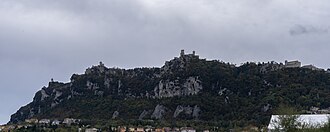
🏔️Monte Titano
The sacred mountaintop where St Marinus founded the world's oldest republic as a refuge from persecution.

⛰️Monte Titano Sacred Sites
The UNESCO-listed sacred summit where Saint Marinus founded the world's oldest republic.
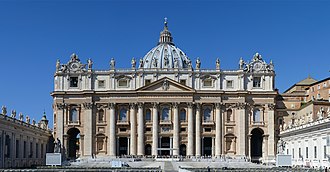
⛪Vatican City (St. Peter's Basilica)
The spiritual center of Roman Catholicism and home of the Pope.
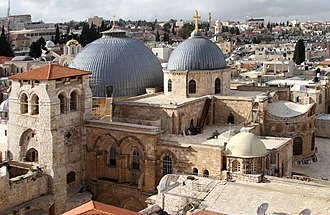
✝️Church of the Holy Sepulchre
The site where Jesus was crucified, buried, and resurrected.