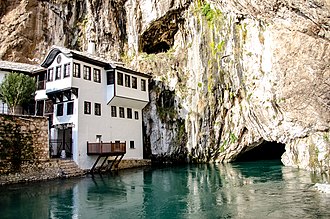
🕌 Blagaj Tekke
Bosnia and Herzegovina
About This Sacred Site
Constructed circa 1520 at the spring of the Buna River, the tekke is built directly into a sheer 200-meter cliff face, utilizing local limestone to blend seamlessly with the natural environment. The mosque and dervish monastery complex features a rectangular prayer hall measuring approximately 10 by 14 meters, topped with a dome supported by wooden beams imported from the Dalmatian coast. The site includes a traditional Sufi semahane (dance hall) where the Halveti order performed dhikr ceremonies, with an adjoining courtyard open to the Buna River. The water source is one of the largest karstic springs in Europe, producing an average flow rate of 43 cubic meters per second, and is incorporated into the tekke's ablution area. The complex's wooden shutters and stone terraces reflect Ottoman architectural styles adapted to the karst terrain, preserving both spiritual function and environmental harmony.
History & Origins
Founded circa 1520 during the height of Ottoman influence in the Balkans, the Blagaj Tekke served as a Sufi lodge for the Dervish order, promoting spiritual reflection and communal worship. Its strategic location at the Buna River spring provided both natural beauty and seclusion, essential for Sufi meditation. Over centuries, the tekke became a cultural and religious hub, surviving regional conflicts and shifts in governance. The complex underwent restorations in the 20th century to preserve its architectural integrity and religious function. Today, it remains an active site for spiritual gatherings and a symbol of Bosnia's Ottoman Islamic heritage.
Spiritual Significance
The Blagaj Tekke served as a spiritual center for the Halveti Sufi order, focusing on the practice of dhikr, or rhythmic chanting of divine names, following the teachings of Sheikh Khalwati, founder of the order. The tekke hosts annual gatherings during the Islamic month of Muharram, commemorating the martyrdom of Imam Hussein with recitations of the Quran and Sufi poetry by Bosnian mystics. Pilgrims perform ritual washing using water from the Buna spring, symbolizing spiritual purification in Sufi tradition. The site embodies the concept of fana, or annihilation of the self in God, central to Halveti doctrine, with the serene natural setting enhancing meditative practices. Halveti sheikhs use the tekke as a place for spiritual instruction and initiation ceremonies, continuing a lineage traced back to 14th-century Anatolian Sufism. The blending of natural elements and spiritual rituals at the tekke reflects the Sufi emphasis on harmony between creation and Creator.
Key Facts
- •Built around 1520 at the source of the Buna River beneath a 200-meter cliff
- •Served as a monastery for the Halveti Sufi order of dervishes
- •The Buna spring is one of the largest karst springs in Europe
- •The tekke includes a musafirhana (guesthouse) and semahana (ritual dance hall)
- •Listed as a national monument of Bosnia and Herzegovina
Location
Coordinates: 43.2569, 17.8847
Frequently Asked Questions
What religion is Blagaj Tekke associated with?▾
Blagaj Tekke is a Islam holy site located in Bosnia and Herzegovina. It was established c. 1520 and is ranked #574 in our global directory of sacred sites.
When was Blagaj Tekke established?▾
Blagaj Tekke dates back to c. 1520. Built around 1520 at the source of the Buna River beneath a 200-meter cliff
How many people visit Blagaj Tekke each year?▾
Blagaj Tekke receives approximately 300,000 visitors per year. Served as a monastery for the Halveti Sufi order of dervishes
What is Blagaj Tekke known for?▾
A stunning Dervish monastery built into a cliff face at the source of the Buna River. Visitors come seeking meditation, purification, spiritual enlightenment. The Buna spring is one of the largest karst springs in Europe
Related Holy Sites
Sacred places connected by country, religion, and purpose

🌉Mostar Old Bridge Area
The iconic Ottoman bridge and surrounding sacred sites symbolizing interfaith coexistence.
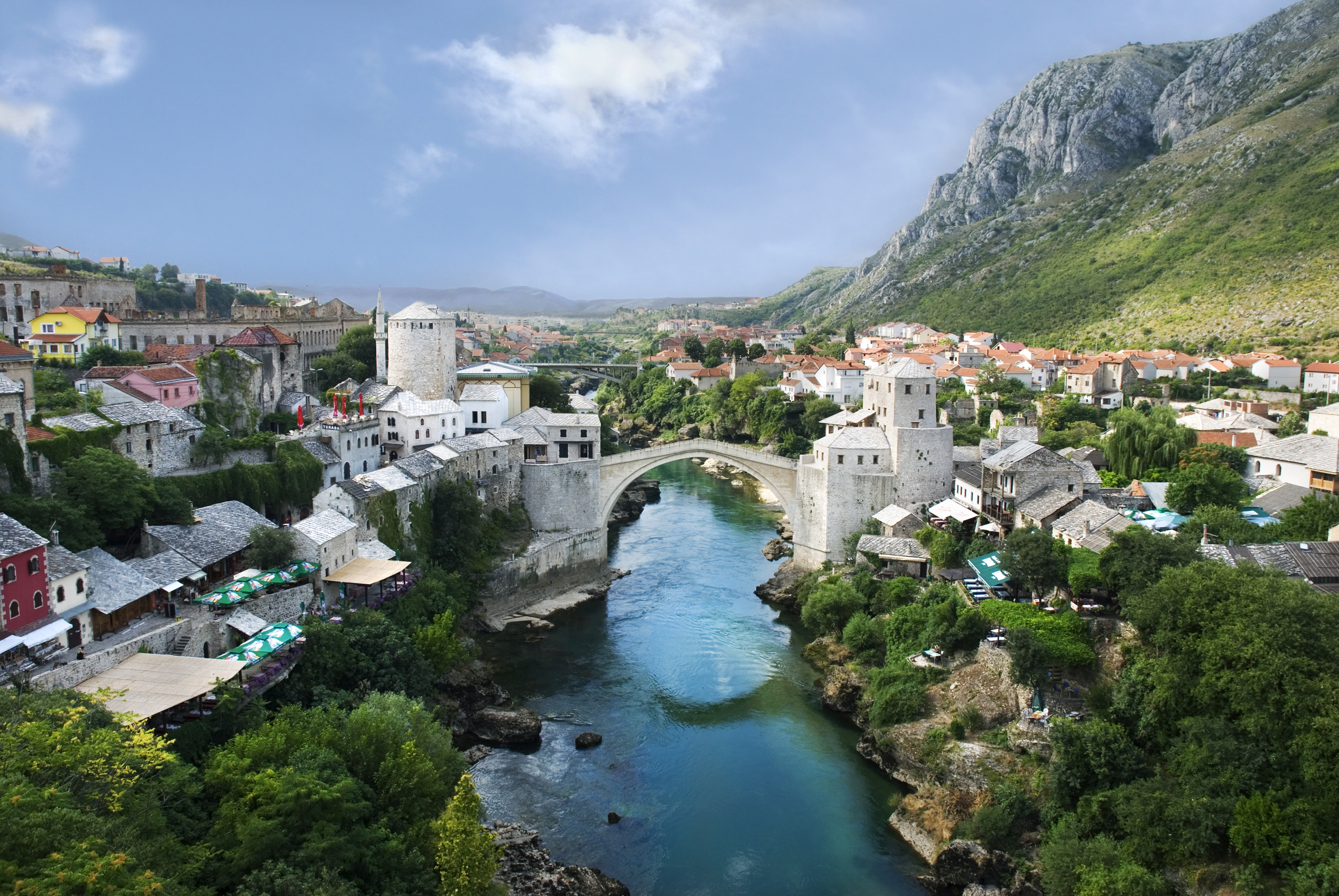
🌉Mostar Old Bridge Area
The iconic Stari Most bridge and surrounding historic area where mosques and churches stand side by side.