⛪ Basilica di San Marino
San Marino
About This Sacred Site
The Basilica di San Marino is the principal church of the Republic of San Marino, prominently located in the city of San Marino. Constructed between 1826 and 1838 in neoclassical style, it was designed by architect Antonio Serra and stands on the site of an earlier 4th-century church. The basilica features a grand portico with Corinthian columns and an imposing pediment, housing religious artifacts, including relics of Saint Marino, the republic’s founder. Inside, the spacious nave and ornate altars reflect 19th-century ecclesiastical artistry, making it a focal point for worship and national ceremonies.
History & Origins
The Basilica di San Marino was constructed between 1826 and 1838, designed in a neoclassical style inspired by ancient Roman temples, featuring a Corinthian portico modeled after the Pantheon. It stands on the site of the original 4th-century church believed to be founded by Saint Marinus, the republic's founder and first bishop. The basilica replaced earlier medieval structures that had fallen into disrepair, reflecting San Marino's 19th-century religious and national revival movements. Architect Francesco Guardi oversaw the construction, which incorporated relics of Saint Marinus enshrined within a crypt beneath the altar. The basilica has undergone restorations in the 20th century to preserve its marble façade and interior frescoes depicting scenes from the life of Saint Marinus and early Christian martyrs.
Spiritual Significance
The basilica serves as the spiritual heart of San Marino, housing the relics of Saint Marinus, whose life is commemorated annually on September 3 with a solemn mass and civic ceremonies. Pilgrims visit to venerate these relics, believed to confer blessings of protection and civic virtue, rooted in hagiographical texts from the early Christian era. The basilica's neoclassical design reflects Enlightenment-era theological ideals emphasizing reason and divine order, aligning with Catholic teachings formalized in the Council of Trent. The liturgical calendar includes celebrations of the founders of the republic and special prayers invoking Saint Marinus' intercession for peace and stability. Its location atop Monte Titano symbolizes spiritual ascent, reinforcing the theological concept of the Christian journey toward salvation.
Key Facts
- •Built between 1826 and 1838 in neoclassical style
- •Houses the relics of Saint Marinus, founder of the republic
- •The facade features a Corinthian portico inspired by the Pantheon
- •A marble urn behind the altar contains Saint Marinus's skull
- •San Marino is the world's oldest surviving republic, founded in 301 CE
Location
Coordinates: 43.9366, 12.4475
Frequently Asked Questions
What religion is Basilica di San Marino associated with?▾
Basilica di San Marino is a Christianity holy site located in San Marino. It was established 1838 (current); original 4th century and is ranked #652 in our global directory of sacred sites.
When was Basilica di San Marino established?▾
Basilica di San Marino dates back to 1838 (current); original 4th century. Built between 1826 and 1838 in neoclassical style
How many people visit Basilica di San Marino each year?▾
Basilica di San Marino receives approximately 300,000 visitors per year. Houses the relics of Saint Marinus, founder of the republic
What is Basilica di San Marino known for?▾
The principal church of San Marino, housing the relics of the republic's founder. Visitors come seeking blessings, pilgrimage, spiritual enlightenment. The facade features a Corinthian portico inspired by the Pantheon
Related Holy Sites
Sacred places connected by country, religion, and purpose
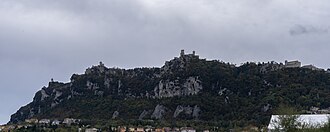
🏔️Monte Titano
The sacred mountaintop where St Marinus founded the world's oldest republic as a refuge from persecution.

⛰️Monte Titano Sacred Sites
The UNESCO-listed sacred summit where Saint Marinus founded the world's oldest republic.
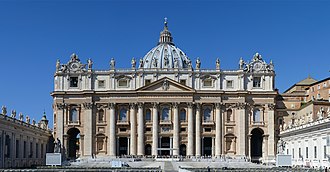
⛪Vatican City (St. Peter's Basilica)
The spiritual center of Roman Catholicism and home of the Pope.
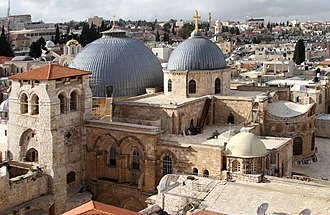
✝️Church of the Holy Sepulchre
The site where Jesus was crucified, buried, and resurrected.