🏰 Bamberg Cathedral
Germany
About This Sacred Site
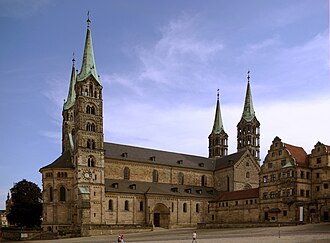
Bamberg Cathedral is a masterpiece of the transition from Romanesque to Gothic architecture, with four impressive towers dominating the medieval townscape. The cathedral is renowned for the Bamberg Horseman (Bamberger Reiter), a 13th-century equestrian statue of unknown identity that is one of the most famous sculptures of the Middle Ages. It contains the tomb of Pope Clement II, the only papal burial north of the Alps. The cathedral also houses the tombs of Emperor Henry II and his wife Cunigunde, both canonized saints, in a magnificent sarcophagus carved by Tilman Riemenschneider.
History & Origins
Founded in 1012 by Emperor Henry II, Bamberg Cathedral is a prime example of the transition from Romanesque to Gothic architecture. Its four towers dominate the medieval town skyline. The cathedral is famed for the Bamberg Horseman statue and the tombs of Henry II and Pope Clement II, the only pope buried north of the Alps. Over centuries, it underwent Gothic and Baroque renovations, blending stylistic influences. The cathedral remains a religious center and a cultural landmark, reflecting Bamberg’s status as an imperial city and UNESCO World Heritage Site.
Spiritual Significance
Bamberg Cathedral, consecrated in 1012 by Emperor Henry II and later reconstructed in the 13th century, is spiritually significant as the resting place of Pope Clement II, the only papal tomb north of the Alps, symbolizing its unique place in papal history. The cathedral is renowned for the Bamberg Horseman, a 13th-century equestrian statue believed to represent a Christian ruler embodying chivalry and divine authority, linking faith and governance. The cathedral hosts the Feast of Saint Peter and Saint George on April 23, featuring liturgical celebrations rooted in medieval ecclesiastical traditions. Pilgrimages to the cathedral often include veneration of relics of Saint Otto of Bamberg, whose missionary work is commemorated with a procession on his feast day, June 24. The cathedral's crypt contains the tombs of the city's bishops, reinforcing its role as an episcopal center. The use of Gothic and Romanesque architectural elements supports a theology of light and transcendence, aligning with John 8:12, where Jesus proclaims Himself the Light of the World, a theme emphasized in the cathedral’s stained glass and sculpture.
Key Facts
- •Part of the UNESCO World Heritage town of Bamberg since 1993
- •Contains the only papal tomb north of the Alps (Pope Clement II, d. 1047)
- •The Bamberg Horseman (c. 1235) is one of the most famous medieval sculptures
- •The Riemenschneider tomb of Henry II and Cunigunde is a masterpiece of late-Gothic carving
- •The cathedral has four towers, giving it a distinctive profile on Bamberg's skyline
Location
Coordinates: 49.8917, 10.8831
Frequently Asked Questions
What religion is Bamberg Cathedral associated with?▾
Bamberg Cathedral is a Christianity holy site located in Germany. It was established 1012 and is ranked #289 in our global directory of sacred sites.
When was Bamberg Cathedral established?▾
Bamberg Cathedral dates back to 1012. Part of the UNESCO World Heritage town of Bamberg since 1993
How many people visit Bamberg Cathedral each year?▾
Bamberg Cathedral receives approximately 400,000 visitors per year. Contains the only papal tomb north of the Alps (Pope Clement II, d. 1047)
What is Bamberg Cathedral known for?▾
A late-Romanesque cathedral housing the only papal tomb north of the Alps. Visitors come seeking pilgrimage, blessings, spiritual enlightenment, peace. The Bamberg Horseman (c. 1235) is one of the most famous medieval sculptures
Related Holy Sites
Sacred places connected by country, religion, and purpose
⛪Cologne Cathedral
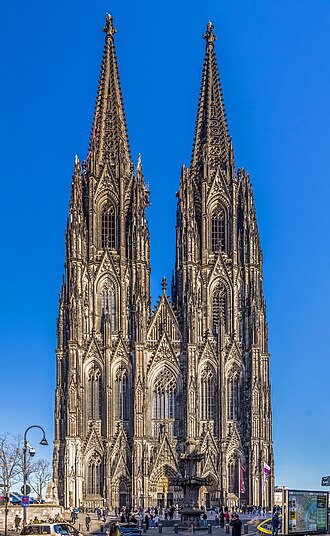
Germany's most visited landmark, a Gothic masterpiece housing the Shrine of the Three Kings.
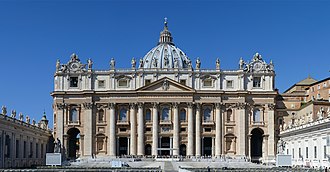
⛪Vatican City (St. Peter's Basilica)
The spiritual center of Roman Catholicism and home of the Pope.
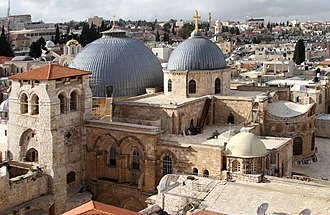
✝️Church of the Holy Sepulchre
The site where Jesus was crucified, buried, and resurrected.