⛪ Asmara Cathedral
Eritrea
About This Sacred Site
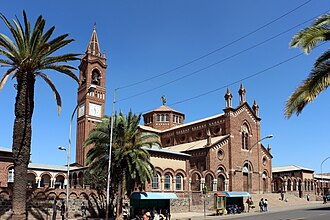
The Cathedral of Our Lady of the Rosary in Asmara is a striking Lombard Romanesque-style Catholic church, one of the most prominent landmarks of Eritrea's UNESCO World Heritage-listed capital. Built between 1921 and 1923 during the Italian colonial period, the cathedral features a dramatic bell tower that rises above the city's modernist skyline. Asmara itself was inscribed as a UNESCO World Heritage Site in 2017 for its remarkable collection of Modernist architecture. The cathedral serves Eritrea's significant Catholic minority and stands as a testament to the religious diversity of this Horn of Africa nation.
History & Origins
Construction of the cathedral commenced in 1921 under Italian colonial administration led by Governor Luigi Frusci and was completed in 1923. The structure was designed by engineer Odoardo Cavagnari, who employed the Lombard Romanesque architectural style characterized by rounded arches and robust masonry. During the Italian occupation, the cathedral served as the central place of worship for the Roman Catholic community in Eritrea. The bell tower, rising approximately 50 meters, was intentionally positioned to be visible across Asmara, symbolizing the prominence of Christianity during that period. In 1941, British forces utilized the cathedral for various administrative purposes during their occupation of Eritrea. The cathedral underwent a significant restoration in 1991 after damage sustained during the Eritrean War of Independence, focusing on preserving its original facade and interior frescoes. The site remains one of the most iconic landmarks within the UNESCO World Heritage-listed city center of Asmara, recognized for its outstanding early 20th-century urban planning and architecture.
Spiritual Significance
Serving as the seat of the Eritrean Catholic Archeparchy, the cathedral is integral to the celebration of the Divine Liturgy following the Alexandrian rite, with congregants participating in the Eucharist accompanied by traditional Tigrinya hymns. The cathedral hosts the annual Feast of Saint Joseph on March 19, featuring processions and special masses led by the archbishop, reflecting deep Marian devotion characteristic of Eritrean Catholicism. Pilgrims from across the country attend weekly vespers and the Easter Vigil, where ancient liturgical chants in Ge'ez are performed, linking modern worship with early Christian traditions. The cathedral's architecture, including its rose window and elaborate altar, symbolizes theological concepts of light and resurrection, enhancing the spiritual atmosphere during worship. Clergy emphasize teachings from Vatican II documents adapted to local contexts, fostering a theology that harmonizes universal Catholic doctrine with Eritrean cultural identity.
Key Facts
- •Built between 1921 and 1923 in Lombard Romanesque style
- •One of the most prominent landmarks in UNESCO-listed Asmara
- •Features a dramatic bell tower visible across the city
- •Asmara was inscribed as a UNESCO World Heritage Site in 2017
- •Serves Eritrea's Catholic minority alongside Orthodox and Muslim communities
Location
Coordinates: 15.3389, 38.9319
Frequently Asked Questions
What religion is Asmara Cathedral associated with?▾
Asmara Cathedral is a Christianity holy site located in Eritrea. It was established 1923 and is ranked #730 in our global directory of sacred sites.
When was Asmara Cathedral established?▾
Asmara Cathedral dates back to 1923. Built between 1921 and 1923 in Lombard Romanesque style
How many people visit Asmara Cathedral each year?▾
Asmara Cathedral receives approximately 30,000 visitors per year. One of the most prominent landmarks in UNESCO-listed Asmara
What is Asmara Cathedral known for?▾
A striking Romanesque-style Catholic cathedral in Eritrea's UNESCO-listed capital. Visitors come seeking blessings, peace, guidance. Features a dramatic bell tower visible across the city
Related Holy Sites
Sacred places connected by country, religion, and purpose
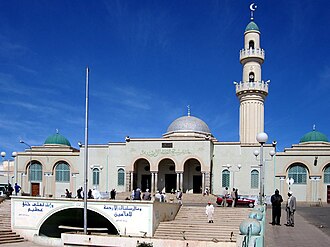
🕌Great Mosque of Asmara
A Rationalist-style mosque with an elegant minaret in Asmara's UNESCO cityscape.
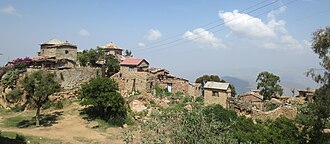
⛪Debre Bizen Monastery
A 14th-century Ethiopian Orthodox monastery perched on a cliff above the Red Sea coast.
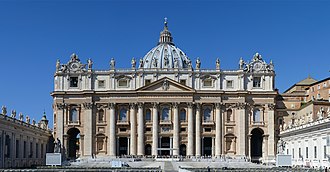
⛪Vatican City (St. Peter's Basilica)
The spiritual center of Roman Catholicism and home of the Pope.
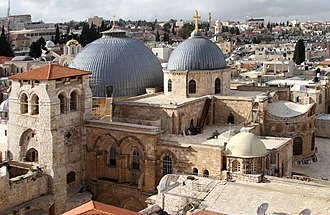
✝️Church of the Holy Sepulchre
The site where Jesus was crucified, buried, and resurrected.