
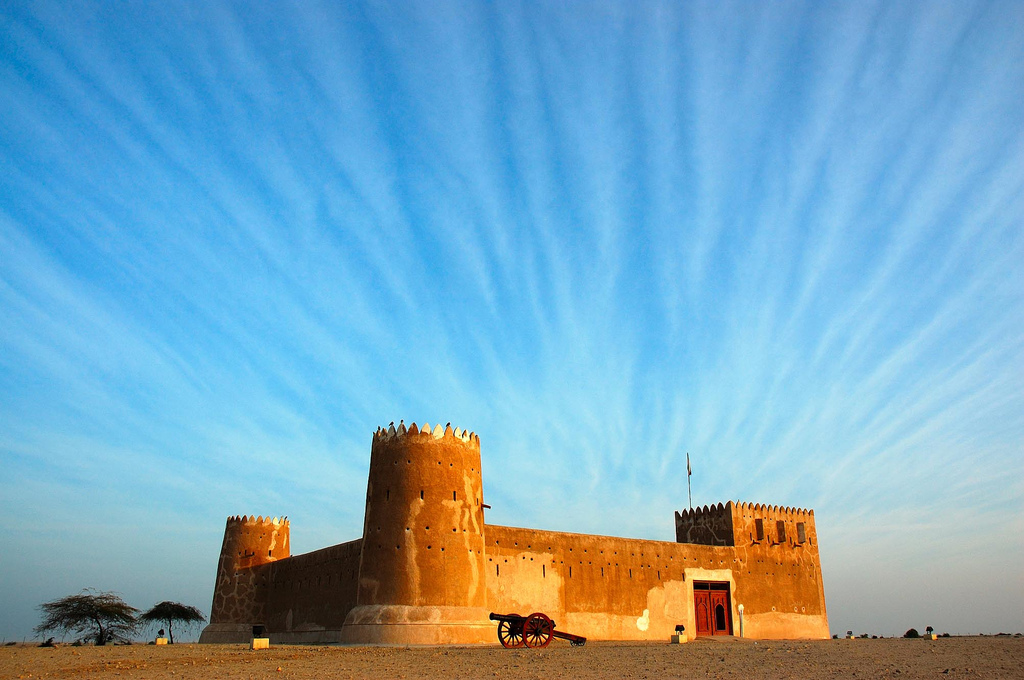
🏰 Al Zubarah Fort
Qatar
About This Sacred Site
Al Zubarah Fort stands guard over the ruins of Al Zubarah, an 18th-century pearling and trading town on Qatar's northwest coast. The UNESCO World Heritage Site encompasses the fort, built in 1938, and the extensive archaeological remains of the town, which include several mosques and a souq. Al Zubarah was one of the largest and most important towns in the Gulf before its abandonment in the early 20th century. The site provides valuable insight into traditional Gulf life, trade, and Islamic worship practices.
Spiritual Significance
Al Zubarah Fort, constructed in 1938 as a coast guard station near the ruins of an 18th-century town, holds spiritual importance linked to its historical role in protecting one of the Gulf's major pearling and trading ports. The fort's designation as a UNESCO World Heritage Site in 2013 underscores its cultural and religious heritage within Islamic maritime communities. Local Muslim traditions commemorate the site during annual festivals that honor the town's historical prosperity and invoke blessings for protection and sustenance from Allah. Rituals performed here include Quranic recitations and prayers for safe passage, reflecting the town's past as a spiritual waypoint for seafarers. The fort's architecture, featuring robust defensive walls and watchtowers, symbolizes divine guardianship, while the adjacent archaeological remains provide insight into the spiritual life of the Gulf's trading populations.
Key Facts
- •UNESCO World Heritage Site since 2013
- •The fort was built in 1938 to serve as a coast guard station
- •The ruined town dates to the 18th century
- •Al Zubarah was a major pearling and trading center
- •Archaeological remains include mosques, houses, and a souq
Location
Coordinates: 25.9806, 51.0311
Frequently Asked Questions
What religion is Al Zubarah Fort associated with?▾
Al Zubarah Fort is a Islam holy site located in Qatar. It was established 1938 (fort) / 18th century (town) and is ranked #428 in our global directory of sacred sites.
When was Al Zubarah Fort established?▾
Al Zubarah Fort dates back to 1938 (fort) / 18th century (town). UNESCO World Heritage Site since 2013
How many people visit Al Zubarah Fort each year?▾
Al Zubarah Fort receives approximately 100,000 visitors per year. The fort was built in 1938 to serve as a coast guard station
What is Al Zubarah Fort known for?▾
A UNESCO fort guarding the ruins of an 18th-century pearling town with historic mosques. Visitors come seeking ancestral connection, protection, peace, guidance. The ruined town dates to the 18th century
Related Holy Sites
Sacred places connected by country, religion, and purpose

⛪Vatican City (St. Peter's Basilica)
The spiritual center of Roman Catholicism and home of the Pope.

🕌Temple Mount / Al-Aqsa (Jerusalem)
Sacred to Judaism, Christianity, and Islam — the most contested holy site on Earth.

