👑 Aachen Cathedral
Germany
About This Sacred Site
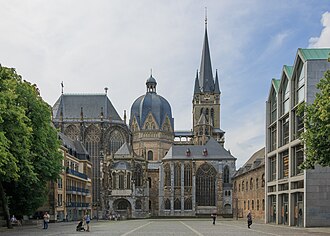
Aachen Cathedral, centered on Charlemagne's Palatine Chapel built around 800 CE, was the first UNESCO World Heritage Site in Germany. Charlemagne intended his octagonal chapel to be a 'New Jerusalem' and it served as the coronation church of German kings and Holy Roman Emperors for nearly 600 years. The cathedral treasury is one of the most important in northern Europe, holding Charlemagne's relics and the four Great Relics displayed every seven years during the Aachen Pilgrimage. Charlemagne's marble throne, from which 30 kings were crowned, still stands in the upper gallery.
History & Origins
Aachen Cathedral centers on the Palatine Chapel, commissioned by Charlemagne around 800 CE as his imperial chapel and burial place. The octagonal chapel combines Carolingian, Byzantine, and Roman architectural elements, notable for its mosaics and marble columns. Over centuries, the cathedral was expanded with Gothic additions, becoming the coronation site for German kings. It was designated Germany's first UNESCO World Heritage Site in 1978. The cathedral houses important relics, including the Shrine of Charlemagne and the Shrine of the Virgin Mary, attracting pilgrims since the Middle Ages.
Spiritual Significance
Aachen Cathedral, the first UNESCO World Heritage Site in Germany since 1978, is venerated for its Palatine Chapel, originally built around 800 CE by Charlemagne, which was the largest domed structure north of the Alps at the time and a model of Carolingian Renaissance architecture. The chapel houses Charlemagne's marble throne where thirty German kings were crowned, a ritual affirming divine sanction for rulership rooted in Christian theology of kingship. The cathedral holds the Shrine of Charlemagne, a gold reliquary containing his remains, which is a focal point during the Aachen pilgrimage, held every seven years since the 14th century, where pilgrims venerate relics including those of the Virgin Mary and various saints. The pilgrimage is rooted in the Catholic doctrine of relic veneration, seeking spiritual healing and indulgences as referenced in medieval Church decrees. The cathedral's mosaics and liturgical practices reflect early medieval Christian iconography and sacraments, reinforcing Aachen's role as a spiritual and political center in medieval Europe.
Key Facts
- •The first UNESCO World Heritage Site listed in Germany (1978)
- •Thirty German kings were crowned on Charlemagne's marble throne
- •The Palatine Chapel was the largest domed structure north of the Alps when built
- •The four Great Relics are displayed every seven years, drawing hundreds of thousands
- •Charlemagne is buried in the cathedral; his golden bust-reliquary adorns the treasury
Location
Coordinates: 50.7747, 6.0839
Frequently Asked Questions
What religion is Aachen Cathedral associated with?▾
Aachen Cathedral is a Christianity holy site located in Germany. It was established c. 800 CE and is ranked #123 in our global directory of sacred sites.
When was Aachen Cathedral established?▾
Aachen Cathedral dates back to c. 800 CE. The first UNESCO World Heritage Site listed in Germany (1978)
How many people visit Aachen Cathedral each year?▾
Aachen Cathedral receives approximately 1.2 million visitors per year. Thirty German kings were crowned on Charlemagne's marble throne
What is Aachen Cathedral known for?▾
Charlemagne's Palatine Chapel, where Holy Roman Emperors were crowned for 600 years. Visitors come seeking pilgrimage, blessings, guidance, spiritual enlightenment. The Palatine Chapel was the largest domed structure north of the Alps when built
Related Holy Sites
Sacred places connected by country, religion, and purpose
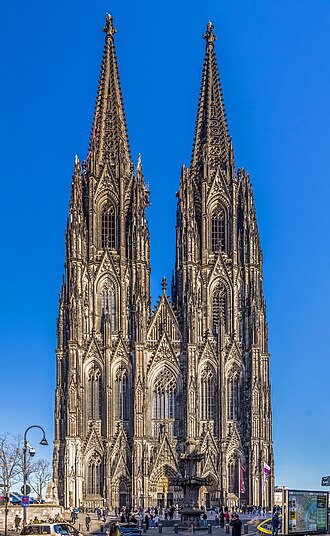
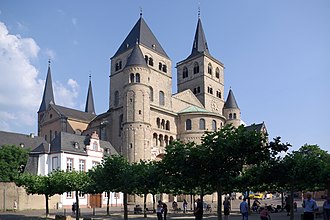
⛪Cologne Cathedral
Germany's most visited landmark, a Gothic masterpiece housing the Shrine of the Three Kings.
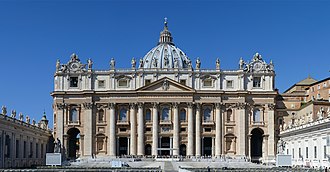
⛪Vatican City (St. Peter's Basilica)
The spiritual center of Roman Catholicism and home of the Pope.
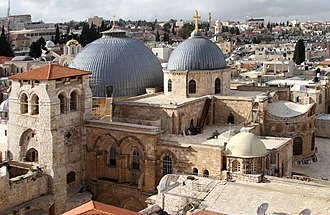
✝️Church of the Holy Sepulchre
The site where Jesus was crucified, buried, and resurrected.