🌳 Ta Prohm
Cambodia
About This Sacred Site
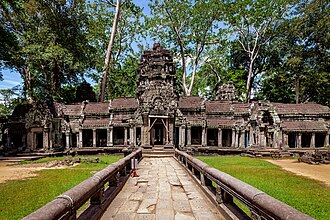
Ta Prohm is a hauntingly beautiful temple in the Angkor complex, famous for the massive silk-cotton and strangler fig trees whose roots have merged with the ancient stone structures. Built in 1186 CE by King Jayavarman VII as a Mahayana Buddhist monastery and university, it once housed over 12,000 people. Unlike most Angkor temples, Ta Prohm was deliberately left largely unrestored to preserve the dramatic interplay between jungle and architecture. The temple gained worldwide fame as a filming location for the movie 'Lara Croft: Tomb Raider.'
History & Origins
Ta Prohm was built in 1186 CE by King Jayavarman VII, the greatest builder of the Khmer Empire, and dedicated to his mother as a Mahayana Buddhist monastery named Rajavihara ('Royal Monastery'). Temple inscriptions reveal it was a vast institution: 12,640 residents including 18 high priests and 615 dancers, supported by 79,365 workers from 3,140 surrounding villages. The complex functioned as both a monastery and a university, with gold, pearls, Chinese silks, and 35 diamonds recorded among its treasures. After the fall of Angkor in the 15th century, the temple was abandoned and gradually consumed by the surrounding jungle. French archaeologists from the Ecole Francaise d'Extreme-Orient made the deliberate decision in the early 20th century to leave Ta Prohm largely unrestored, allowing the dramatic spectacle of giant silk-cotton (Tetrameles nudiflora) and strangler fig (Ficus gibbosa) trees intertwined with crumbling stone galleries to remain. The Archaeological Survey of India began conservation work in 2003, stabilizing structures while preserving the signature tree-root overgrowth.
Spiritual Significance
Jayavarman VII built Ta Prohm as a living prayer for his mother, whom an inscription identifies with Prajnaparamita, the Buddhist personification of transcendent wisdom. The temple's central image depicted Prajnaparamita with the face of the queen mother, merging royal ancestor worship with Mahayana Buddhist devotion. As a monastery, Ta Prohm was a center for the study of Mahayana sutras, and its 18 high priests oversaw meditation practice and dharma teaching for hundreds of monks. The temple's current state, where nature has physically merged with the sacred architecture, carries its own spiritual resonance: Cambodian Buddhists interpret the trees embracing the stones as a visual teaching on impermanence (anicca), one of the three marks of existence in Buddhist philosophy. Visitors today leave incense and small offerings at surviving Buddha images within the ruins. The interplay of roots and stone has made Ta Prohm a global symbol of the Buddhist teaching that all conditioned things are subject to decay, yet the spiritual impulse that created them endures.
Key Facts
- •Built in 1186 CE as a monastery and university housing over 12,000 people
- •Deliberately left unrestored to show the power of nature reclaiming human structures
- •Giant silk-cotton and strangler fig tree roots grow through and around the ruins
- •Featured prominently in the 2001 film 'Lara Croft: Tomb Raider'
- •Inscriptions record that the temple owned 3,140 villages with a staff of 79,365 people
Location
Coordinates: 13.4352, 103.8891
Frequently Asked Questions
What religion is Ta Prohm associated with?▾
Ta Prohm is a Buddhism holy site located in Cambodia. It was established 1186 CE and is ranked #553 in our global directory of sacred sites.
When was Ta Prohm established?▾
Ta Prohm dates back to 1186 CE. Built in 1186 CE as a monastery and university housing over 12,000 people
How many people visit Ta Prohm each year?▾
Ta Prohm receives approximately 1+ million visitors per year. Deliberately left unrestored to show the power of nature reclaiming human structures
What is Ta Prohm known for?▾
The jungle temple where massive tree roots engulf ancient stone ruins. Visitors come seeking meditation, peace, spiritual enlightenment, ancestral connection. Giant silk-cotton and strangler fig tree roots grow through and around the ruins
Related Holy Sites
Sacred places connected by country, religion, and purpose
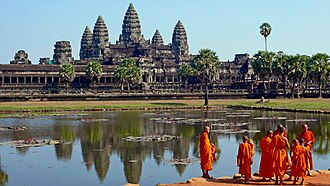
🛕Angkor Wat
The largest religious monument in the world, originally Hindu then Buddhist.
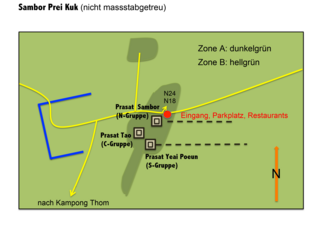
🏛️Sambor Prei Kuk
Pre-Angkorian temple ruins that served as the capital of the Chenla Empire.
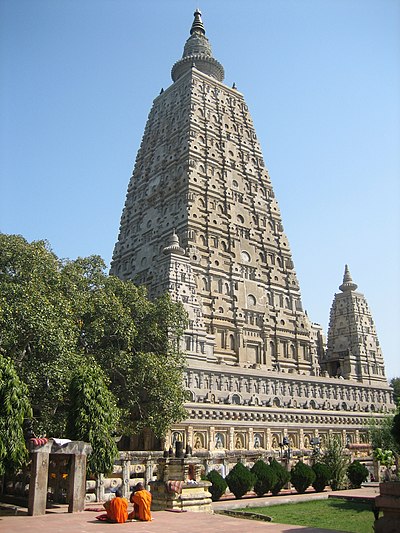
☸️Bodh Gaya (Mahabodhi Temple)
Where Siddhartha Gautama attained enlightenment and became the Buddha.
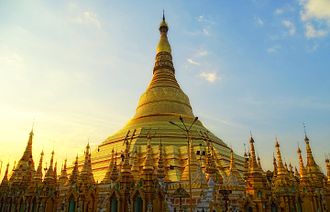
🪷Shwedagon Pagoda
Myanmar's most sacred Buddhist pagoda, gilded with 60 tons of gold.