🕌 Sultan Mosque (Masjid Sultan, Singapore)
Singapore
About This Sacred Site
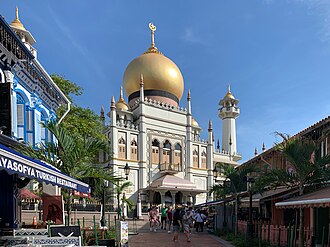
The Sultan Mosque (Masjid Sultan) is the most important mosque in Singapore and a national monument. Located in the historic Kampong Glam district, the original mosque was built in 1824 with a grant from the East India Company. The current building, designed by Denis Santry, was completed in 1932 and features two golden onion domes that are an iconic part of Singapore's skyline. The mosque serves as the focal point of Muslim life in Singapore and the base of the glass bottles ringing the main dome was made from donated bottles — a gesture of community inclusivity.
History & Origins
The Sultan Mosque, originally constructed in 1824 for Sultan Hussein Shah of Johor, was rebuilt in its current form in 1932 under the architectural direction of Denis Santry, featuring a distinctive golden dome and large prayer hall. Declared a national monument in 1975, it stands in the Kampong Glam district, historically a Malay-Muslim enclave. The mosque was built using bricks from the demolished Fort Canning, integrating colonial and Islamic architectural styles. Major renovations took place in the 1990s to restore the terrazzo floors and the intricate stained-glass windows. The mosque's minaret rises to 22 meters, serving as a visual landmark. It was initially funded by the British East India Company and local Muslim merchants, reflecting the socio-political dynamics of early 19th-century Singapore. The mosque continues to function as a religious and community center, linking Singapore's Islamic heritage with contemporary urban life.
Spiritual Significance
As the focal point of Muslim worship in Singapore, the mosque hosts the five daily prayers (Salah) and the weekly Jumu'ah congregational prayers, following the Shafi'i madhab predominant in Southeast Asia. The mosque is central to Ramadan activities, including nightly Taraweeh prayers and communal Iftar meals that foster community solidarity. It also celebrates Maulidur Rasul, the Prophet Muhammad's birthday, with processions and Quranic recitations emphasizing Sunnah practices. The mosque's design incorporates a mihrab aligned precisely towards the Kaaba in Mecca, guiding worshippers' qibla during prayers as prescribed in Islamic jurisprudence. The mosque supports Islamic education through its madrasah, teaching Quran memorization (Hifz) and Fiqh, and serves as a venue for interfaith dialogues promoting religious harmony. Pilgrims often perform Tahiyyatul Masjid prayers upon entering the mosque, adhering to prophetic traditions recorded in Hadith collections such as Sahih Bukhari.
Key Facts
- •The most important mosque in Singapore, declared a national monument in 1975
- •The original mosque was built in 1824 for Sultan Hussein Shah of Johor
- •The current building was completed in 1932 with distinctive golden onion domes
- •The base of the main dome is rimmed with glass bottles donated by the poor
- •Located in the historic Kampong Glam, Singapore's traditional Muslim quarter
Location
Coordinates: 1.3025, 103.8587
Frequently Asked Questions
What religion is Sultan Mosque (Masjid Sultan, Singapore) associated with?▾
Sultan Mosque (Masjid Sultan, Singapore) is a Islam holy site located in Singapore. It was established 1824 (original), 1932 (current) and is ranked #769 in our global directory of sacred sites.
When was Sultan Mosque (Masjid Sultan, Singapore) established?▾
Sultan Mosque (Masjid Sultan, Singapore) dates back to 1824 (original), 1932 (current). The most important mosque in Singapore, declared a national monument in 1975
How many people visit Sultan Mosque (Masjid Sultan, Singapore) each year?▾
Sultan Mosque (Masjid Sultan, Singapore) receives approximately 500,000+ visitors per year. The original mosque was built in 1824 for Sultan Hussein Shah of Johor
What is Sultan Mosque (Masjid Sultan, Singapore) known for?▾
Singapore's most important mosque, a national monument in the historic Kampong Glam district. Visitors come seeking pilgrimage, peace, blessings, guidance. The current building was completed in 1932 with distinctive golden onion domes
Related Holy Sites
Sacred places connected by country, religion, and purpose
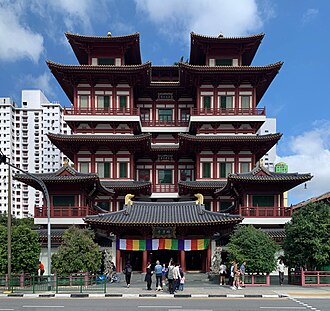
☸️Buddha Tooth Relic Temple (Singapore)
A Tang-dynasty-style Buddhist temple in Chinatown, said to house a tooth relic of the Buddha.